
Slideshow Items

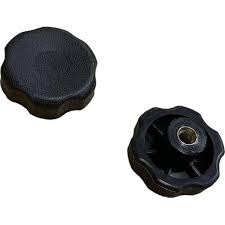
Knob Spreader Bar for Recline Wheelchair

C$19.99
In stock online
In store: Check availability

Available in store

UPC Code: 822383141336
SKU: STDS900K

Hand-tightening knob with threaded metal insert for reclining wheelchair spreader bars. Secures the spreader bar to the wheelchair frame without tools, maintaining lateral frame stability during use and allowing quick disassembly for transport or storage.

    • Why the Spreader Bar Knob Is the Frame Rigidity Boundary and the Assembly Control Component of the Reclining Wheelchair Simultaneously

      The spreader bar knob on a reclining wheelchair serves two structurally distinct functions that are both essential to the wheelchair's mechanical and clinical performance, and that a single hardware component must satisfy simultaneously. The first function is frame rigidity: the knob is the fastening element that clamps the spreader bar to the wheelchair frame at the torque level required to prevent lateral frame flex during use. The spreader bar is the cross-member that connects the two lateral frame rails and resists the lateral forces that seating load, transfer activity, and propulsion generate at the frame. A spreader bar that is not clamped at the correct tightening torque — because the knob has been lost, cracked, or has stripped its threaded insert — allows the frame to flex laterally under these loads, reducing the rigidity that safe wheelchair use requires and introducing a progressive loosening of the spreader bar attachment that worsens with each use cycle. The knob is therefore not a convenience fastener — it is the frame rigidity boundary that determines whether the spreader bar maintains the lateral stiffness of the wheelchair frame under active use loading.

      The second function the spreader bar knob must satisfy simultaneously is tool-free assembly and disassembly of the wheelchair frame for transport and storage. Reclining wheelchairs are routinely folded or partially disassembled for vehicle transport, and the spreader bar removal is a standard step in this process. A knob that requires tools to operate — because the hand-tightening geometry has been damaged or because the knob has been replaced with a standard hex fastener — imposes a tool dependency on a disassembly task that caregivers perform in transport contexts where tools are not reliably available. The hand-tightening knob design allows the caregiver to remove and reinstall the spreader bar with finger pressure alone, maintaining the tool-free assembly capability that the wheelchair's transport usability depends on.

      The threaded metal insert of the replacement knob addresses the specific failure mode that plastic spreader bar knobs develop in active wheelchair use. The plastic body of the knob provides the hand-grip geometry and tightening torque transmission, but the clamping force is generated at the metal insert's thread engagement with the spreader bar fastener. A knob with a plastic thread rather than a metal insert develops thread wear and stripping under the repeated tightening and loosening cycles of daily wheelchair assembly and disassembly, losing its ability to generate and maintain the clamping force that the spreader bar retention requires. The metal insert specification is therefore a functional requirement for fastener longevity under the assembly cycle demands of active wheelchair use, not simply a construction quality indicator.

      The tool-free tightening geometry of the knob — the hand-grip profile that allows sufficient finger torque to be applied to generate the required clamping force — is not an ergonomic preference. In a caregiver population that may include users with limited hand strength or fine motor control, a knob whose grip profile does not allow adequate tightening torque to be generated by hand produces an under-tightened spreader bar attachment that allows frame flex under use loading. The replacement knob's grip profile must match the OEM geometry that was specified to allow hand-tightening to the required clamping torque by the caregiver population the wheelchair is designed for.

      KEY FEATURES

      • Threaded metal insert — generates and maintains clamping force at the spreader bar fastener thread engagement without the thread wear and stripping that a plastic-threaded knob develops under repeated assembly and disassembly cycles
      • Hand-tightening grip profile — allows adequate tightening torque to be applied with finger pressure alone, maintaining tool-free spreader bar assembly and disassembly for transport and storage without requiring a caregiver tool kit
      • Frame rigidity restoration — correct knob tightening clamps the spreader bar at the torque level that prevents lateral frame flex under seating load, transfer activity, and propulsion forces during active wheelchair use
      • Durable plastic body with metal insert construction — plastic grip body provides the hand-tightening geometry while the metal insert carries the clamping load, combining ergonomic grip form with the thread durability that active use demands
      • Compatible with reclining wheelchair spreader bar configurations — thread specification and knob geometry match the spreader bar fastener interface of compatible reclining wheelchair models

      BENEFITS

      • Restores frame rigidity at the spreader bar attachment — replacing a lost, cracked, or stripped knob before the wheelchair is used under seating load, removing the lateral frame flex risk that an unsecured spreader bar creates
      • Metal insert extends replacement knob service life under assembly cycle loading — resisting the thread stripping that a plastic-threaded knob develops under the repeated tightening and loosening of daily wheelchair transport preparation
      • Tool-free assembly maintained after replacement — hand-tightening grip profile restores the caregiver's ability to remove and reinstall the spreader bar without tools in transport and storage contexts
      • Component-level knob replacement extends the wheelchair's service life without replacing the spreader bar, frame assembly, or seating components
      • Cost-effective hardware replacement restores full frame assembly function at fastener replacement cost rather than spreader bar or frame replacement cost

      TYPICAL APPLICATIONS

      Lost knob replacement — immediate replacement when the original knob has been lost during transport, storage, or maintenance, restoring spreader bar retention before the wheelchair is returned to active use

      Stripped insert replacement — replacement when thread stripping at the metal insert has eliminated the knob's ability to generate clamping force at the spreader bar fastener, identified by knob rotation without resistance or spreader bar movement under lateral load

      Cracked body replacement — replacement when the plastic knob body has cracked under overtightening or impact, reducing the grip area available for hand-tightening torque application

      Scheduled maintenance replacement — knob inspection and replacement as part of wheelchair service intervals in long-term care facilities and rental programs, confirming thread integrity and grip condition before the next user

      Wheelchair recommissioning — knob inspection and replacement when a reclining wheelchair is transferred to a new user or returned from storage, confirming clamping function and hand-tightening geometry before the wheelchair enters active use

    • No reviews yet

      Add yours

    Testimonials from Google

    See all reviews

    Your cart — 0

    You cart is currently empty

    Login

    By using our website, you agree to the use of cookies. These cookies help us understand how customers arrive at and use our site and help us make improvements. Hide this message More on cookies »