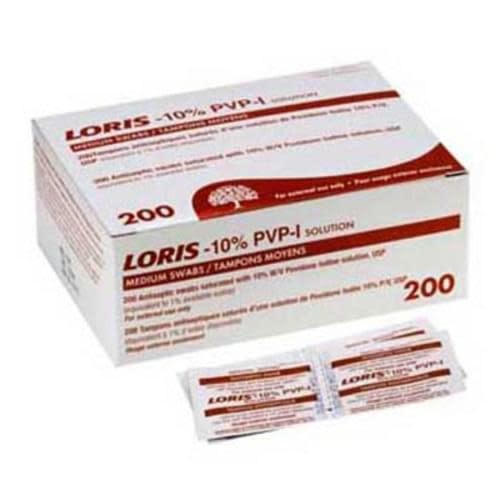
Why 10% Povidone-Iodine in Pre-Moistened Pad Format for Efficient Pre-Procedure Preparation
The 10% povidone-iodine (PVP-I) concentration delivers enhanced antimicrobial potency compared to standard 7.5% formulations while maintaining safety for intact skin application—this higher strength achieves rapid broad-spectrum bactericidal, fungicidal, and virucidal action within 15-30 seconds contact time, reducing the dwell period needed before procedures and enabling faster patient throughput in busy clinical environments, while the formulation remains appropriate for routine use without the excessive tissue irritation or delayed wound healing associated with concentrations exceeding 10% that would limit clinical applicability. The pre-moistened pad format with individual wrapper packaging delivers operational efficiency superior to traditional swabstick or solution bottle methods: each sealed packet contains a precisely saturated gauze pad ensuring consistent antimicrobial delivery without the variable application technique issues that occur when staff manually prepare cotton balls or gauze from multi-use bottles, the flat pad design enables coverage of larger surface areas with fewer applications compared to cylindrical swabsticks requiring multiple passes, and the disposable single-use packaging eliminates the cross-contamination risks inherent in shared antiseptic bottles accessed repeatedly throughout clinical shifts. The medium pad size provides adequate coverage for typical procedural sites including venipuncture areas in antecubital fossae and hand veins, peripheral IV insertion locations, intramuscular and subcutaneous injection sites on deltoids and thighs, and small wound margins requiring antiseptic cleansing, while the 200-count box quantity supports high-volume clinical operations including primary care offices performing dozens of daily injections, emergency departments managing continuous patient flow, dialysis centers preparing multiple catheter sites per shift, and vaccination clinics administering hundreds of immunizations where bulk packaging reduces reordering frequency and ensures adequate supply during peak demand periods.
Key Features & Benefits
Key Features:
- 10% povidone-iodine (PVP-I) concentration
- Medium-size prep pads
- Pre-moistened with antiseptic solution
- Individually wrapped in sealed packets
- Ready to use (no preparation)
- Single-use, disposable design
- 200 pads per box (bulk packaging)
- Sterile or clean (verify product specifications)
- Non-woven gauze pad construction
- Broad-spectrum antimicrobial:
- Bactericidal (gram-positive and gram-negative)
- Fungicidal
- Virucidal
- Some sporicidal activity
- Orange-brown iodine solution
- LORIS brand
- Cost-effective bulk quantity
Benefits:
- 10% concentration = enhanced antimicrobial potency
- Faster kill time (15-30 seconds) than lower concentrations
- Reduces microorganisms on skin before procedures
- Pre-moistened pads save preparation time
- Ready to use immediately
- Medium size appropriate for most sites
- Covers injection sites, venipuncture areas, small wounds
- Individually wrapped prevents contamination
- Each pad sterile/clean until opened
- Convenient for point-of-care use
- Portable for emergency kits
- 200-count box ideal for:
- High-volume clinics
- Hospitals and emergency departments
- Vaccination campaigns
- Reduces reordering frequency
- Flat pad design covers area efficiently
- Visible orange-brown color confirms application
- Trusted antiseptic formula
- Cost-effective for routine use
Clinical Applications
LORIS Povidone-Iodine 10% Prep Pads are appropriate for:
✓ Venipuncture skin preparation ✓ IV catheter insertion site antisepsis ✓ Intramuscular injection site preparation ✓ Subcutaneous injection site preparation ✓ Vaccine administration (skin prep) ✓ Blood culture collection site prep ✓ Minor wound edge cleansing (intact skin around wounds) ✓ Suture site preparation ✓ Biopsy site preparation ✓ Small surgical procedure antisepsis ✓ Central line insertion (as adjunct) ✓ Arterial line insertion ✓ Catheter site care (urinary, dialysis) ✓ Drain site antisepsis ✓ Mass vaccination clinic skin prep ✓ Emergency first aid antisepsis ✓ Pre-injection skin cleansing (any medication) ✓ Any procedure requiring skin antisepsis
Usage & Application
IMPORTANT: For external use only on intact skin. Do NOT use on open wounds or mucous membranes unless specifically indicated.
Pre-Use Assessment:
- Check patient for contraindications:
- Iodine allergy (absolute contraindication)
- Shellfish allergy (controversial—most can use iodine)
- Thyroid disease (iodine absorption concerns)
- Pregnancy (generally avoid, especially repeated use)
- Neonates <32 weeks gestation (thyroid risk)
- History of povidone-iodine reaction
- Verify appropriate use:
- Procedure requires skin antisepsis
- Application site is intact skin
- Alternative antiseptics considered if contraindicated
- Gather supplies:
- LORIS povidone-iodine 10% prep pad
- Gloves (if indicated)
- Gauze or alcohol for removal (if needed)
- Procedural supplies
Application Technique:
General Principles:
- Contact time:
- Minimum 15-30 seconds wet contact (10% higher concentration = faster kill)
- Optimal: 30-60 seconds for maximum antisepsis
- Allow to dry completely before procedure
- Drying enhances antimicrobial action
- Application pattern:
- Outward circular motion from center OR
- Back-and-forth friction strokes
- Cover entire procedural area
Step-by-Step Application:
- Hand hygiene and don gloves (if indicated)
- Open prep pad packet:
- Tear open sealed wrapper
- Remove moistened pad
- Do NOT touch application surface of pad
- Clean procedural site:
- Start at intended puncture/incision point
- Apply moderate pressure with pad
- Use outward circular motion from center
- OR use back-and-forth strokes
- Cover area 2-3 inches in diameter (larger than needed)
- Scrub for 15-30 seconds minimum
- Use entire moistened pad surface
- May use both sides of pad if needed
- Allow to dry:
- Critical step—do NOT skip
- Air dry for 30-60 seconds minimum
- Iodine must dry for full antimicrobial effect
- Do NOT wipe off prematurely
- Do NOT fan or blow dry (introduces contaminants)
- Do NOT proceed until visibly dry
- Proceed with procedure:
- Once skin completely dry
- Maintain aseptic technique
- Post-procedure (optional):
- Can remove iodine with alcohol or water
- Prevents prolonged skin contact
- Reduces staining risk
Specific Applications:
Venipuncture:
- Apply tourniquet before cleansing
- Palpate vein to identify site
- Apply povidone-iodine pad:
- Center over intended puncture
- Circular motion outward 2-3 inches
- 15-30 second scrub
- Allow to dry (30-60 seconds)
- Do NOT repalpate vein after antisepsis
- Proceed with venipuncture
IV Catheter Insertion:
- Similar to venipuncture
- Prep larger area (3-4 inch diameter)
- Complete drying before insertion
- Aseptic catheter insertion
Injections (IM/SubQ):
- Identify injection site
- Apply pad:
- Circular motion 2-3 inches
- 15-30 seconds
- Allow to dry (30-60 seconds)
- Inject medication
Vaccination Campaigns:
- High-volume settings:
- 10% = faster prep (shorter contact time)
- 200-count box supports mass clinics
- Efficient workflow
- Technique:
- Quick circular scrub (15-30 sec)
- Allow drying while preparing vaccine
- Inject when dry
Minor Wound Edge Cleansing:
- For intact skin around wounds only
- Do NOT apply to wound bed (can delay healing)
- Clean periwound skin
- Allow drying before dressing
Post-Application Care:
- Dispose of pad:
- Place in regular waste
- Not sharps
- Hand hygiene
- Document:
- Antiseptic used (povidone-iodine 10%)
- Site prepared
- Procedure performed
Removal of Iodine (if desired):
- After procedure
- Wipe with:
- Alcohol pad OR
- Damp gauze OR
- Wash with soap and water
- Prevents prolonged contact and staining
Troubleshooting:
Pad too dry (insufficient moisture):
- Package may have been compromised
- Discard and use new pad
- Check packet seal before opening
Iodine not drying:
- Allow more time (humidity delays drying)
- Do NOT proceed until dry
- Ensure adequate ventilation
Patient reports stinging:
- Normal slight sensation
- 10% may sting more than 7.5%
- If severe: May indicate sensitivity
- Discontinue and use alternative
Insufficient coverage:
- Medium pad usually adequate
- Use additional pad if large area
- Ensure complete coverage
Staining skin/clothing:
- Normal (iodine stains orange-brown)
- Remove with alcohol or soap/water
- Usually temporary on skin
- May be permanent on fabric
Special Considerations:
Neonates and infants:
- Use with caution in very young
- Avoid in premature <32 weeks (thyroid risk)
- Higher concentration (10%) = more absorption risk
- Remove promptly after procedure
- Prefer chlorhexidine alternative
Pediatric patients:
- Generally safe for older children
- Watch for sensitivity
- Remove after procedure
Pregnant patients:
- Generally avoid if possible
- 10% higher absorption risk than 7.5%
- Iodine crosses placenta
- Use chlorhexidine alternative if available
- If must use: Single application, remove promptly
Patients with thyroid disease:
- 10% = higher iodine absorption
- Can affect thyroid function
- Use with caution
- Limit repeated applications
- Consider alternative antiseptic
Iodine allergy:
- Absolute contraindication
- Use chlorhexidine or alcohol
- Verify allergy status before use
Shellfish allergy:
- Controversial relationship
- Most patients CAN use iodine
- Exercise caution, have alternative ready
Renal failure:
- Iodine can accumulate
- Use with caution in chronic repeated use
Burns or broken skin:
- Do NOT use on open wounds (delays healing)
- Use only on intact periwound skin
Before electrocautery:
- Must dry completely (fire risk)
- Ensure no pooling
- Never combine with alcohol-based products simultaneously
High-volume settings:
Vaccination clinics:
- 200-count box supports mass campaigns
- Quick 15-30 sec prep
- Efficient workflow
- Bulk packaging reduces restocking
Emergency departments:
- Continuous patient flow
- 10% faster kill time beneficial
- Individual packs convenient
- 200-count supports high volume
Dialysis centers:
- Multiple daily catheter preps
- Bulk packaging economical
- Consistent application
Primary care offices:
- Daily injections, blood draws
- 200-count lasts weeks to months
- Cost-effective
Infection Control:
- Aseptic technique
- Do NOT touch application surface of pad
- Single-use only (never reuse)
- Do NOT share between patients
- Do NOT touch site after antisepsis
Advantages:
10% vs. 7.5% Povidone-Iodine:
- 10% advantages:
- Faster kill time (15-30 sec vs. 30-60 sec)
- Higher antimicrobial potency
- Efficient for high-volume settings
- 7.5% advantages:
- Less skin irritation potential
- Lower iodine absorption
- Better for sensitive populations
Prep Pads vs. Swabsticks:
- Prep pad advantages:
- Larger coverage area per application
- Flat design efficient for broad surfaces
- Less expensive typically
- Good for high-volume use
- Swabstick advantages:
- Integrated handle (may be easier for some)
- No hand contact with applicator
Prep Pads vs. Solution Bottles:
- Prep pad advantages:
- Pre-measured (consistent application)
- Single-use (no cross-contamination)
- Portable, convenient
- No spillage
- Solution bottle disadvantages:
- Contamination risk
- Inconsistent application
- Requires separate application materials
200-Count Box vs. Smaller Quantities:
- 200-count advantages:
- Cost-effective bulk pricing
- Reduces reordering frequency
- Supports high-volume settings
- Always have adequate supply
- Smaller quantities:
- Lower upfront cost
- Good for low-volume settings
Storage:
- Store at room temperature
- Protect from excessive heat and freezing
- Keep in original packaging
- Close box securely after each use
- Check expiration dates
- Rotate stock using FIFO
- Typical shelf life 2-3 years
When to Contact Provider:
- Patient develops allergic reaction
- Severe skin irritation
- Infection develops after procedure
- Questions about appropriate use
Regulatory and Professional Guidelines:
CDC Guidelines:
- Recommend chlorhexidine over iodine for central lines
- Povidone-iodine acceptable for peripheral procedures
INS Standards:
- Support use for peripheral IV insertion
- Chlorhexidine preferred for central lines
When to Contact Provider:
- Allergic reaction (rash, hives, itching)
- Severe irritation
- Procedure site infection
- Questions about use
Technical Specifications
Product Details:
- Brand: LORIS
- Product Type: Pre-moistened antiseptic prep pads
- Active Ingredient: Povidone-iodine (PVP-I) 10%
- Formulation: Aqueous solution
- Pad Size: Medium
- Pad Material: Non-woven gauze
- Antimicrobial Spectrum:
- Bactericidal (gram-positive and gram-negative)
- Fungicidal
- Virucidal
- Some sporicidal activity
- Kill Time: 15-30 seconds contact (faster than 7.5%)
- Contact Time Required: Minimum 15-30 seconds, optimal 30-60 seconds
- Drying Time: 30-60 seconds (must dry completely)
- Color: Orange-brown solution
- pH: Approximately 3.0-5.0
- Sterility: Verify product specifications (sterile or clean)
- Packaging: Individually wrapped in sealed packets
- Box Quantity: 200 pads per box
- Intended Use: External skin antisepsis before invasive procedures
- Application Site: Intact skin only
- Single Use: Disposable, do not reuse
- Shelf Life: Check expiration (typically 2-3 years)
- Storage: Room temperature, protect from freezing
- Regulatory Status: Over-the-counter (OTC) antiseptic