
Slideshow Items

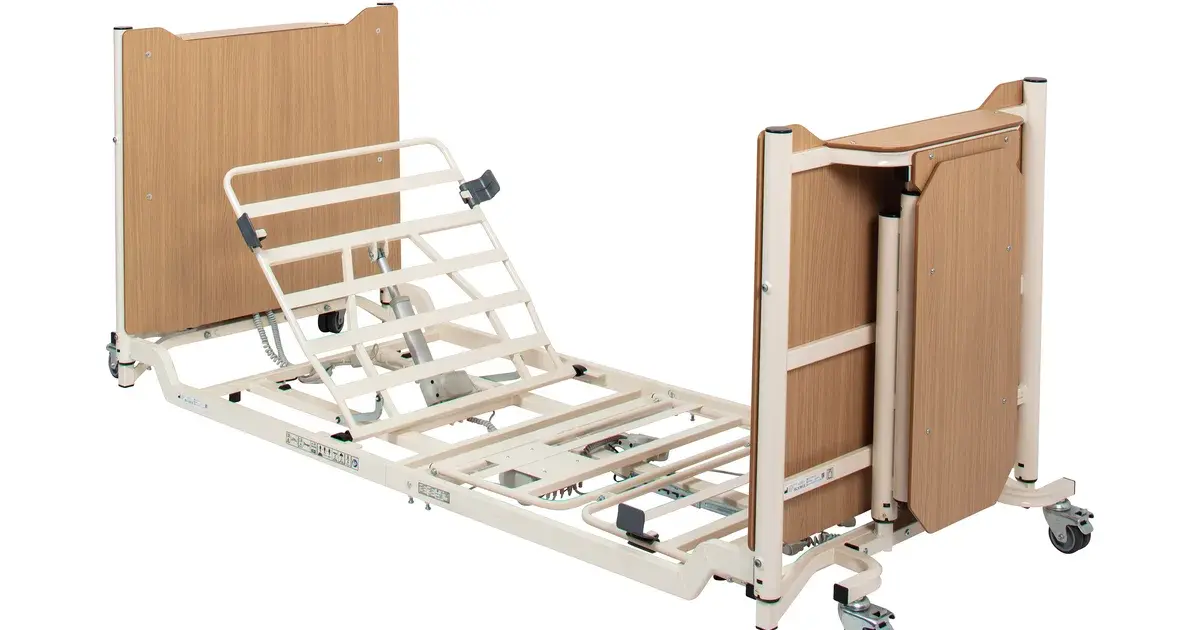
Low Height Solite Bed Foot Deck Assembly w/Curved Ends

C$0.00
3+ Day Shipping
In store: Check availability

Available in store

SKU: 15006HEADDECK

Replacement foot section deck assembly for Solite low-height hospital beds. Reinforced steel platform with curved ends supports the mattress under the patient's legs and feet while articulating smoothly through the full foot elevation range.

    • Why the Foot Deck Assembly Is the Mattress Support Boundary and the Articulation Geometry Component of the Solite Low Height Bed Simultaneously

      The foot deck assembly on a Solite low-height hospital bed serves two structurally distinct functions that are both essential to the bed's clinical and mechanical performance, and that a single deck component must satisfy simultaneously. The first function is mattress support: the foot deck is the rigid platform that carries the distributed weight of the mattress and the patient's lower body load across the full width of the foot section. A hospital bed mattress in clinical use transfers the patient's leg and foot weight — a load that shifts significantly during repositioning, Fowler's position changes, and lower limb elevation — into the deck surface across the mattress contact area. A foot deck that has cracked, bent, or developed structural fatigue at the frame mounting points can no longer distribute this load uniformly across the deck surface, concentrating it at the intact structural elements and introducing deflection that the mattress surface reflects as an uneven support profile beneath the patient's lower limbs. The foot deck assembly is therefore not a passive platform — it is the mattress support boundary that determines whether the foot section maintains the correctly supported surface that lower limb positioning and pressure distribution require.

      The second function the foot deck assembly must satisfy simultaneously is articulation geometry through the foot elevation range. Solite low-height beds include a powered or manual foot elevation mechanism that raises and lowers the foot deck through a defined arc, and the deck must follow this arc without binding, misalignment, or contact with the bed frame side rails at any elevation angle. The curved end design of the foot deck assembly is the geometric feature that allows the deck to articulate through its full elevation range while maintaining clearance from the frame components at the deck's lateral ends. A replacement deck without the correct curved end geometry — or with a curved end radius that does not match the Solite frame's foot section articulation arc — contacts the frame side rails at intermediate elevation angles, binding the mechanism and preventing smooth foot elevation adjustment. The curved end specification is therefore a functional articulation requirement for the Solite frame geometry, not a cosmetic design detail.

      The reinforced steel construction of the Solite foot deck assembly addresses the specific loading conditions that hospital bed foot decks experience in clinical use. The deck is subjected not only to the static distributed load of the mattress and patient lower body weight, but also to the dynamic load cycling of repeated foot elevation adjustments and the localised load concentrations that lower limb positioning aids and heel protection devices introduce at specific deck locations. A deck material that fatigues under this cyclic and localised loading develops micro-cracking at the high-stress geometry points — the frame mounting attachment locations and the mid-span regions of unsupported deck width — before visible deformation occurs, reducing the deck's residual load capacity without providing a visible warning of structural compromise. The reinforced steel specification is a functional requirement for deck service life under the combined static, cyclic, and localised loading of active clinical use.

      The OEM-style replacement specification of the Solite foot deck assembly addresses the dimensional precision required for correct installation within the Solite bed frame. The deck's frame mounting hole pattern, lateral width, longitudinal depth, and curved end radius are all specified to the dimensions that allow the deck to seat correctly within the Solite frame rail channels, engage the foot elevation mechanism at the correct pivot geometry, and clear the footboard and side rail components through the full elevation range. A non-OEM deck that does not match these dimensions introduces installation misalignment that affects articulation smoothness, mechanism load, and frame contact clearance in ways that manifest as operational problems under clinical use conditions.

      KEY FEATURES

      • Curved end design — lateral end geometry matched to the Solite low-height bed frame's foot section articulation arc, maintaining clearance from frame side rails and footboard components through the full foot elevation range without binding or contact at intermediate angles
      • Reinforced steel deck construction — structural specification selected for resistance to the combined static lower body load, cyclic flexural loading of repeated foot elevation adjustments, and localised load concentrations from positioning aids across the service life of an active clinical bed
      • Full-width mattress support platform — deck surface spans the complete foot section width to distribute mattress and patient lower body load uniformly, preventing the load concentration and surface deflection that a structurally compromised deck introduces beneath the patient's legs and feet
      • OEM-style frame mounting geometry — mounting hole pattern, lateral width, and deck depth match the Solite frame rail channel specification, ensuring correct foot elevation pivot engagement and component clearance after replacement
      • Compatible with Solite foot elevation mechanism — deck geometry restores smooth powered or manual foot elevation adjustment without mechanism binding or increased drive load from deck-to-frame contact

      BENEFITS

      • Restores uniform mattress support across the foot section — replacing a cracked, bent, or fatigue-compromised deck before the bed is placed in clinical use, removing the uneven support profile that a structurally degraded deck introduces beneath the patient's lower limbs
      • Curved end geometry restores smooth foot elevation articulation — eliminating the mechanism binding and frame contact that an incorrect or damaged end geometry produces at intermediate elevation angles
      • Reinforced steel construction extends replacement deck service life under combined static, cyclic, and localised loading — resisting the fatigue micro-cracking at mounting attachment points that a lower-specification material would develop
      • OEM-style dimensional specification ensures correct installation within the Solite frame — restoring foot elevation pivot geometry and component clearance that a non-OEM deck cannot guarantee
      • Component-level deck replacement extends the bed's service life without replacing the frame rails, elevation mechanism, headboard assembly, or base structure

      TYPICAL APPLICATIONS

      Structural damage replacement — immediate foot deck replacement when cracking, bending, or mounting point failure has compromised the deck's load-bearing capacity, restoring uniform mattress support before the bed is returned to clinical use

      Articulation failure replacement — replacement when curved end damage or deformation has introduced binding in the foot elevation mechanism, identified by resistance to elevation adjustment or frame contact at intermediate elevation angles

      Fatigue wear replacement — replacement when cyclic flexural loading has produced visible deck deflection under patient load or identified micro-cracking at mounting attachment points during routine maintenance inspection

      Bed refurbishment — foot deck inspection and replacement when a Solite low-height bed is recommissioned after storage or transfer between care environments, confirming structural integrity and articulation clearance before the bed enters active clinical use

      Scheduled maintenance replacement — deck inspection and replacement as part of bed frame service intervals in hospitals and long-term care facilities, confirming load-bearing capacity and foot elevation mechanism function before the next patient placement

    • No reviews yet

      Add yours

    Testimonials from Google

    See all reviews

    Your cart — 0

    You cart is currently empty

    Login

    By using our website, you agree to the use of cookies. These cookies help us understand how customers arrive at and use our site and help us make improvements. Hide this message More on cookies »