
Slideshow Items

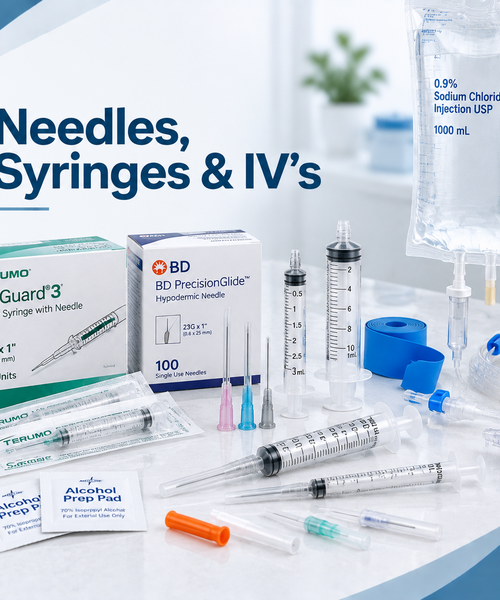
  • Needles, Syringes & IV's
  • needles-syringes-ivs
MedLine

  |  

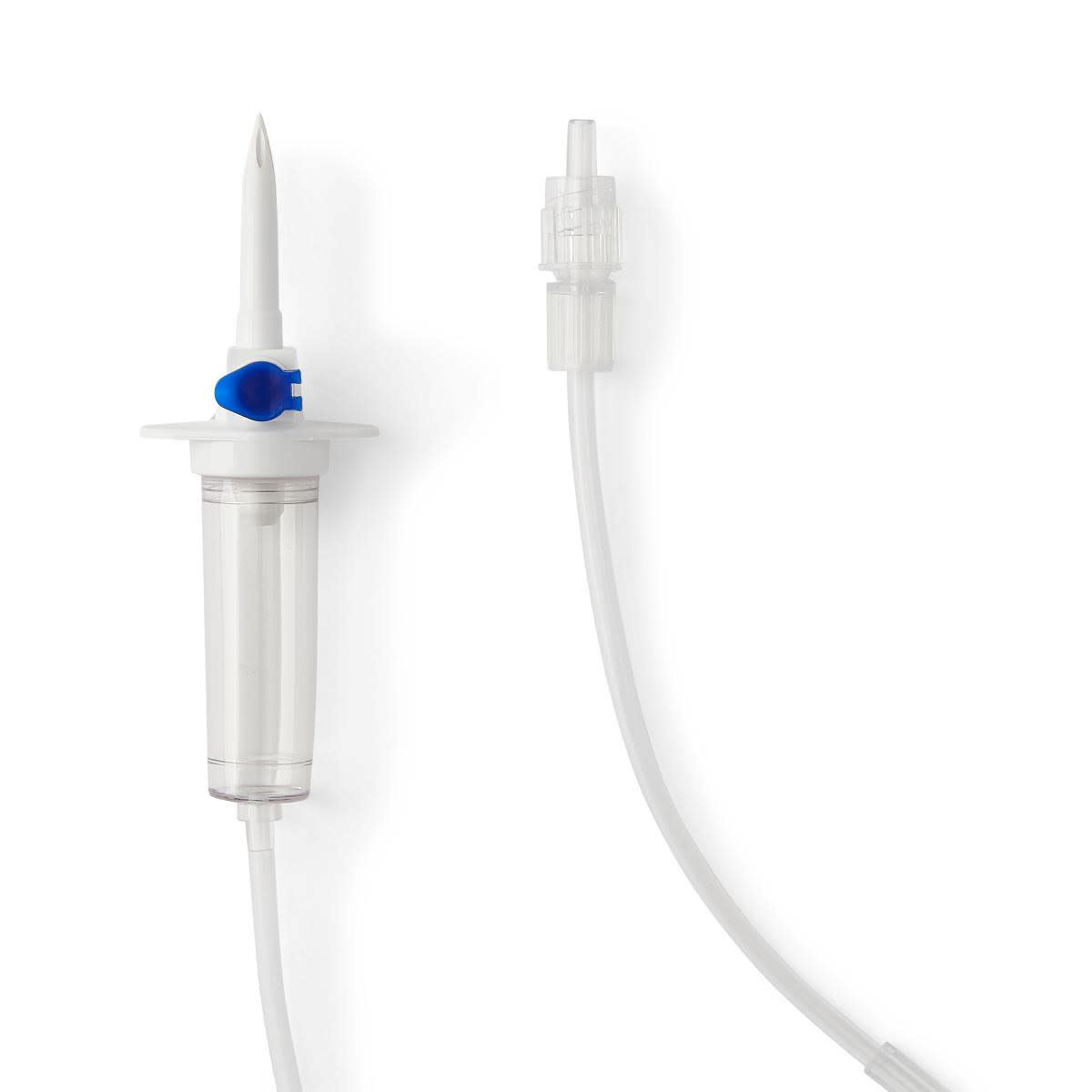
Medline IV Administration Set With 2 Injection Sites 15 Drops/ML 92" Length 50/Bx

C$250.00
Out of stock online
In store: Check availability

Available in store

SKU: DYNDTA1812

Administration Sets deliver reliable gravity-fed intravenous therapy with precise flow control and convenient medication access. The 92-inch tubing with dual injection sites supports versatile clinical applications in hospital and outpatient settings.

    • Why 15 Drops/mL Macrodrip with 92-Inch Tubing for Versatile IV Therapy

      The 15 drops/mL (macrodrip) drip chamber is specifically calibrated for standard IV fluid administration, making flow rate calculations straightforward for healthcare providers (flow rate in mL/hr ÷ 4 = drops per minute approximately) while delivering adequate volumes for hydration, maintenance fluids, and routine medication infusions. The 92-inch (234 cm) tubing length provides exceptional flexibility for patient positioning and movement—essential for ambulatory patients, bariatric beds, stretchers in emergency departments, and situations where IV poles must be positioned at distance from the patient. Dual injection sites (Y-sites or ports) eliminate the need to disconnect the primary IV line when administering secondary medications, reducing infection risk and maintaining continuous fluid therapy while accommodating multiple medication schedules. The roller clamp enables precise manual flow rate adjustment without electronic pumps, making this set ideal for gravity-fed infusions in resource-limited settings, transport situations, or as backup when IV pumps are unavailable. Universal spike compatibility ensures reliable connection to standard IV solution bags and glass bottles, while the clear drip chamber allows visual confirmation of fluid flow and early detection of air bubbles before they reach the patient.

      Key Features & Benefits

      Key Features:

      • 15 drops/mL drip rate (macrodrip chamber) for standard IV fluid delivery
      • 92-inch (234 cm) tubing length for extended reach and patient mobility
      • Two injection sites (Y-ports) for medication administration without disconnection
      • Clear drip chamber for visual flow monitoring and air detection
      • Roller clamp for precise manual flow rate control
      • Universal spike compatible with IV bags and bottles
      • Luer Lock or Luer Slip connector (product dependent) for catheter attachment
      • Vented spike option for rigid IV bottles (non-vented for bags)
      • Sterile, individually packaged in protective overwrap
      • Single-use, disposable design prevents cross-contamination
      • Latex-free construction for allergy safety
      • DEHP-free materials (check specific product line)
      • Flexible, kink-resistant tubing maintains consistent flow
      • Transparent tubing allows fluid visualization
      • Backcheck valve prevents backflow (if equipped)
      • Air-eliminating filter option on some models
      • Meets ISO and FDA standards for IV administration sets

      Benefits:

      • Macrodrip chamber appropriate for most routine IV therapies
      • Extra-long tubing accommodates various bed types and patient positions
      • Dual injection sites support complex medication regimens
      • Gravity-fed operation requires no electronic equipment
      • Visual drip chamber enables quick flow verification
      • Roller clamp allows precise flow adjustment without pumps
      • Universal spike fits standard IV containers
      • Sterile packaging ensures infection control
      • Single-use design eliminates sterilization needs
      • Latex-free protects sensitive patients and staff
      • Kink-resistant tubing reduces flow interruptions
      • Clear materials enable air bubble detection
      • Cost-effective for high-volume clinical use
      • Reliable Medline quality at competitive pricing

      Clinical Applications

      Medline IV Administration Sets are appropriate for:

      ✓ Maintenance IV fluid therapy (normal saline, lactated Ringer's, D5W) ✓ Hydration therapy for dehydrated patients ✓ Electrolyte replacement and correction ✓ Antibiotic administration via IV piggyback ✓ IV push medications through injection ports ✓ Pain management medication infusions ✓ Blood transfusion (verify blood-compatible set) ✓ Continuous medication infusions (heparin, insulin, vasopressors with pump) ✓ Pre-operative and post-operative fluid management ✓ Emergency department stabilization and rehydration ✓ Labor and delivery IV access ✓ Chemotherapy administration (verify compatibility) ✓ Total parenteral nutrition (TPN) delivery with pump ✓ Contrast media administration for imaging ✓ Keep-vein-open (KVO) rate maintenance ✓ Pediatric IV therapy (calculate drops carefully for weight-based rates) ✓ Geriatric IV hydration and medication delivery ✓ Home healthcare IV therapy

      Usage & Application

      Pre-Setup Preparation:

      1. Verify order and solution:
        • Confirm IV fluid type, additives, rate, and duration ordered
        • Check patient identity and allergies
        • Verify solution matches order (name, concentration, additives)
        • Inspect IV solution bag/bottle for clarity, expiration, leaks, particles
      2. Gather supplies:
        • Medline IV administration set (verify package intact, not expired)
        • IV solution bag or bottle
        • IV pole or hanging device
        • Alcohol swabs
        • Clean gloves
        • Tape or securement device
        • Label for IV tubing (date/time initiated)
        • Protective pads if needed
      3. Hand hygiene:
        • Wash hands thoroughly for at least 20 seconds
        • Or use alcohol-based hand sanitizer
        • Don clean gloves
      4. Inspect IV set package:
        • Check for tears, moisture, or damage
        • Verify expiration date
        • Ensure sterile overwrap intact
        • Discard if compromised

      Opening and Preparing IV Set:

      1. Open sterile package:
        • Tear open protective overwrap using designated tear notch
        • Remove IV tubing while maintaining sterility of spike and patient connector
        • Do not touch spike tip or connector end
      2. Close roller clamp:
        • CRITICAL: Slide roller clamp downward (toward drip chamber) to fully closed position
        • This prevents air from entering tubing during priming
        • Verify clamp is completely closed before proceeding
      3. Prepare IV solution container:
        • For IV bags: Remove protective cover from IV bag port
        • For glass bottles: Remove metal cap and rubber disc; verify vented spike if using rigid bottle
        • Inspect port for damage or contamination

      Spiking the IV Container:

      1. Remove spike cover:
        • Twist off protective cap from spike while maintaining spike sterility
        • Do not touch spike tip
      2. Insert spike into IV container:
        • For IV bags: Hold bag upright; insert spike straight into port with firm, twisting motion until fully seated
        • For glass bottles: Insert vented spike through rubber stopper until fully inserted
        • Ensure spike is secure and not leaking
      3. Hang IV container:
        • Hang IV bag/bottle on IV pole at appropriate height (typically 36 inches above IV site for adequate gravity flow)
        • Ensure bag hangs properly without kinks

      Priming the IV Tubing:

      1. Squeeze drip chamber:
        • Squeeze drip chamber gently until it fills to approximately 1/3 to 1/2 full
        • This level allows you to see drops falling during infusion
        • Do not overfill (prevents accurate drop counting)
        • Release chamber and allow it to fill to correct level
      2. Remove air from tubing:
        • Hold patient connector end over sink or waste container
        • Keep connector end covered with protective cap
        • Slowly open roller clamp (slide upward toward IV bag)
        • Allow fluid to flow through entire length of tubing
        • Watch for air bubbles traveling through tubing
        • Hold tubing vertically with connector pointing down to help air rise and escape
      3. Tap to remove stubborn air bubbles:
        • If air bubbles trapped in tubing, tap tubing gently to dislodge
        • Flick tubing to move bubbles toward drip chamber or connector end
        • Continue flushing until all visible air expelled
      4. Prime injection sites:
        • Open each injection site cap briefly
        • Allow small amount of fluid to flow through to remove air from ports
        • Recap ports immediately
        • Verify both injection sites are primed
      5. Close roller clamp:
        • Once tubing completely primed and air-free, close roller clamp
        • Keep protective cap on connector end until ready to attach to patient

      Calculating and Setting Flow Rate:

      Formula for 15 drops/mL set:

      Drops per minute = (Total volume in mL × 15 drops/mL) ÷ Time in minutes

      Simplified: Drops per minute ≈ mL per hour ÷ 4

      Example calculations:

      1. Order: 1000 mL over 8 hours
        • mL/hr = 1000 mL ÷ 8 hr = 125 mL/hr
        • Drops/min = 125 ÷ 4 = approximately 31 drops/min
      2. Order: 500 mL over 4 hours
        • mL/hr = 500 mL ÷ 4 hr = 125 mL/hr
        • Drops/min = 125 ÷ 4 = approximately 31 drops/min
      3. Order: 100 mL/hr
        • Drops/min = 100 ÷ 4 = 25 drops/min
      4. KVO (keep vein open) rate: typically 20-30 mL/hr
        • Drops/min = 20-30 ÷ 4 = 5-8 drops/min

      Connecting to Patient IV Catheter:

      1. Verify IV catheter patency:
        • Check that IV site is patent, no signs of infiltration or phlebitis
        • Flush IV catheter with saline if needed to confirm patency
      2. Prepare connection:
        • Clean IV catheter hub with alcohol swab (15-second scrub)
        • Allow to air dry completely
      3. Connect IV tubing:
        • Remove protective cap from IV set connector
        • For Luer Lock: Attach to catheter hub and twist clockwise until secure
        • For Luer Slip: Push firmly onto catheter hub until seated
        • Ensure connection is secure with no gaps or looseness
      4. Open roller clamp to start infusion:
        • Slowly open roller clamp by sliding upward
        • Watch drip chamber to see drops falling
        • Count drops per minute using watch with second hand
      5. Adjust flow rate:
        • Adjust roller clamp up or down until achieving desired drops per minute
        • Count drops for full 60 seconds (or 15 seconds and multiply by 4)
        • Fine-tune clamp position as needed
        • Recount to verify accuracy

      Securing and Labeling:

      1. Secure tubing:
        • Create strain-relief loop near IV site
        • Tape loop to prevent tugging on catheter
        • Ensure tubing not kinked or under tension
      2. Label IV tubing:
        • Apply label near drip chamber with:
          • Date and time IV initiated
          • Initiator's initials
          • Rate if not using pump
        • Per facility protocol, may also label with solution type
      3. Position IV pole:
        • Ensure adequate height for gravity flow (36 inches minimum above IV site)
        • Secure pole if mobile/ambulatory patient
        • Keep tubing organized and untangled

      Using Injection Sites for Medication Administration:

      IV Push Medications:

      1. Verify compatibility: Ensure medication compatible with primary IV fluid
      2. Stop or slow primary infusion: Close roller clamp or slow to KVO rate per protocol
      3. Clean injection site: Scrub port with alcohol for 15 seconds, allow to dry
      4. Attach medication syringe: Insert syringe into injection port
      5. Administer medication: Push medication at prescribed rate (some require slow push over several minutes)
      6. Flush: Remove syringe, resume primary IV at prescribed rate (flush effect clears medication)
      7. Document: Record medication, dose, time, route, patient response

      IV Piggyback (Secondary Medications):

      1. Prepare secondary medication: Draw up medication or use pre-mixed piggyback bag
      2. Clean injection site: Scrub higher port (closer to IV bag) with alcohol
      3. Attach secondary tubing: Connect secondary IV set to injection port via needle or needleless connector
      4. Adjust heights:
        • Hang secondary medication bag higher than primary IV bag
        • This creates backpressure to pause primary while secondary infuses
      5. Open secondary clamp: Allow secondary medication to infuse at prescribed rate
      6. Monitor: When secondary complete, primary IV automatically resumes (if using backcheck valve)
      7. Remove secondary set: Disconnect when complete, clean port, resume monitoring primary

      Monitoring During Infusion:

      1. Check IV site regularly:
        • Assess every 1-2 hours (more frequently for high-risk medications)
        • Look for: swelling, redness, coolness, pain, leakage
        • Palpate for tenderness or firmness
        • Compare to opposite extremity
      2. Verify flow rate:
        • Recount drops per minute every 1-2 hours
        • Flow rates can slow over time due to:
          • Patient position changes
          • Clamp drift
          • Catheter occlusion
          • Tubing kinks
      3. Monitor drip chamber level:
        • Should remain 1/3 to 1/2 full
        • If too full: squeeze excess back into IV bag
        • If too empty: squeeze chamber to refill
      4. Inspect tubing:
        • Check for kinks, compression, or disconnections
        • Ensure tubing not caught in bed rails or under patient
        • Verify all connections secure
      5. Assess patient tolerance:
        • Monitor for fluid overload signs (dyspnea, crackles, edema)
        • Watch for allergic reactions to medications
        • Verify patient comfortable and IV not restricting movement

      Changing IV Tubing:

      Standard practice: Change IV administration sets every 96 hours (per CDC guidelines) unless:

      • Contamination suspected
      • Set integrity compromised
      • Blood products administered (change after each unit or per protocol)
      • Lipid emulsions (change every 24 hours)
      • Propofol (change every 6-12 hours per protocol)

      Procedure:

      1. Prepare new IV set: Prime new tubing completely, label with date/time
      2. Close roller clamp on old set: Stop infusion temporarily
      3. Clean catheter hub: Scrub with alcohol for 15 seconds
      4. Quick disconnect/reconnect:
        • Quickly disconnect old tubing
        • Immediately connect new tubing
        • Minimize time catheter hub exposed to air (infection risk)
      5. Resume infusion: Open new tubing clamp to prescribed rate
      6. Dispose of old set: Discard in appropriate waste container
      7. Document: Record tubing change date/time

      Discontinuing IV:

      1. Verify order to discontinue
      2. Close roller clamp: Stop infusion
      3. Prepare supplies: Gauze, tape, gloves
      4. Hand hygiene and don gloves
      5. Stabilize catheter hub: Hold hub in place while removing IV tubing
      6. Disconnect tubing: Twist and pull to separate
      7. Decision point:
        • If IV catheter staying: Cap catheter with sterile cap, flush with saline per protocol
        • If removing catheter: Remove catheter, apply pressure, cover with bandage
      8. Dispose of IV set: Discard entire set in appropriate waste container
      9. Document: Record discontinuation time, IV site condition

      Troubleshooting:

      No fluid dripping (no flow):

      • Check roller clamp: Ensure clamp is open
      • Check catheter: May be occluded—attempt to flush gently with saline
      • Check tubing: Look for kinks, closed clamps, tubing caught under patient
      • Check IV height: Ensure bag at least 36 inches above IV site
      • Check catheter position: Patient arm position may be occluding catheter—reposition
      • Assess for infiltration: IV may have infiltrated—assess site, discontinue if needed

      Flow rate too fast or too slow:

      • Recount drops: May have miscounted initially
      • Adjust roller clamp: Fine-tune clamp position
      • Check patient position: Arm elevation/lowering affects flow
      • Verify calculation: Recalculate drops per minute needed
      • Check for partial occlusion: May have fibrin buildup in catheter

      Drip chamber too full:

      • Close roller clamp
      • Invert IV bag (spike pointing up)
      • Squeeze drip chamber to push excess fluid back into bag
      • Rehang bag normally
      • Resume infusion

      Drip chamber too empty:

      • Squeeze drip chamber while IV bag hangs normally
      • Release and allow chamber to fill to 1/3-1/2 level
      • Resume infusion

      Air in tubing:

      • Small bubbles: Usually not harmful but remove when possible
        • Flick tubing to move bubbles upward toward drip chamber
        • Bubbles collect in drip chamber (air trap function)
      • Large air column:
        • Close roller clamp immediately
        • Disconnect at injection site closest to air
        • Flush air out through disconnected end
        • Reconnect and resume infusion
      • Prevent: Always prime tubing completely before starting infusion

      Leaking at connections:

      • Check Luer Lock: Tighten by twisting clockwise
      • Check Luer Slip: Push firmly to ensure full connection
      • Check for cracks: Inspect hub and connector for damage
      • Replace if damaged: Disconnect and replace IV set if cracked

      Infiltration (swelling, coolness, pain at IV site):

      • Stop infusion immediately
      • Disconnect IV
      • Remove catheter
      • Elevate extremity
      • Apply warm or cold compress per protocol
      • Document infiltration volume and appearance
      • Restart IV in different location (preferably opposite arm)

      Phlebitis (redness, warmth, tenderness along vein):

      • Discontinue IV
      • Apply warm compress
      • Document using phlebitis scale
      • Restart IV in different location
      • Monitor site for progression

      Backflow of blood into tubing:

      • May indicate:
        • IV bag empty or nearly empty
        • Catheter tip against vein wall
        • Patient arm positioned above IV bag level
      • Lower patient's arm below heart level temporarily
      • Replace empty IV bag
      • Flush tubing with new fluid to clear blood
      • Blood in tubing doesn't necessarily require set change unless clotted

      Special Considerations:

      Pediatric patients:

      • Use extreme care with flow rate calculations (weight-based dosing)
      • Consider microdrip set (60 drops/mL) for very precise small volumes
      • Monitor very closely for fluid overload (small circulating volume)
      • Secure tubing well (children pull at IV lines)
      • May need pump for precise delivery (gravity too variable)

      Geriatric patients:

      • Increased risk of fluid overload (decreased cardiac/renal function)
      • Monitor carefully for pulmonary edema signs
      • Fragile veins—assess IV site frequently
      • May need slower rates than younger adults
      • Assess mobility needs (long tubing beneficial)

      Critically ill patients:

      • Typically require IV pumps for precise delivery (not gravity sets)
      • Multiple IV lines often needed (multiple drips)
      • Higher infection risk—use strict aseptic technique
      • Monitor closely for complications

      Ambulatory patients:

      • 92-inch tubing allows movement to bathroom, around room
      • Secure tubing to prevent dislodgement during ambulation
      • Teach patient to:
        • Keep IV bag above heart level when ambulating
        • Avoid pulling on tubing
        • Report pain, swelling, or wetness immediately
        • Use IV pole wheels carefully to prevent falls

      Patients on fluid restriction:

      • Calculate precisely—gravity flow less accurate than pumps
      • Consider pump for fluid-restricted patients
      • Account for IV medication volumes in total fluid intake
      • Use KVO rates between medications (minimize fluid volume)

      Patients receiving blood products:

      • Verify set is appropriate for blood (larger bore, filter)
      • Many facilities require dedicated blood administration sets
      • Follow strict blood transfusion protocols
      • Monitor closely for transfusion reactions

      Transport situations:

      • Gravity sets useful when transporting patients without portable pumps
      • Maintain adequate IV bag height during transport
      • Secure all connections before moving patient
      • Monitor flow during transport (bumps can alter rate)

      Home healthcare:

      • Teach patient/caregiver proper monitoring techniques
      • Provide written instructions for flow rate adjustment
      • Ensure adequate IV pole in home
      • Arrange for supply delivery and sharps disposal
      • Schedule regular nursing visits to assess and change sets

      Storage:

      • Store at room temperature in clean, dry area
      • Protect from direct sunlight and extreme temperatures
      • Keep in original packaging until use
      • Organize by expiration date (FIFO method)
      • Inspect packages before use—discard if damaged
      • Typical shelf life: 3-5 years (check individual packages)

      Infection Control:

      • Always use aseptic technique when handling IV sets
      • Never reuse IV administration sets (single-use only)
      • Change sets per protocol (typically every 96 hours)
      • Scrub injection ports with alcohol before each access
      • Use closed system for medication administration when possible
      • Never use sets from damaged packages
      • Maintain sterility during spiking and connection procedures

      When to Contact Provider:

      • IV site shows signs of infection (increasing redness, warmth, purulent drainage)
      • Suspected infiltration or phlebitis
      • Unable to establish adequate flow despite troubleshooting
      • Patient develops signs of fluid overload
      • Allergic reaction to IV fluid or medication
      • Air embolism suspected (chest pain, dyspnea, hypotension after air in line)
      • Equipment malfunction or defect

      Technical Specifications

      Product Details:

      • Manufacturer: Medline Industries, Inc.
      • Product Type: IV administration set for gravity infusion
      • Drip Rate: 15 drops/mL (macrodrip chamber)
      • Tubing Length: 92 inches (234 cm)
      • Injection Sites: Two Y-sites or injection ports
      • Drip Chamber: Clear, graduated for flow visualization
      • Flow Control: Roller clamp for manual rate adjustment
      • Spike: Universal spike compatible with IV bags and bottles
      • Spike Type: Vented (for rigid bottles) or non-vented (for bags)—product specific
      • Patient Connector: Luer Lock or Luer Slip (product dependent)
      • Tubing Material: Medical-grade PVC or polyethylene
      • Chamber Material: Clear polycarbonate or acrylic
      • Latex Content: Latex-free (no natural rubber latex)
      • DEHP Content: Check specific product line (DEHP-free options available)
      • Backcheck Valve: May be included (prevents backflow)
      • Filter: Air-eliminating filter on some models
      • Sterility: Sterile, individually packaged
      • Sterilization Method: Ethylene oxide (EtO) or gamma radiation
      • Expiration: Typically 3-5 years from manufacture date
      • Packaging: Individual sterile overwrap
      • Box Quantity: Varies (typically 50-100 sets per case)
      • Intended Use: Gravity IV fluid and medication administration
      • Flow Rate Range: 0-999 mL/hr (depending on clamp adjustment and IV height)
      • Patient Population: All ages (with appropriate rate calculations)
      • Regulatory Status: FDA-cleared medical device, Class II
      • Standards Compliance: ISO 8536 (infusion equipment for medical use)
      • Country of Origin: Varies (check package labeling)
    • No reviews yet

      Add yours

    Testimonials from Google

    See all reviews

    Your cart — 0

    You cart is currently empty

    Login

    By using our website, you agree to the use of cookies. These cookies help us understand how customers arrive at and use our site and help us make improvements. Hide this message More on cookies »