
Why 1 mL Capacity with Luer Lock Connection for Precision Small-Dose Delivery
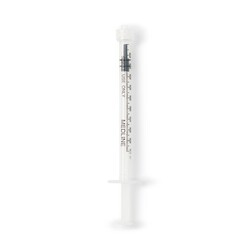
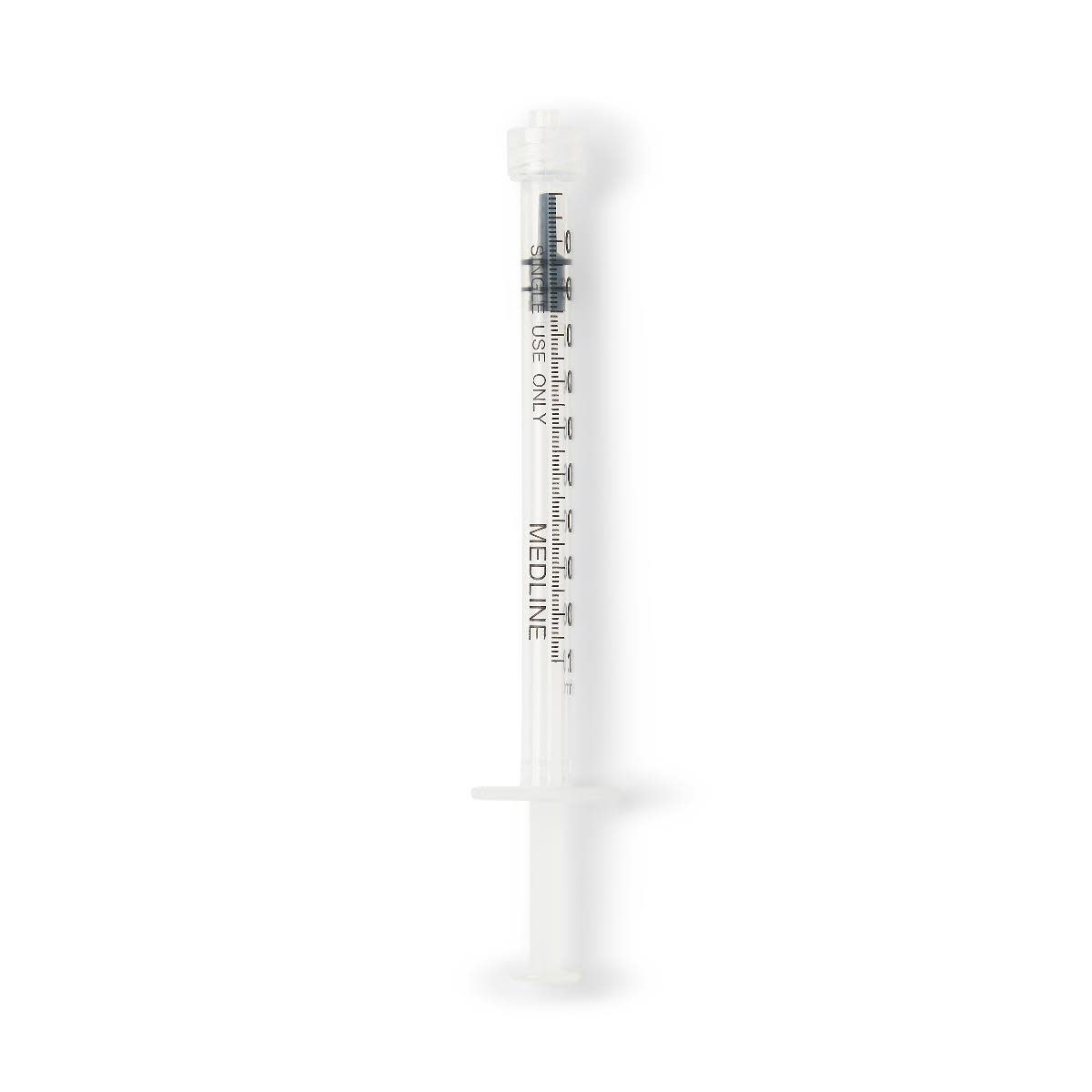
The 1 mL (1 cc) barrel capacity provides the precision essential for accurate measurement and delivery of small medication doses where even minor volume errors could cause therapeutic failure or toxicity—particularly critical for high-alert medications like insulin, anticoagulants, concentrated opioids, pediatric weight-based dosing, and any situation where the therapeutic window is narrow and precise titration determines clinical outcomes, while the compact barrel length and fine graduation markings (typically 0.01 mL increments) enable visual dose verification superior to larger syringes where the same volume represents a smaller, less discernible distance on the barrel scale. The Luer Lock threaded tip connection provides mechanical security through twist-to-lock engagement that prevents the accidental needle or device disconnection catastrophic during procedures like intradermal tuberculin testing where needle separation would invalidate results, intravenous medication administration where disconnection compromises sterility and dose delivery, or administration of high-alert drugs where any medication loss creates dosing uncertainty requiring procedure restart—the physical barrier created by threaded connection proves especially important during patient movement, procedures involving pulling forces on attached devices, or any high-stakes injection where the consequences of mid-administration disconnection include medication waste, contamination, patient harm, or procedure failure. The combination of 1 mL precision capacity with Luer Lock security makes this syringe the standard choice for tuberculin skin testing, allergy testing, intradermal injections, small-volume IV push medications, pediatric dosing, and any application where measurement accuracy and connection reliability simultaneously determine procedure success and patient safety.
Key Features & Benefits
Key Features:
- 1 mL (1 cc) barrel capacity for precise small-dose measurement
- Luer Lock threaded tip connection
- Clear transparent polypropylene barrel
- Fine graduation markings (typically 0.01 mL increments)
- Bold numbers for easy reading
- Smooth-gliding plunger for controlled delivery
- Positive plunger stop prevents accidental removal
- Retaining ring secures plunger in barrel
- Latex-free construction (no natural rubber latex)
- Sterile, individually packaged
- Single-use, disposable design
- Without attached needle (sold separately)
- Medical-grade materials
- Pyrogen-free
- Non-toxic
- Meets USP and ISO quality standards
Benefits:
- 1 mL size enables precise small-dose measurement
- Ideal for high-alert medications requiring accuracy
- Fine graduations improve dose precision
- Luer Lock ensures secure needle attachment
- Threaded connection prevents accidental disconnection
- Safe for critical procedures and medications
- Compatible with all Luer Lock needles and devices
- Clear barrel allows dose verification and air bubble detection
- Bold markings facilitate accurate reading
- Smooth plunger enables precise, controlled injection
- Positive stop prevents dose errors from plunger removal
- Latex-free protects sensitive patients and healthcare workers
- Sterile packaging ensures infection control
- Single-use prevents cross-contamination
- Compact size provides excellent handling control
- Trusted quality for critical applications
Clinical Applications
1 mL Luer Lock Syringes are appropriate for:
✓ Tuberculin skin testing (Mantoux test) ✓ Allergy testing (intradermal) ✓ Intradermal injections ✓ High-alert medication administration (small doses) ✓ Insulin administration (if not using insulin syringe) ✓ Anticoagulant administration (small doses) ✓ Pediatric medication administration (weight-based dosing) ✓ IV push medications (small volumes) ✓ Vaccine administration (small dose vaccines) ✓ Local anesthetic administration (small volumes) ✓ Ophthalmic procedures ✓ Dental anesthesia ✓ Botulinum toxin injections (small doses) ✓ Laboratory procedures requiring precise volumes ✓ Medication dilution and preparation ✓ Neonatal and infant medication administration ✓ Any application requiring precise 1 mL or less volume
Usage & Application
IMPORTANT: Syringes should be used by trained healthcare professionals or patients/caregivers specifically instructed by healthcare providers.
Pre-Use Inspection:
- Check package integrity:
- Verify sealed package intact
- Check for damage or punctures
- Discard if package compromised
- Inspect syringe:
- Check expiration date
- Verify 1 mL capacity
- Ensure Luer Lock tip undamaged
- Check barrel clear with readable markings
- Verify plunger moves smoothly
- Discard if any defects
- Verify appropriate use:
- Confirm dose ≤1 mL
- Check that precision measurement required
- Ensure Luer Lock connection needed
Opening Package:
- Peel open sterile package:
- Open carefully
- Do NOT touch syringe tip
- Do NOT touch plunger tip
- Remove syringe:
- Hold by barrel
- Maintain sterility of Luer Lock tip
Attaching Needle:
- Select appropriate needle:
- Verify Luer Lock compatible (threaded hub)
- Choose gauge and length per procedure
- For intradermal: 25G-27G × 3/8"-1/2"
- For subcutaneous: 25G-27G × 5/8"
- For IM (pediatric): 22G-25G × appropriate length
- Attach to Luer Lock tip:
- Remove tip cap from syringe
- Hold syringe barrel firmly
- Align needle hub threads with syringe tip threads
- Push hub onto tip
- Twist clockwise while pushing until firmly seated
- Should feel secure "lock"
- Tug gently to verify won't separate
- Remove needle shield:
- Pull straight off
- Do NOT touch needle
Drawing Medication:
General principles for 1 mL syringe:
- Precision critical with small volumes
- Read carefully at eye level
- Use good lighting
- Verify dose multiple times
From vials:
- Prepare vial:
- Check medication name, concentration, expiration
- Calculate volume carefully:
- Example: Need 0.5 mL of medication
- Verify concentration (e.g., 1 mg/mL)
- Calculate: 0.5 mg ÷ 1 mg/mL = 0.5 mL
- Clean stopper with alcohol
- Draw air:
- Pull plunger to desired volume
- 1 mL syringe: Very precise plunger control needed
- Insert and withdraw:
- Insert needle into vial
- Inject air
- Invert vial
- Withdraw medication slowly
- Watch graduations carefully (0.01 mL increments)
- Remove air bubbles:
- Critical in 1 mL syringe (air takes up significant volume)
- Tap barrel gently
- Hold vertical with needle up
- Push plunger slowly to expel air
- Recheck dose after air removal
- Verify dose:
- Hold at eye level horizontally
- Read at top of plunger rubber (not rod top)
- 1 mL syringe allows precise ±0.01 mL measurement
- Double-check critical medications
Tuberculin Skin Testing (Mantoux Test):
Specific technique for TB testing:
- Prepare tuberculin:
- Draw 0.1 mL tuberculin PPD
- Extremely precise volume required
- Remove all air bubbles
- Select site:
- Volar (inner) forearm
- 2-4 inches below elbow crease
- Avoid areas with scars, veins
- Clean site:
- Alcohol swab, allow to dry completely
- Position needle:
- Use 25G-27G × 3/8"-1/2" needle
- Bevel UP (critical for intradermal)
- Hold syringe nearly parallel to skin (5-15 degree angle)
- Insert needle:
- Insert just under skin surface (intradermal)
- Bevel should be visible under skin
- Advance 1/8 inch
- Inject:
- Slowly inject 0.1 mL
- Should feel resistance (tight skin)
- Watch for wheal formation (pale raised area 6-10mm)
- If no wheal, injection too deep (repeat)
- Withdraw:
- Remove needle
- Do NOT massage (disperses antigen)
- Document:
- Date, time, site (left or right forearm)
- Lot number of tuberculin
- Schedule reading 48-72 hours
Intradermal Injections:
- Technique similar to TB test:
- Very shallow insertion
- Bevel up
- Nearly parallel to skin
- Should create wheal
- Volume:
- Typically 0.01-0.1 mL intradermal
- 1 mL syringe ideal for this precision
Subcutaneous Injections:
- Small-dose medications:
- Insulin (if not using insulin syringe)
- Low-molecular-weight heparin (small doses)
- Vaccines (0.5 mL typical)
- Technique:
- 45-90 degree angle
- Insert to appropriate depth
- Inject slowly
- Count 5-10 after injection
IV Push Medications:
- Small-volume IV medications:
- Many critical medications <1 mL
- High-alert drugs requiring precision
- Attach to IV port:
- Clean port with alcohol 15 seconds
- Twist Luer Lock onto port (secure connection)
- Inject per protocol
- Luer Lock prevents disconnection during injection
Pediatric Dosing:
- Weight-based calculations:
- Example: Child weighs 10 kg, dose 0.1 mg/kg
- Total dose: 10 kg × 0.1 mg/kg = 1 mg
- If concentration 10 mg/mL: Need 0.1 mL
- 1 mL syringe enables this precision
- Safety:
- Always verify calculations
- Have second person check dose
- Use appropriate needle size for child
Reading 1 mL Syringe Graduations:
Understanding markings:
- Major lines: Typically every 0.1 mL (0.1, 0.2, 0.3... 1.0)
- Minor lines: Typically every 0.01 mL
- Numbers: Usually marked at 0.1, 0.2, 0.3, etc.
Reading technique:
- Hold at eye level
- Horizontal position
- Read at top of black plunger rubber
- Estimate between lines if needed
- Good lighting essential
Examples:
- Plunger at first line past 0.5: 0.51 mL
- Plunger at third line past 0.2: 0.23 mL
- Plunger at 0.1 line exactly: 0.10 mL
Post-Use Care:
- Dispose immediately:
- Do NOT recap needle
- Place entire syringe with needle in sharps container
- Never reuse 1 mL syringes
- Remove gloves and hand hygiene
- Document:
- Medication, precise dose, route, site, time
- Patient tolerance
Troubleshooting:
Difficult to read markings:
- Use magnifying glass if needed
- Reading glasses
- Better lighting
- Have second person verify
Plunger difficult to move:
- May be defective—discard
- Do NOT force
Air bubbles won't come out:
- Critical to remove in 1 mL syringe
- Tap barrel firmly
- Flick with finger
- Hold vertical, push slowly
- May need to start over if persistent large bubble
Luer Lock won't tighten:
- May be cross-threaded
- Remove and reattach carefully
- Ensure straight alignment
Needle comes loose:
- May not be tightened enough
- Twist more firmly clockwise
- Luer Lock should be very secure
Cannot measure precise small volume:
- 1 mL syringe best for 0.1-1.0 mL
- For <0.1 mL: May need tuberculin syringe or insulin syringe
- Ensure using correct syringe size
Special Considerations:
High-alert medications:
- Insulin, anticoagulants, opioids, etc.
- Double-check dose calculations
- Independent verification by second person
- Use smallest appropriate syringe for precision
- 1 mL appropriate for many high-alert doses
Pediatric patients:
- Weight-based dosing common
- 1 mL syringe ideal for small pediatric doses
- Extra care with calculation
- Appropriate needle size for child's muscle/tissue
Neonatal/infant patients:
- Very small doses required
- 1 mL syringe often too large
- May need tuberculin syringe (0.5 mL) or insulin syringe
- Extreme precision required
Geriatric patients:
- May have vision difficulties
- Assistance with dose measurement may be needed
- Bold markings helpful
Home healthcare:
- Teach proper dose measurement
- Use good lighting
- Reading glasses if needed
- Provide written instructions
- Consider pre-filled syringes if available
Allergy testing:
- Multiple allergen injections
- 1 mL syringe standard for intradermal testing
- Very small volumes (0.01-0.05 mL typical)
- Precise measurement critical
Botulinum toxin:
- Extremely potent medication
- Very small doses
- 1 mL syringe appropriate after reconstitution
- Precise measurement critical for safety
Infection Control:
- Strict aseptic technique
- Never reuse 1 mL syringes
- Never share between patients
- Use new syringe for each medication/patient
- Maintain sterility of tip and plunger
Advantages of 1 mL Luer Lock:
1 mL capacity advantages:
- Precision measurement for small doses
- Fine graduations (0.01 mL)
- Easy to read small volumes
- Less medication waste
- Ideal for high-alert drugs
- Perfect for pediatric dosing
Luer Lock advantages:
- Secure threaded connection
- Prevents accidental disconnection
- Essential for critical medications
- Safer for IV push
- Required for many procedures
1 mL vs. Other Sizes:
vs. 3 mL or larger:
- 1 mL advantages:
- Much more precise for small doses
- Easier to read small volumes
- Better control for critical medications
- Larger syringe advantages:
- Can measure larger volumes
- May be adequate for less critical medications
vs. Insulin/Tuberculin syringes:
- 1 mL Luer Lock advantages:
- Luer Lock connection (more secure)
- Compatible with standard needles
- Versatile for various medications
- Insulin/Tuberculin advantages:
- Even finer graduations for insulin/TB testing
- Integrated needles (some models)
Luer Lock vs. Luer Slip:
Luer Lock advantages:
- Threaded secure connection
- Won't disconnect during procedure
- Essential for:
- TB testing
- IV push medications
- High-alert drugs
- Any critical connection
Storage:
- Store at room temperature
- Keep in original packaging until use
- Protect from damage
- Check expiration dates
- Rotate stock using FIFO
- Typical shelf life 5 years
When to Contact Provider:
- Questions about dose measurement
- Calculation verification needed
- Unable to perform procedure
- Complications occur
- Concerns about accuracy
Technical Specifications
Product Details:
- Product Type: Sterile disposable syringe without needle
- Capacity: 1 mL (1 cc)
- Tip Type: Luer Lock (threaded connection)
- Barrel Material: Clear medical-grade polypropylene
- Barrel Transparency: Transparent for dose visualization
- Graduation Markings: Fine, bold, permanent markings (typically 0.01 mL increments)
- Graduation Accuracy: ±5% (meets standards)
- Major Lines: Typically every 0.1 mL
- Minor Lines: Typically every 0.01 mL
- Numbers: Marked at 0.1, 0.2, 0.3, 0.4, 0.5, 0.6, 0.7, 0.8, 0.9, 1.0 mL
- Plunger Material: Latex-free elastomer
- Plunger Design: Smooth-gliding with positive stop
- Retaining Ring: Prevents accidental plunger removal
- Latex Content: Latex-free (no natural rubber latex)
- Pyrogen Content: Non-pyrogenic
- Sterility: Sterile until opened
- Sterilization Method: Ethylene oxide (EtO) or gamma radiation
- Needle Included: No (sold separately)
- Packaging: Individually packaged in peel-open pouches
- Shelf Life: Typically 5 years
- Storage: Room temperature 15-30°C (59-86°F), dry conditions
- Intended Use: Precise small-dose medication administration, aspiration
- Routes: Various (intradermal, SubQ, IM, IV)
- Patient Population: All ages (with appropriate dose calculations)
- Regulatory Status: FDA-cleared medical device, Class II
- Standards Compliance:
- ISO 7886-1 (sterile hypodermic syringes)
- ISO 594 (Luer Lock connections)
- USP standards