Slideshow Items

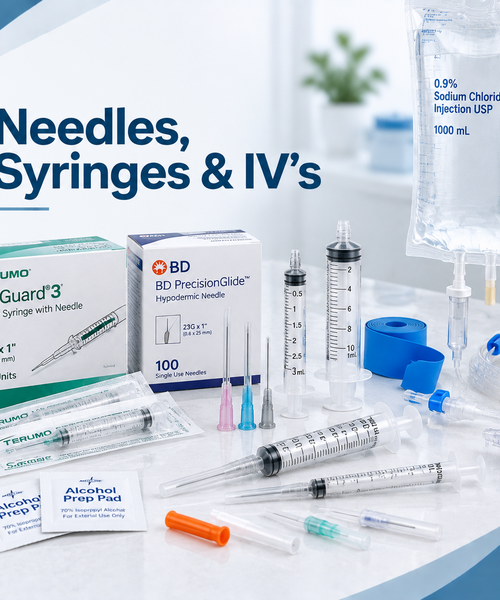
  • Needles, Syringes & IV's
  • needles-syringes-ivs
ML-MedLine

  |  

Medline Syringe Only 60ml Luer Lock Latex-Free Sterile

C$1.50
In stock online
In store: Check availability

Available in store

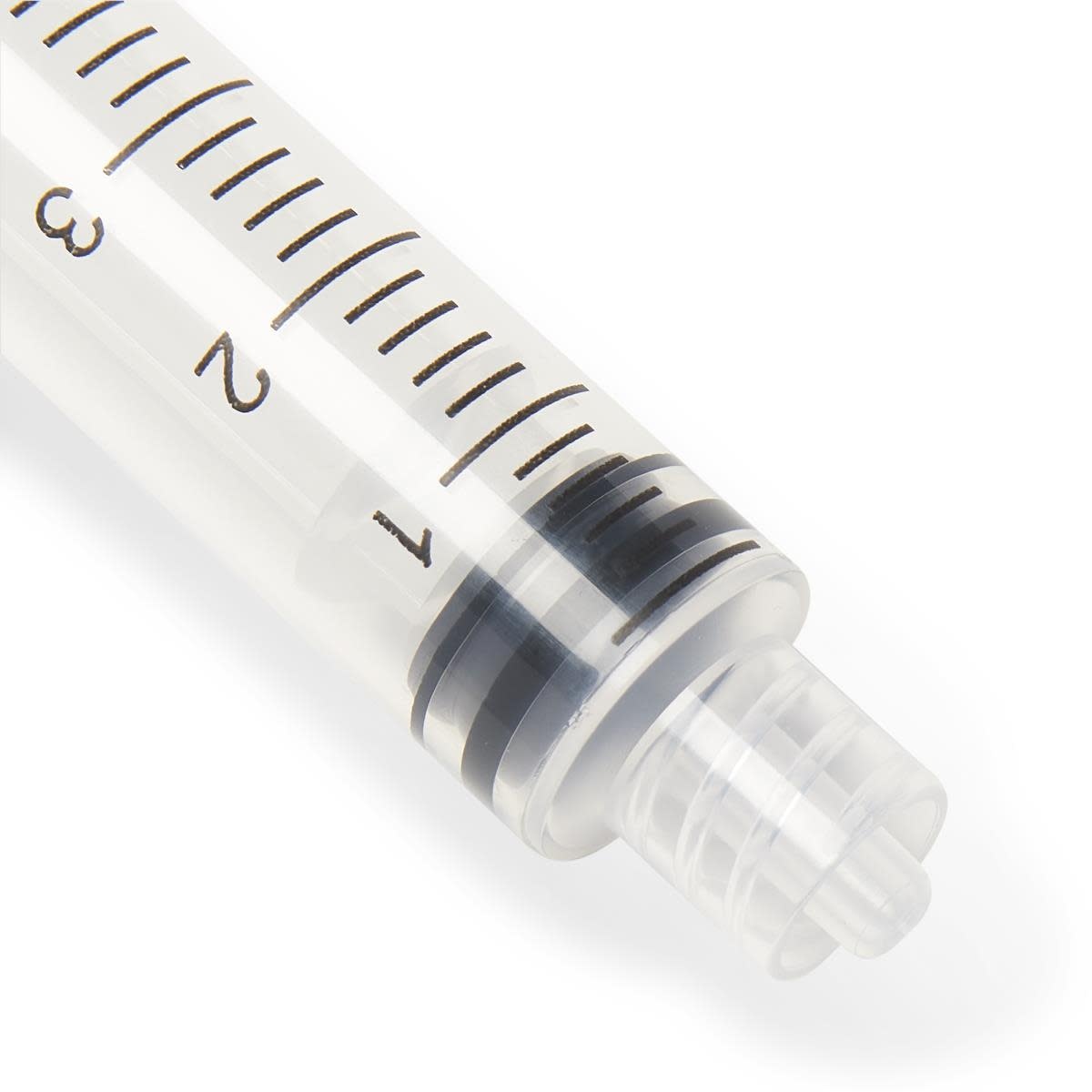
60 mL Luer Lock syringes deliver large-volume fluid management with capacity for irrigation and aspiration, threaded tip providing secure attachment during high-pressure procedures, clear graduated barrel for accurate measurement, latex-free construction.

    • Why 60 mL Capacity with Luer Lock Connection for High-Volume Clinical Applications

      The 60 mL (60 cc) large-volume barrel capacity provides the substantial fluid volume essential for wound irrigation requiring copious mechanical cleansing to remove debris and contaminants, aspiration of moderate to large fluid collections from body cavities or wounds, enteral feeding tube medication administration and flushing, nasogastric tube irrigation, and large-volume medication delivery where multiple smaller syringes would create inefficient workflow and increase contamination risks through repeated connections—this capacity represents the optimal balance between adequate volume for effectiveness and manageable size for single-handed operation and controlled pressure application. The Luer Lock threaded tip connection delivers the mechanical security critical during high-pressure irrigation procedures where fluid force could dislodge simple friction-fit connections, aspiration of viscous fluids requiring sustained negative pressure that might separate Luer Slip attachments, and any application where mid-procedure disconnection would compromise sterility, waste medication, or create safety hazards—the physical barrier created by threaded engagement prevents the accidental separations that occur with push-on connections during patient movement, equipment manipulation, or the application of force inherent in irrigation and aspiration procedures. The combination of large 60 mL capacity with Luer Lock security makes this syringe the standard choice for wound irrigation where adequate pressure and volume determine debris removal effectiveness, joint aspiration where complete fluid evacuation impacts diagnostic accuracy, enteral medication administration where tube flushing prevents clogging, and any clinical situation requiring reliable delivery or collection of substantial fluid volumes with connection security that ensures procedure completion without interruption or contamination.

      Key Features & Benefits

      Key Features:

      • 60 mL (60 cc) large-volume barrel capacity
      • Luer Lock threaded tip connection
      • Clear transparent polypropylene barrel
      • Graduated markings (typically 2 mL increments)
      • Bold numbers for easy reading
      • Smooth-gliding plunger with silicone lubrication
      • Positive plunger stop prevents accidental removal
      • Retaining ring secures plunger in barrel
      • Latex-free construction (no natural rubber latex)
      • Sterile, individually packaged
      • Single-use, disposable design
      • Without attached needle (sold separately)
      • Medical-grade materials
      • Pyrogen-free
      • Non-toxic
      • Meets USP and ISO quality standards

      Benefits:

      • 60 mL capacity appropriate for large-volume applications
      • Ideal for irrigation, aspiration, enteral feeding
      • Reduces need for multiple smaller syringes
      • Luer Lock ensures secure attachment during procedures
      • Threaded connection prevents accidental disconnection
      • Safe for high-pressure irrigation
      • Compatible with all Luer Lock devices
      • Clear barrel allows volume verification
      • Bold markings improve measurement accuracy
      • Silicone-lubricated plunger enables smooth operation
      • Easy pressure control for irrigation
      • Positive stop prevents dose errors
      • Latex-free protects sensitive patients and healthcare workers
      • Sterile packaging ensures infection control
      • Single-use prevents cross-contamination
      • Large size reduces procedure interruptions
      • Cost-effective for high-volume applications

      Clinical Applications

      60 mL Luer Lock Syringes are appropriate for:

      ✓ Wound irrigation (copious fluid delivery) ✓ Surgical site irrigation ✓ Abscess irrigation after incision and drainage ✓ Joint aspiration (knee, shoulder, other large joints) ✓ Pleural effusion aspiration ✓ Ascites aspiration (paracentesis) ✓ Bladder irrigation via catheter ✓ Nasogastric (NG) tube irrigation and flushing ✓ Gastrostomy (G-tube) medication administration ✓ Jejunostomy (J-tube) feeding and flushing ✓ Enteral feeding tube medication delivery ✓ Large-volume medication administration ✓ Contrast media administration ✓ Specimen collection (body fluids) ✓ Drainage of fluid collections ✓ Laboratory procedures requiring large volumes ✓ Emergency department procedures ✓ Operating room irrigation and aspiration ✓ Any application requiring secure large-volume delivery

      Usage & Application

      IMPORTANT: Syringes should be used by trained healthcare professionals or patients/caregivers specifically instructed by healthcare providers.

      Pre-Use Inspection:

      1. Check package integrity:
        • Verify sealed package intact
        • Check for damage or punctures
        • Discard if package compromised
      2. Inspect syringe:
        • Check expiration date
        • Verify 60 mL capacity
        • Ensure Luer Lock tip undamaged
        • Check barrel clear with readable markings
        • Verify plunger moves smoothly
        • Test plunger for smooth glide
        • Discard if any defects
      3. Verify appropriate use:
        • Confirm application requires large volume
        • Check that Luer Lock connection needed
        • Ensure compatible attachment available

      Opening Package:

      1. Peel open sterile package:
        • Open carefully
        • Do NOT touch syringe tip
        • Do NOT touch plunger tip
      2. Remove syringe:
        • Hold by barrel
        • Maintain sterility of Luer Lock tip

      Attaching Device:

      1. Select appropriate attachment:
        • Verify Luer Lock compatible (threaded)
        • For irrigation: 18G-20G needle or irrigation tip
        • For aspiration: Appropriate needle gauge/length
        • For feeding tubes: Enteral feeding adapter
      2. Attach to Luer Lock tip:
        • Remove tip cap from syringe
        • Hold syringe barrel firmly
        • Align device threads with syringe tip threads
        • Push device onto tip
        • Twist clockwise while pushing until secure
        • Should feel tight "lock"
        • Tug gently to verify won't separate
      3. Remove protective cap (if applicable):
        • Pull straight off device
        • Do NOT touch sterile parts

      Wound Irrigation:

      Preparation:

      1. Prepare irrigation solution:
        • Normal saline or sterile water typical
        • Room temperature or warmed per protocol
        • Have adequate volume available
      2. Draw irrigation fluid:
        • Insert into solution bottle/bag
        • Pull plunger back to fill 60 mL
        • Remove air bubbles if present
      3. Attach irrigation device:
        • 18G-20G needle for general irrigation OR
        • Irrigation tip/splash shield for safety
        • Luer Lock ensures secure connection

      Irrigation Technique:

      1. Position wound:
        • Over collection basin
        • Waterproof pads underneath
        • Catch basin ready
      2. Irrigation pressure:
        • Hold syringe 2-4 inches above wound
        • 60 mL syringe provides ideal pressure range (8-15 psi)
        • Higher position = higher pressure
        • Lower position = lower pressure
      3. Irrigate:
        • Push plunger with steady, moderate pressure
        • Direct stream across wound surface
        • Use sweeping motion to cover entire wound
        • 60 mL allows sustained irrigation without refilling
        • Luer Lock prevents disconnection during pressure
      4. Refill and repeat:
        • Refill syringe as needed
        • Continue until return fluid runs clear
        • Small wounds: 200-500 mL total
        • Moderate wounds: 500-1000 mL
        • Large/contaminated: 1-2 liters or more

      Joint Aspiration:

      Preparation:

      1. Prepare site:
        • Sterile technique
        • Clean with antiseptic
        • Drape appropriately
      2. Attach appropriate needle:
        • 18G-20G × 1.5" typical for large joints
        • Verify Luer Lock connection secure

      Aspiration Technique:

      1. Insert needle into joint space:
        • Per anatomical landmarks
        • Advance to appropriate depth
      2. Aspirate:
        • Pull plunger back slowly and steadily
        • 60 mL capacity adequate for most joint effusions
        • May need multiple syringes for very large effusions
        • Luer Lock prevents disconnection during aspiration
      3. Complete aspiration:
        • Continue until maximum fluid removed
        • Note fluid appearance
        • Transfer to specimen containers if needed

      Enteral Feeding Tube Medication:

      Preparation:

      1. Prepare medication:
        • Liquid formulation preferred
        • Crush tablets to fine powder if needed
        • Dissolve in water (typically 15-30 mL)
        • 60 mL syringe holds medication + flush
      2. Attach to feeding tube:
        • Remove feeding tube cap
        • Connect Luer Lock syringe to tube port
        • Secure connection prevents leaks

      Administration:

      1. Flush tube (pre-medication):
        • 30 mL water to verify patency
        • Ensures tube clear
      2. Administer medication:
        • Push slowly to deliver medication
        • 60 mL size enables controlled delivery
        • Do NOT force (indicates clog)
      3. Flush tube (post-medication):
        • 30 mL water to clear medication
        • Prevents tube clogging
        • 60 mL syringe can hold flush in one fill

      NG/G-Tube Irrigation:

      1. Purpose:
        • Maintain tube patency
        • Clear residue or clogs
        • Verify placement
      2. Technique:
        • Draw 60 mL irrigation solution (water or saline)
        • Attach to tube
        • Push gently to irrigate
        • Pull back to check gastric contents (if checking placement)
        • 60 mL adequate for most tube irrigation

      Large-Volume Medication Administration:

      1. Draw medication:
        • From vial or IV bag
        • 60 mL for larger doses
        • Remove air bubbles
      2. Administer:
        • Via appropriate route (IV, feeding tube, etc.)
        • Control delivery speed
        • Monitor patient

      Aspiration of Body Fluids:

      Paracentesis (ascites):

      1. Sterile technique
      2. Appropriate needle (typically 18G)
      3. Multiple 60 mL syringes may be needed
      4. Transfer fluid to specimen containers

      Pleural effusion:

      1. Sterile technique
      2. Appropriate needle/catheter
      3. 60 mL syringes for fluid removal
      4. May need many syringes for large effusions

      Post-Use Care:

      1. Dispose immediately:
        • Place entire syringe with attachment in sharps container
        • Or remove needle carefully to sharps, syringe to medical waste
        • Never reuse 60 mL syringes
      2. Remove gloves and hand hygiene
      3. Document:
        • Procedure performed
        • Volume used or aspirated
        • Fluid characteristics (if aspirating)
        • Patient tolerance

      Reading 60 mL Syringe Graduations:

      Understanding markings:

      • Major lines: Typically every 10 mL
      • Minor lines: Typically every 2 mL
      • Numbers: Usually marked at 10, 20, 30, 40, 50, 60 mL

      Reading technique:

      1. Hold at eye level
      2. Read at top of plunger rubber
      3. Estimate between lines if needed
      4. 60 mL less precise than smaller syringes
      5. Appropriate for large volumes where ±2 mL acceptable

      Troubleshooting:

      Plunger difficult to move:

      • Large volume creates more resistance (normal)
      • Use steady, controlled pressure
      • Silicone lubrication should help
      • If excessively difficult: may be defective, discard

      Cannot achieve adequate irrigation pressure:

      • Position syringe higher above wound (increases pressure)
      • Use firmer, more rapid plunger push
      • 60 mL optimal size for irrigation pressure

      Luer Lock won't tighten:

      • May be cross-threaded
      • Remove and reattach carefully
      • Ensure straight alignment

      Device disconnects during use:

      • Luer Lock may not be fully tightened
      • Twist more firmly clockwise
      • Check threads not damaged

      Cannot draw fluid:

      • Needle may be clogged
      • Bevel may be against wall
      • Reposition device
      • May need larger gauge needle

      Air bubbles in large volume:

      • Tap barrel firmly
      • Hold vertical
      • Push plunger to expel
      • Some small bubbles acceptable for irrigation

      Resistance during enteral administration:

      • May indicate tube clog
      • Do NOT force (can rupture tube)
      • Try warm water flush
      • May need replacement tube

      Special Considerations:

      Wound irrigation:

      • 60 mL provides ideal pressure (8-15 psi with moderate push)
      • Larger than needed for small wounds
      • Perfect for moderate-large wounds
      • Reduces refill frequency

      Joint aspiration:

      • 60 mL capacity adequate for most joints
      • Knee effusions often 30-100 mL
      • May need multiple syringes for very large effusions
      • Luer Lock security important during aspiration

      Enteral feeding:

      • 60 mL standard size for feeding tube use
      • Can hold medication + flush in one syringe
      • Reduces number of syringes needed
      • Some feeding tube sets come with 60 mL syringe

      Home healthcare:

      • 60 mL common for home G-tube/J-tube care
      • Teach proper technique
      • Medication administration and flushing
      • Provide adequate supply

      Pediatric patients:

      • May be too large for small children
      • Use smaller syringes for precise dosing
      • 60 mL appropriate for:
        • Irrigation (if large wound)
        • NG tube care
        • Some feeding tube applications

      Geriatric patients:

      • 60 mL appropriate for:
        • Wound irrigation (common in elderly)
        • Feeding tube care
        • May need two hands to operate

      Operating room:

      • 60 mL standard for surgical irrigation
      • Multiple syringes used per procedure
      • Luer Lock important in sterile field

      Emergency department:

      • 60 mL versatile for:
        • Wound irrigation
        • Joint aspiration
        • NG tube placement and care
        • Large-volume medication

      Infection Control:

      • Strict aseptic technique
      • Never reuse 60 mL syringes
      • Never share between patients
      • Use new syringe for each procedure
      • Maintain sterility of tip and plunger

      Advantages of 60 mL Luer Lock:

      60 mL capacity advantages:

      • Large volume for irrigation without frequent refills
      • Adequate for most aspirations
      • Good for enteral feeding applications
      • Optimal size for generating irrigation pressure
      • Reduces procedure interruptions

      Luer Lock advantages:

      • Secure connection during pressure applications
      • Prevents disconnection during irrigation
      • Essential for aspiration (maintains seal)
      • Safer overall for large-volume procedures

      60 mL vs. Other Sizes:

      vs. 10-20 mL:

      • 60 mL requires fewer refills
      • Better for sustained irrigation
      • More efficient workflow

      vs. Larger syringes (100+ mL):

      • 60 mL easier to handle
      • Better pressure control
      • Lighter weight
      • Adequate for most applications

      Luer Lock vs. Catheter Tip:

      60 mL Luer Lock:

      • Threaded connection for devices
      • Compatible with needles, irrigation tips
      • More versatile

      60 mL Catheter Tip:

      • Tapered tip for direct tube insertion
      • Good for feeding tubes (some)
      • No threads

      Storage:

      • Store at room temperature
      • Keep in original packaging until use
      • Protect from damage
      • Check expiration dates
      • Rotate stock using FIFO
      • Typical shelf life 5 years

      When to Contact Provider:

      • Questions about appropriate use
      • Unable to perform procedure
      • Complications occur
      • Equipment malfunction
      • Concerns about technique

      Technical Specifications

      Product Details:

      • Product Type: Sterile disposable syringe without needle
      • Capacity: 60 mL (60 cc)
      • Tip Type: Luer Lock (threaded connection)
      • Barrel Material: Clear medical-grade polypropylene
      • Barrel Transparency: Transparent for volume visualization
      • Graduation Markings: Bold, permanent markings (typically 2 mL increments)
      • Major Lines: Typically every 10 mL
      • Minor Lines: Typically every 2 mL
      • Numbers: Marked at 10, 20, 30, 40, 50, 60 mL
      • Plunger Material: Polypropylene with latex-free elastomer tip
      • Plunger Lubrication: Silicone lubricant for smooth glide
      • Plunger Design: Smooth-gliding with positive stop
      • Retaining Ring: Prevents accidental plunger removal
      • Latex Content: Latex-free (no natural rubber latex)
      • Pyrogen Content: Non-pyrogenic
      • Sterility: Sterile until opened
      • Sterilization Method: Ethylene oxide (EtO) or gamma radiation
      • Needle Included: No (sold separately)
      • Packaging: Individually packaged in peel-open pouches
      • Shelf Life: Typically 5 years
      • Storage: Room temperature 15-30°C (59-86°F), dry conditions
      • Intended Use: Large-volume irrigation, aspiration, medication administration, feeding tube use
      • Applications: Wound care, joint procedures, enteral feeding, specimen collection
      • Patient Population: All ages (with appropriate applications)
      • Regulatory Status: FDA-cleared medical device, Class II
      • Standards Compliance:
        • ISO 7886-1 (sterile hypodermic syringes)
        • ISO 594 (Luer Lock connections)
        • USP standards
    • No reviews yet

      Add yours

    Testimonials from Google

    See all reviews

    Your cart — 0

    You cart is currently empty

    Login