Slideshow Items

  • Transfer Aids
  • mobility/transfer-aids
  • Mobility
  • mobility
MedLine

  |  

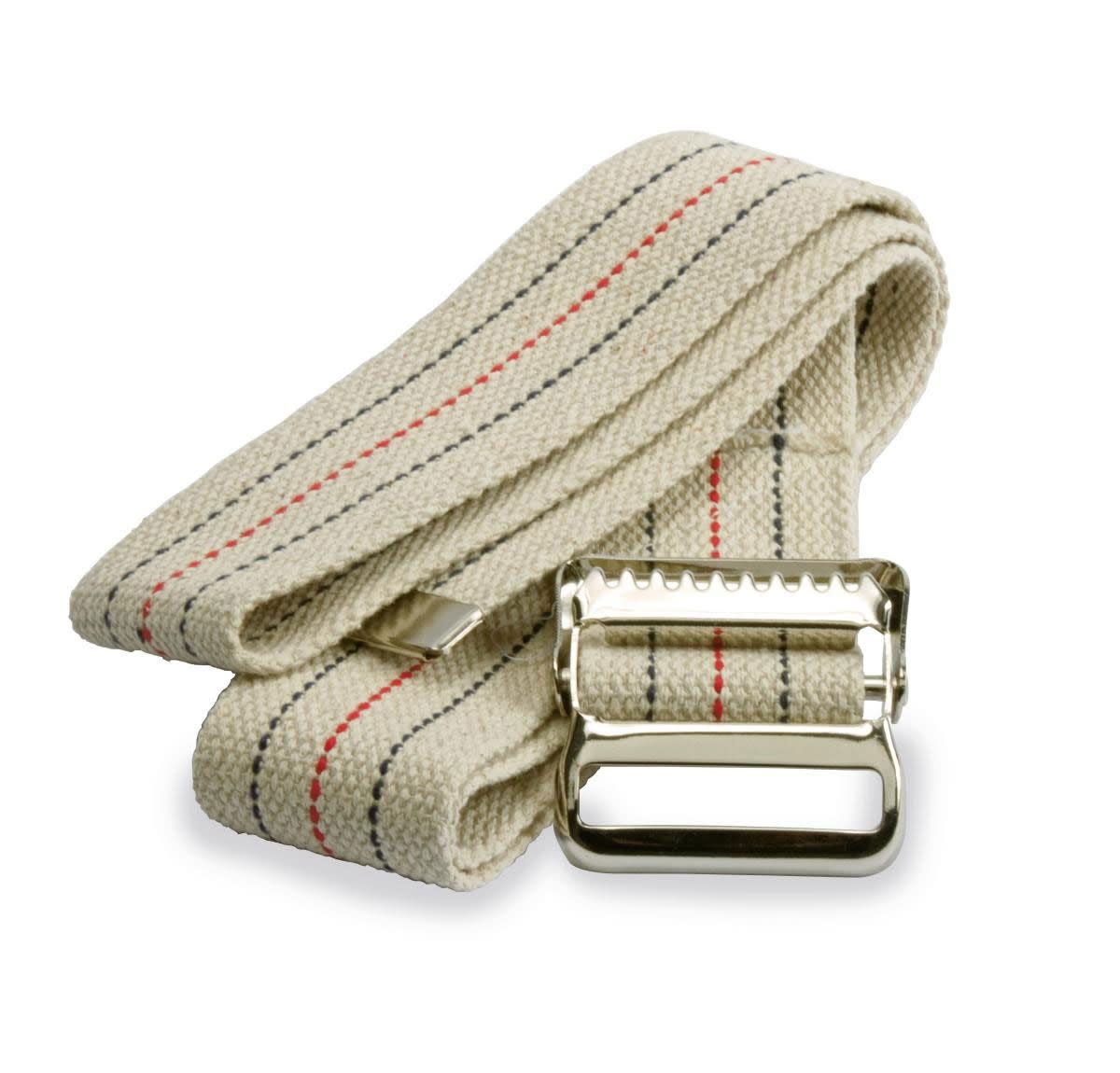
Medline Transfer/Gait Belt; Beige with Stripes W/Metal Buckle

C$13.99
3+ Day Shipping
In store: Check availability

Available in store

SKU: MDT821203

The Medline Transfer/Gait Belt provides caregiver support for assisted transfers, repositioning, and walking support during mobility routines.

    • Why Choose the Medline Transfer/Gait Belt – Beige with Stripes – Metal Buckle

      The Medline Transfer/Gait Belt is designed to help trained caregivers provide support during transfers, standing, walking, and repositioning tasks. The belt secures around the user's waist, giving caregivers a stable handhold to assist with mobility while helping reduce the need to pull on the user's arms or clothing — the simple strap that makes assisted mobility safer for both people in it.

      Key Features

      ✔ Medline transfer/gait belt

      ✔ Beige with stripes design

      ✔ Metal buckle closure

      ✔ Designed for caregiver-assisted mobility

      ✔ Supports transfers, standing, and walking routines

      ✔ Provides a secure handhold for caregivers

      ✔ Practical for home care and facility use

      ✔ Useful for rehabilitation and daily care settings

      ✔ Durable mobility assistance accessory

      Benefits

      ✔ Helps caregivers assist users more safely during movement

      ✔ Provides support during sit-to-stand and transfer routines

      ✔ Useful for walking assistance and balance support when appropriate

      ✔ Helps reduce pulling on arms, shoulders, or clothing

      ✔ Practical for home care, clinics, and long-term care facilities

      ✔ Metal buckle helps secure the belt when properly fitted

      ✔ Supports caregiver confidence during mobility tasks

      Usage/Application

      Ideal for assisted transfers, walking support, rehabilitation routines, home care, long-term care facilities, assisted living settings, hospitals, clinics, and caregivers who need a transfer/gait belt for mobility assistance. The gait belt solves assisted mobility's grip problem: without one, a helping caregiver ends up pulling on arms, shoulders, or waistbands — holds that hurt the user, strain the caregiver, and fail exactly when balance wavers — while the belt secured around the user's waist gives the caregiver a purpose-built handhold at the body's centre of mass, turning sit-to-stand assists, transfers, and steadying support during walking into controlled, two-person teamwork. Fit and technique carry the safety: the belt wraps over clothing at the waist per its instructions, the metal buckle threaded and locked so it holds under load, snugness set to two-fingers-flat — tight enough not to slide up the torso under a lift, never tight enough to restrict breathing — and the caregiver grips the belt with a supportive underhand hold, assisting the user's own movement rather than hauling them, which is the technique distinction gait belt training teaches and the reason these belts belong with trained caregivers following the care plan's transfer instructions. Know the belt's boundaries: it assists a user who bears some weight and participates in the movement — users who can't weight-bear belong with mechanical lift equipment per their assessment, and abdominal surgery, feeding tubes, hernias, and similar conditions route belt placement questions to the care team first. Wipe the belt clean per its care guidance between users in shared settings, inspect webbing, stitching, and the metal buckle's teeth for wear on the schedule that safety equipment earns, and retire a belt that's frayed or slipping — the handhold that fails mid-transfer is the one that was due for replacement last month.

    • No reviews yet

      Add yours

    Testimonials from Google

    See all reviews

    Your cart — 0

    You cart is currently empty

    Login

    By using our website, you agree to the use of cookies. These cookies help us understand how customers arrive at and use our site and help us make improvements. Hide this message More on cookies »