
Slideshow Items

|
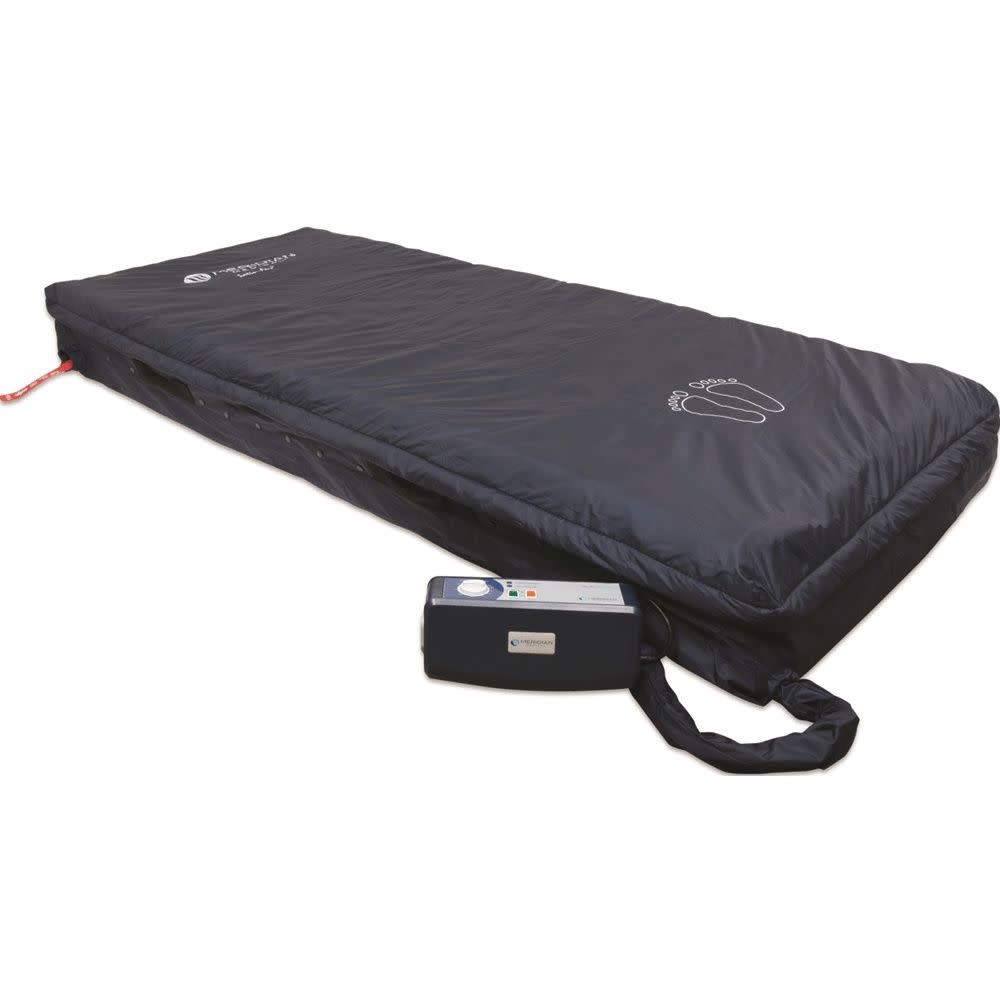
The Meridian SatinAir Alternating Pressure and Low Air Loss Mattress System is an 8-inch APM mattress with 5-inch alternating air cells, 3-inch foam safety base, digital control pump, and low air loss for high-risk pressure injury patients.
Loading…
Among the support surface categories available for pressure injury prevention and treatment, powered alternating pressure mattress systems occupy a distinct clinical tier above passive foam and gel surfaces — not because they redistribute pressure at a fixed point more effectively than a well-specified therapeutic foam mattress, but because they actively change the pressure distribution pattern over time. The fundamental problem that passive support surfaces address is peak interface pressure at a bony prominence during sustained contact — and they address it by reducing that peak pressure through conforming load distribution. The fundamental limitation of passive support surfaces is that they reduce but do not eliminate the sustained pressure exposure that causes tissue ischaemia over time, regardless of how well they redistribute the contact load. For patients at moderate risk on a well-fitted therapeutic foam mattress, this reduction in peak pressure is clinically sufficient to maintain tissue viability with adequate repositioning. For patients at high risk — those with Braden scores below 12, existing Stage 2 or higher pressure injuries, circulatory compromise that reduces tissue tolerance to even reduced interface pressure, or who cannot be repositioned at the recommended minimum interval — the passive reduction alone is insufficient, and active pressure relief through alternating pressure cycling is the clinically indicated intervention.
The SatinAir's alternating pressure mechanism works by cyclically inflating and deflating alternating cells in the air mattress layer — while one set of cells is inflated and bearing body weight, the adjacent cells are deflated and providing pressure relief to the skin over those cells. The cycle then reverses: the inflated cells deflate and the deflated cells inflate, shifting the load to the previously unloaded tissue and providing relief to the previously loaded tissue. This systematic cycling of pressure across the body surface achieves what no passive surface can — genuine periodic offloading of every anatomical zone in contact with the mattress, including the bony prominences at the sacrum, trochanters, heels, and occiput that represent the highest-risk tissue injury sites. The cycling frequency and cell pressure are controlled by the digital pump unit, allowing adjustment to the patient's weight and clinical condition — lower cycling pressures for patients with fragile or reactive skin, faster cycling for patients requiring more frequent pressure relief intervals.
The low air loss component of the SatinAir system addresses the moisture and temperature microenvironment at the skin-mattress interface — a critical but frequently underappreciated dimension of pressure injury risk that alternating pressure alone does not address. Sustained skin moisture from perspiration, incontinence, or wound drainage raises the skin's friction coefficient, softens the stratum corneum through maceration, and creates a warm, humid interface environment that accelerates the skin barrier deterioration that makes tissue more vulnerable to both pressure and shear damage. Low air loss technology directs a continuous flow of conditioned air through small perforations in the mattress cover surface, creating a gentle air current that wicks moisture vapour away from the skin surface and moderates the local temperature at the skin-mattress interface. The combined effect is a significantly drier, cooler skin contact environment compared to a sealed air mattress or foam surface — reducing the compounding moisture risk factor that makes high-humidity skin more vulnerable to pressure injury development at the pressures that even a well-functioning alternating pressure system delivers during the loaded phase of the cycle.
The 3-inch foam safety base of the SatinAir system is the structural element that distinguishes a complete mattress replacement system from a simple air overlay, and it serves three clinical functions simultaneously. First, it provides a stable foam foundation that maintains the patient's position during the air cell deflation phase of the alternating cycle — without a foam base, the deflating cells would drop the patient toward the bed frame deck, creating an unstable sleeping surface and potential frame contact pressure during each cycle. Second, it functions as a safety surface during power interruption — if the pump fails or is disconnected, the 3-inch foam base continues to provide passive pressure redistribution support, preventing the complete loss of pressure management that would occur if the patient were lying on a deflated air mattress directly on a bed frame. Third, it provides the dimensional stability and edge support that allow safe patient transfers, nursing care procedures, and repositioning without the surface instability that pure air mattresses create during lateral movement.
✓ High-risk pressure injury prevention for patients with Braden scores below 12 where passive foam surfaces are clinically insufficient ✓ Active pressure injury treatment for patients with existing Stage 2 or higher sacral, heel, or trochanteric pressure injuries requiring offloading ✓ Immobile patients with neurological conditions — stroke, spinal cord injury, traumatic brain injury — requiring continuous active pressure management ✓ Post-operative patients with restricted repositioning following major surgical procedures where standard turning schedules cannot be maintained ✓ Palliative and end-of-life care for patients requiring maximum comfort and skin protection during terminal illness bed rest ✓ Patients with circulatory compromise — peripheral vascular disease, cardiac failure with reduced perfusion — requiring lower threshold pressure relief ✓ Long-term care residents at high risk where staffing constraints limit repositioning frequency to intervals longer than the clinical ideal ✓ Homecare patients on AADL or insurance-funded pressure management programs where active surface therapy is clinically justified ✓ Oncology patients with severe fatigue, cachexia, and compromised tissue tolerance requiring continuous active pressure management ✓ Patients with incontinence-associated dermatitis or moisture-compromised skin who require concurrent moisture management alongside pressure relief ✓ Bariatric high-risk patients whose body weight requires both active pressure management and the structural stability of a foam safety base ✓ Hospital and rehabilitation units managing patients with complex wound care programs where mattress surface selection is a component of the treatment protocol
System Setup and Pump Configuration Unbox the SatinAir mattress and foam base components and assemble on the bed frame with the foam base positioned first and the air mattress system placed on top. Connect the air mattress hose to the digital pump unit and power on — the pump will auto-inflate the mattress cells to their initial pressure settings during the start-up inflation sequence. After initial inflation, adjust the pressure setting on the digital control panel to the patient's weight range using the recommended settings in the product manual — most APM systems provide a weight-based pressure guide that sets the cell inflation pressure to a level calibrated for the patient's weight, ensuring that the inflated cells provide adequate support without over-pressurizing to a level that creates high interface pressure. Allow the mattress to complete several full cycles before placing the patient to confirm even inflation and cycling function across all cells.
Carousel items
Testimonial items
Very welcoming and informative. We went in to rent a Walker for my mom to see if she would use it. They had no rentals left so he gave us a brand new one on rental. Highly recommend this company for all your ADL needs.
Tara Maye
The rating of this product is 5 out of 5
Fantastic service and experience, from delivery to pickup we could not have asked for anything more! We rented a hospital bed, and I do not believe you would get better service anywhere. Highly recommended!
Shawn Dillon
The rating of this product is 5 out of 5
Super friendly and very helpful! Delivered the wheelchair for me, special ordered other parts and took the time to show me how to install. I recommend!
Fiona Haines
The rating of this product is 5 out of 5
Can not thank the team at Med Supplies enough for their amazing service. We were in a tough spot till we got their help. Amazing service. Kind and respectful delivery. First class all the way. Thank you again.
Jon Beatty
The rating of this product is 5 out of 5
Ordered the chair on Sunday and it arrived Monday morning. Spoke to customer service to follow up on delivery times. It was already on my front door. Excellent and helpful staff. The product is sturdy and of good quality. Thank you for your help.
H D
The rating of this product is 5 out of 5
Excellent experience - website faithfully represented what was in stock (which hasn't always been my experience with other vendors sadly), and local shipping was really fast - ordered on the weekend, received it on Monday in my case. Thank you for being
Jason Hudson
The rating of this product is 5 out of 5
0/0
You cart is currently empty
780 409-1509
Get directions