Why the MIC G-Tube Is the Gastric Access Boundary and the Long-Term Enteral Feeding Stability Component of the Nutritional Support System Simultaneously
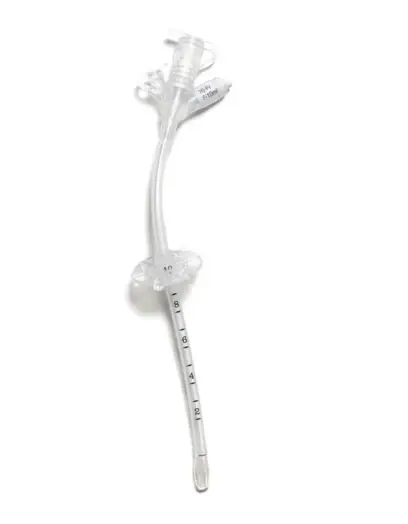
The MIC gastrostomy feeding tube serves two structurally distinct functions that are both essential to effective long-term enteral nutritional support, and that a single tube component must satisfy simultaneously. The first function is gastric access: the G-tube is the indwelling device that maintains a patent, continuous access pathway through the abdominal wall and gastric wall into the stomach lumen, through which nutrition, fluids, and medications can be delivered directly to the stomach without requiring the patient to swallow. Patients who require a gastrostomy feeding tube have lost the capacity for safe oral intake — through neurological impairment, oropharyngeal malignancy, severe dysphagia, or anatomical disruption — and the G-tube is the only available route through which the prescribed nutritional support and medication regimen can be delivered. The tube's recessed distal tip design positions the tube outlet within the stomach lumen at the correct distance from the gastric wall to allow free drainage into the stomach without the outlet being occluded by mucosal contact. The 20 French diameter provides a bore sufficient for the viscosity range of enteral feeding formulas, oral medications, and flush volumes that long-term gastrostomy feeding management requires, without exceeding the stoma tract diameter that a 20 Fr placement creates. The MIC G-tube is therefore not an indwelling access device among alternatives — for a patient with an established 20 Fr stoma tract, it is the gastric access boundary that determines whether the enteral feeding pathway remains patent and functional.
The second function the G-tube must satisfy simultaneously is placement stability — maintaining the tube's position at the correct depth within the stomach lumen across the full range of patient movement, position change, and daily activity that long-term use involves. G-tube displacement — the tube moving outward from the correct intragastric position or being inadvertently removed entirely — is the primary mechanical failure mode of long-term gastrostomy tubes, and it carries clinical consequences ranging from feeding interruption to peritoneal contamination if the displaced tube is used before correct repositioning is confirmed. The MIC G-tube addresses placement stability through a two-component retention system: the internal inflatable balloon, filled with 7–10 mL of water after insertion, expands against the interior gastric wall to provide an internal stop that prevents the tube from being pulled outward through the stoma tract; and the SECUR-LOK external retention ring, positioned against the abdominal skin surface, prevents the tube from advancing inward beyond the correct depth. The combination of internal balloon and external ring creates a bilateral retention system that resists both outward displacement and inward migration simultaneously.
The inflatable balloon retention mechanism of the MIC G-tube is the component that allows the tube to be inserted through the established stoma tract and then secured without requiring the surgical or endoscopic fixation that non-balloon retention systems require. The balloon is deflated for insertion, allowing the tube to pass through the stoma tract at its uninflated diameter, and inflated with 7–10 mL of sterile water after the tip is confirmed to be correctly positioned within the stomach lumen. This insertion and securement sequence enables the MIC G-tube to be placed as a replacement tube in an established stoma tract without sedation or procedural facilities — a significant clinical efficiency advantage in the home and long-term care environments where the majority of G-tube replacements occur. The 7–10 mL balloon volume specification is not a preference — it is the volume range that achieves the correct balloon diameter against the gastric mucosa for the MIC 20 Fr tube, providing adequate retention without the mucosal pressure that over-inflation creates.
The radiopaque stripe in the MIC G-tube's silicone wall provides continuous radiographic visibility of the tube's position during fluoroscopic confirmation and standard abdominal imaging. When a G-tube's position is uncertain — following a reported displacement event, after insertion in a patient with anatomical complexity, or during routine radiographic surveillance — the radiopaque stripe allows the tube's complete course from the abdominal wall to the distal tip to be traced on plain radiograph or fluoroscopy without requiring contrast injection to identify the tube. Medical-grade silicone, which is radiolucent without a radiopaque marker, would be invisible on standard radiographic imaging without this incorporated stripe.
KEY FEATURES
- 7–10 mL inflatable retention balloon — inflates against the interior gastric wall after insertion to provide an internal stop that prevents outward displacement, with the 7–10 mL specification achieving correct balloon diameter for the 20 Fr MIC tube without mucosal over-pressure
- SECUR-LOK external retention ring — external stabiliser positioned against the abdominal skin surface to prevent inward tube migration, completing the bilateral retention system with the internal balloon to resist displacement in both directions simultaneously
- 20 French tube diameter — bore specification matched to the viscosity range of enteral feeding formulas, oral medications, and flush volumes required for long-term gastrostomy feeding management without exceeding the 20 Fr stoma tract diameter
- Medical-grade silicone construction — material flexibility reduces mucosal irritation at the stoma tract and gastric wall contact surfaces during long-term indwelling use, with softness that maintains patient comfort during movement and position change
- Radiopaque stripe — radiographic visibility marker incorporated into the silicone wall, allowing the tube's complete course to be traced on plain radiograph or fluoroscopy without contrast injection during position confirmation
- Recessed distal tip — tip geometry positions the tube outlet within the stomach lumen away from mucosal wall contact, preventing outlet occlusion that would interrupt feeding delivery
BENEFITS
- Inflatable balloon enables replacement tube placement without procedural facilities — balloon deflation for insertion and inflation for securement allows G-tube replacement in established stoma tracts in home and long-term care environments without sedation or endoscopic support
- Bilateral retention system resists displacement in both directions — internal balloon and external SECUR-LOK ring prevent outward tube loss and inward tube migration simultaneously, reducing the displacement events that interrupt feeding schedules and require clinical intervention
- Silicone flexibility maintains patient comfort during long-term indwelling use — soft material reduces mucosal and skin irritation at the stoma tract contact surface across the extended replacement intervals of long-term G-tube management
- Radiopaque stripe supports post-insertion position confirmation without contrast — tube position can be confirmed on standard abdominal radiograph without requiring a separate contrast study at the time of replacement or position check
- Recessed distal tip prevents outlet occlusion at the gastric wall — tip geometry maintains patent feeding delivery without the mucosal contact that a non-recessed tip produces when the stomach moves against the tube
TYPICAL APPLICATIONS
✓ Replacement tube in established stoma tract — direct replacement of a displaced, blocked, or end-of-service G-tube in an established 20 Fr stoma tract, with balloon-facilitated insertion enabling replacement in home and care facility environments without procedural support
✓ Long-term neurological and dysphagia patients — primary enteral feeding access for patients with stroke, motor neurone disease, cerebral palsy, or progressive neurological conditions requiring sustained nutritional support through a gastrostomy route
✓ Oncology and head-and-neck patients — gastrostomy feeding access for patients whose oral intake capacity has been eliminated or severely compromised by oropharyngeal, oesophageal, or laryngeal malignancy or its treatment
✓ Paediatric and adult long-term care — indwelling G-tube for patients in long-term care and home environments requiring nutritional support, hydration, and medication administration without oral intake capability
✓ Post-surgical gastric access — G-tube placement for patients whose post-surgical anatomy or recovery period requires a defined period of direct gastric enteral feeding before oral intake is resumed


 780 409-1509
 Get directions