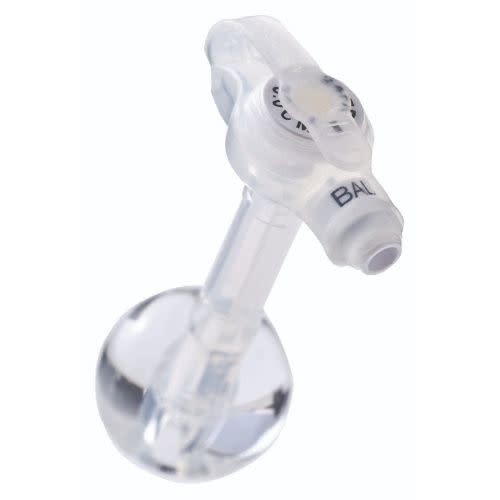
Why 20 Fr Low-Profile Design with 5 mL Balloon for Long-Term Gastrostomy Feeding
The 20 French (6.7mm outer diameter) tube size provides the optimal balance for older children, adolescents, and adults—large enough to accommodate adequate nutritional flow rates without clogging while small enough to minimize stoma site trauma, tissue irritation, and patient discomfort during the extended wear periods typical of chronic enteral feeding needs. The low-profile (skin-level) button design positions the feeding port flush against the abdominal wall rather than extending outward like traditional long gastrostomy tubes, dramatically reducing the risk of accidental tube dislodgement from catching on clothing, bedding, or during physical activity—particularly critical for active patients, children, individuals with cognitive impairments who might pull at tubes, and anyone seeking to maintain normal daily activities without the mechanical complications of protruding external tubing. The 5 mL balloon inflation volume creates secure internal retention against the stomach wall using moderate pressure that balances stability against the risk of pressure necrosis—adequate to prevent migration through the stoma tract while avoiding excessive tissue compression that can compromise blood flow and cause ulceration at the balloon contact site.
Key Features & Benefits
Key Features:
- 20 French (20 Fr) outer diameter (6.7mm) for adequate flow
- 5 mL balloon inflation volume for secure retention
- Low-profile skin-level button design
- Medical-grade silicone construction (soft, flexible, biocompatible)
- Feeding port with safety cap or plug
- Balloon inflation port (one-way valve)
- ENFit-compatible feeding connector (newer models)
- Anti-reflux valve prevents backflow
- Radiopaque material for X-ray visibility
- External bumper/retention ring stabilizes at skin level
- Graduated shaft markings for depth verification
- Color-coded feeding port for size identification
- Sterile, single-patient use (replaced every 3-6 months typically)
- Multiple shaft lengths available (patient specific)
- Tapered tip for easier insertion
- Manufactured by Avanos Medical (formerly Halyard/Kimberly-Clark)
Benefits:
- Low-profile design maximizes comfort and discretion
- Reduced risk of accidental tube dislodgement
- Can be hidden under clothing easily
- Better for active patients and children
- Silicone material gentle on tissues, long-lasting
- 20 Fr size prevents frequent clogging
- Adequate bore for blended diets (product dependent)
- 5 mL balloon provides secure retention without excessive pressure
- Anti-reflux valve prevents formula leakage
- ENFit compatibility prevents dangerous misconnections
- Radiopaque for placement verification
- Easy to clean and maintain
- Durable for months of use
- Universal compatibility with feeding equipment
Clinical Applications
MIC-KEY Gastrostomy Feeding Tubes 20 Fr are appropriate for:
✓ Long-term enteral nutrition (>4 weeks anticipated) ✓ Pediatric gastrostomy feeding (older children, adequate stoma tract) ✓ Adult gastrostomy feeding ✓ Neurological conditions (stroke, ALS, cerebral palsy, traumatic brain injury) ✓ Cancer patients unable to eat adequately ✓ Swallowing disorders (dysphagia) ✓ Head and neck cancer treatment support ✓ Failure to thrive requiring supplemental nutrition ✓ Congenital anomalies affecting feeding (esophageal atresia, etc.) ✓ Chronic conditions requiring long-term nutrition support ✓ Post-surgical nutrition support ✓ Gastroesophageal reflux disease (GERD) with feeding needs ✓ Medication administration when oral route not feasible ✓ Gastric decompression (venting) ✓ Home enteral nutrition programs ✓ Active patients requiring feeding tube ✓ Patients who previously had long tubes (replacement/upgrade)
Usage & Application
IMPORTANT: MIC-KEY tubes are typically placed by healthcare professionals and require medical supervision. The following information is for educational purposes.
Initial Placement (by qualified healthcare provider):
MIC-KEY tubes are typically placed:
- Surgically: During open or laparoscopic surgery
- Endoscopically: PEG (Percutaneous Endoscopic Gastrostomy) procedure
- Radiologically: Image-guided percutaneous placement
- As replacement: Into existing gastrostomy tract
Tube Components and Familiarity:
- External components:
- Feeding port with safety cap
- External bumper/retention disk (sits against skin)
- Balloon inflation port with one-way valve
- Internal components:
- Tapered insertion tip
- Inflatable retention balloon (inside stomach)
- Tube shaft with markings
Home Care and Maintenance:
Daily Care:
- Skin care around stoma:
- Clean daily with mild soap and water
- Pat dry gently with clean towel
- Check for signs of infection:
- Redness extending beyond stoma
- Swelling
- Warmth
- Drainage (especially purulent/foul-smelling)
- Pain or tenderness
- Small amount of clear drainage normal initially
- Granulation tissue (red bumpy tissue) common—notify provider if excessive
- Rotate tube daily:
- Gently rotate tube 360 degrees once daily
- Prevents tube adhering to stoma tract
- Do NOT rotate if within first 2 weeks of placement (per provider)
- Move external bumper slightly in and out (1-2mm)
- Should move freely without resistance
- Check external bumper position:
- Should sit snugly against skin (not tight)
- Should be able to slide finger under bumper
- Not so loose that tube moves excessively
- Not so tight that it causes skin indentation or redness
Feeding Administration:
- Prepare for feeding:
- Wash hands thoroughly
- Gather supplies:
- Prescribed formula
- Feeding extension set or syringe
- Water for flushing
- Clean towel or pad
- Position patient:
- Head elevated 30-45 degrees
- Sitting upright if possible
- Remain elevated during feeding and 30-60 minutes after
- Connect feeding equipment:
- Remove safety cap from feeding port
- For ENFit connector:
- Align extension set ENFit connector
- Push and twist clockwise until secure
- For legacy connector:
- Insert feeding set firmly into port
- Secure connection to prevent disconnection
- Verify tube placement (before EACH feeding):
- Check external tube marking at skin level (should not have changed)
- Aspirate small amount of gastric contents (pH <5 typically)
- If unable to aspirate or marking changed: DO NOT feed, contact provider
- Administer feeding:
- Bolus feeding (gravity or syringe):
- Pour formula into syringe barrel
- Raise syringe 12-18 inches above stomach
- Allow to flow by gravity
- Typical rate: 200-400 mL over 15-30 minutes
- Adjust height to control flow speed
- Continuous feeding (pump):
- Use feeding pump per manufacturer instructions
- Set prescribed rate
- Monitor regularly
- Flush tube:
- CRITICAL: Flush before and after each feeding
- Use 30-60 mL water (per provider instructions)
- Prevents tube clogging
- Flush every 4 hours during continuous feeding
- Use warm water for better flow
- After feeding:
- Disconnect feeding equipment
- Replace safety cap on feeding port
- Keep patient elevated 30-60 minutes
- Clean reusable equipment per protocol
Medication Administration:
- Prepare medications:
- Use liquid forms when possible
- Crush tablets to fine powder, dissolve in water (check if crushing allowed)
- Open capsules, mix contents with water (check if appropriate)
- Do NOT mix medications together
- Administer one at a time
- Flush before medications:
- Give each medication separately:
- Push slowly with syringe
- Flush with 5-10 mL water between each medication
- Flush after all medications:
Venting (Gastric Decompression):
If patient experiencing gas, bloating, or discomfort:
- Open feeding port to air:
- Remove safety cap
- May attach empty syringe without plunger
- Allows gas to escape from stomach
- Duration:
- 10-30 minutes or until patient comfortable
- Close port:
- Replace safety cap
- Prevents air entry
Balloon Management:
IMPORTANT: Balloon maintenance critical for tube retention
- Check balloon weekly:
- Use 5 mL syringe (catheter tip or slip tip)
- Attach to balloon inflation port
- Aspirate to check volume
- Should contain 5 mL (or volume specified by provider)
- If balloon volume low:
- Add sterile water to bring to correct volume (5 mL)
- Use ONLY sterile water (not saline—can crystallize)
- Never overfill (can burst balloon)
- Balloon inflation port:
- One-way valve prevents leakage
- Should not need to be opened except for checking/refilling
- If balloon repeatedly losing volume: tube may need replacement
Tube Replacement (by caregiver if trained):
NOTE: Only perform if trained by healthcare provider and emergency replacement necessary
If tube accidentally dislodged:
- Act quickly:
- Stoma tract can close within hours (especially in new stomas)
- If <6 months old, go to emergency department
- Temporary measure (if trained):
- Insert Foley catheter same size (20 Fr) into stoma
- Inflate balloon per Foley instructions
- Seek medical attention within hours
- Do NOT feed through Foley
- Replacement MIC-KEY (if trained and available):
- Lubricate tip with water-soluble lubricant
- Insert through stoma with balloon deflated
- Inflate balloon with 5 mL sterile water
- Pull gently until balloon seats against stomach wall
- Position external bumper snugly
- Verify placement before feeding (X-ray typically required)
Troubleshooting:
Tube won't flush or clogged:
- Try warm water (not hot)
- Use gentle pressure (don't force—can damage tube)
- Try pull-push technique (aspirate, then flush)
- May try pancreatic enzyme solution (per provider)
- If severely clogged: may need tube replacement
- Prevention: Flush regularly, especially after medications
Leaking around tube site:
- Check balloon inflation (may be deflated)
- External bumper may be too loose or too tight
- Stoma tract may be too large for tube
- Granulation tissue may be present
- May need different tube size or length
- Contact provider if persistent
Tube accidentally pulled out:
- Stay calm
- Cover site with clean gauze
- Insert temporary catheter if trained (Foley 20 Fr)
- Contact provider immediately
- Do NOT feed until placement verified
- Stoma can close quickly—act fast
Tube difficult to rotate:
- May have granulation tissue or adhesions
- Don't force rotation
- May indicate infection or other issue
- Contact provider
Formula leaking from feeding port:
- Check anti-reflux valve functioning
- Ensure safety cap secured
- Port may be damaged
- May need tube replacement
Skin redness, irritation, or infection:
- Clean with soap and water
- Pat dry
- May apply barrier cream (per provider)
- If signs of infection: contact provider
- May need antibiotics
- Adjust bumper if too tight
Granulation tissue (red bumpy tissue around stoma):
- Common occurrence
- Clean gently
- May apply prescribed treatment (silver nitrate, steroid cream)
- Contact provider if excessive or bleeding
Balloon burst:
- Tube will fall out or become loose
- Replace immediately or insert temporary catheter
- Contact provider
Patient experiencing pain:
- Check for infection
- Balloon may be over-inflated
- Stoma tract irritation
- Check external bumper not too tight
- Contact provider if severe or persistent
Special Considerations:
Pediatric patients:
- 20 Fr appropriate for older children, adolescents
- Smaller children may need 14-18 Fr
- Extra care preventing tube dislodgement (active, curious)
- May need protective covering during play
- Teach age-appropriate care and independence
- School nurse education important
Active patients and athletes:
- Low-profile design ideal for sports and activities
- May tape over tube for extra security during vigorous activity
- Swimming typically allowed after stoma healed (check with provider)
- Avoid contact sports without protective gear
Blended diet feeding:
- 20 Fr adequate for many blended diets
- Blend to smooth consistency
- Strain to remove large particles
- May need trial to assess tube tolerance
- Flush frequently to prevent clogging
- Discuss with provider and dietitian
Bathing and swimming:
- Can shower and bathe normally (once stoma healed)
- Clean stoma site after bathing
- Pat dry thoroughly
- Swimming typically allowed after initial healing
- Chlorine/salt water generally safe
- May use waterproof covering if desired
Sleeping:
- Low-profile design comfortable for sleeping
- Minimal interference with sleep positions
- Cap feeding port securely before bed
Clothing:
- Low-profile design easily hidden under clothing
- Can wear normal clothes
- No special clothing adaptations needed
Travel:
- Bring extra supplies (tube, feeding equipment, formula)
- Carry prescription documentation
- Know how to manage emergencies away from home
- Bring feeding pump if used
When to Contact Healthcare Provider:
Immediate/Emergency:
- Tube falls out and cannot be replaced
- Severe bleeding from stoma site
- Signs of peritonitis (severe abdominal pain, fever, rigidity)
- Tube pulled inside stomach (external bumper at skin, tube not visible)
- Respiratory distress
- Vomiting blood
Soon (within 24 hours):
- Unable to flush tube
- Persistent leaking around tube
- Signs of infection (redness spreading, pus, fever)
- Balloon repeatedly deflating
- Tube length marking changed significantly
- Excessive granulation tissue
- Unable to verify tube placement
Routine contact:
- Questions about tube care or feeding
- Need for tube replacement (after months of use)
- Adjustments to feeding schedule or formula
- Skin irritation not improving with routine care
Replacement Schedule:
- MIC-KEY tubes typically replaced every 3-6 months
- Replacement schedule varies by:
- Manufacturer recommendations
- Patient factors
- Healthcare provider preference
- Replacement usually simple outpatient procedure
- Some patients/caregivers trained to replace at home
Storage of Replacement Tubes:
- Keep replacement tube available at home
- Store at room temperature
- Keep in original packaging
- Check expiration date
- Have emergency replacement plan
Training and Education:
Before home care, patients/caregivers should be trained on:
- Daily stoma care
- Feeding administration
- Flushing technique
- Medication administration
- Balloon maintenance
- Troubleshooting common problems
- Emergency tube replacement (if appropriate)
- When to contact healthcare provider
Quality of Life:
MIC-KEY low-profile tubes significantly improve quality of life:
- Comfort: Sits flat, minimal awareness of tube
- Discretion: Easy to hide, normal appearance
- Activity: Enables sports, play, normal movement
- Independence: Easy for patients to manage
- Durability: Resistant to accidental dislodgement
- Normalcy: Supports participation in usual activities
Technical Specifications
Product Details:
- Brand: MIC-KEY® (Avanos Medical, formerly Halyard/Kimberly-Clark)
- Product Type: Low-profile gastrostomy feeding tube (button)
- French Size: 20 Fr (6.7mm outer diameter)
- Balloon Volume: 5 mL (inflation with sterile water)
- Material: Medical-grade silicone (soft, flexible, biocompatible)
- Design: Low-profile skin-level button
- Radiopacity: Radiopaque for X-ray visualization
- Shaft Lengths: Multiple lengths available (measured in cm, patient-specific)
- External Bumper: Retention disk stabilizes at skin level
- Feeding Port: ENFit-compatible (newer models) or legacy connector
- Safety Cap: Included to close feeding port when not in use
- Balloon Port: One-way valve for inflation/deflation
- Anti-Reflux Valve: Prevents backflow and leakage
- Color Coding: Feeding port color-coded by size (product dependent)
- Shaft Markings: Graduated markings for depth verification
- Tip Design: Tapered for easier insertion
- Sterility: Sterile until opened
- Intended Use: Long-term enteral feeding and medication administration
- Typical Replacement: Every 3-6 months
- Patient Population: Older children, adolescents, adults
- Placement Method: Surgical, endoscopic, radiologic, or into existing tract
- Latex Content: Latex-free
- DEHP-Free: Yes (silicone construction)
- Regulatory Status: FDA-cleared medical device
- Standards Compliance: ISO 80369-3 (ENFit, newer models)


 780 409-1509
 Get directions