Slideshow Items

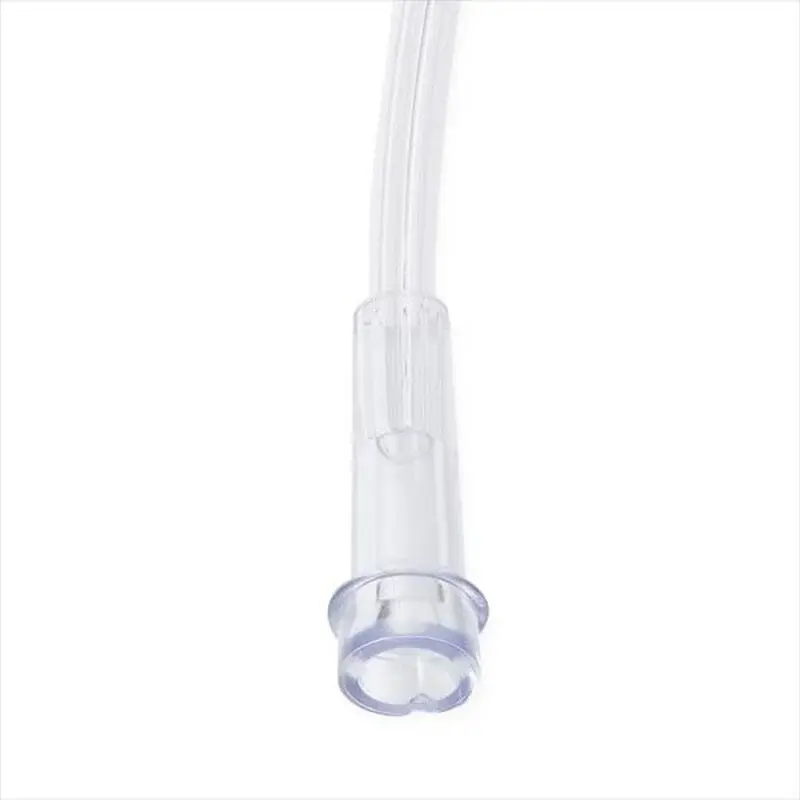
Seven-foot crush-resistant flexible medical-grade PVC oxygen supply tubing with standard universal connectors, maintaining consistent supplemental oxygen flow from concentrator or cylinder to nasal cannula or mask during respiratory therapy.
Loading…
The oxygen supply tubing serves two structurally distinct functions that are both essential to effective supplemental oxygen therapy, and that a single tube component must satisfy simultaneously. The first function is flow continuity: the tubing is the conduit through which the prescribed supplemental oxygen travels from the output port of the oxygen source — concentrator, cylinder, or regulator — to the patient interface where the patient inhales it. Oxygen therapy is prescribed at specific flow rates — measured in litres per minute — and the prescribed flow rate is the clinical parameter that the physician has determined will maintain the patient's blood oxygen saturation at the therapeutic target. Any interruption to the flow through the supply tubing — caused by a kink, crush, or bore collapse — reduces or eliminates the oxygen reaching the patient interface, dropping the delivered flow rate below the prescribed level and allowing the patient's oxygen saturation to fall. Unlike some medication delivery failures that have a gradual clinical onset, a sudden loss of supplemental oxygen flow in a patient who depends on it for saturation maintenance can produce a rapid symptomatic desaturation. The crush-resistant construction of this tubing addresses the specific failure mode of standard oxygen tubing that is most common in homecare and clinical environments: the bore collapse that occurs when the tubing is pinched beneath a chair leg, wheelchair wheel, bed frame, or other compressive load that the patient's movement brings the tube into contact with. The crush-resistant wall reinforcement maintains the internal bore diameter under compressive loads that collapse standard-wall PVC tubing, preventing the flow interruption that tube bore collapse produces.
The second function the oxygen supply tubing must satisfy simultaneously is patient mobility — providing a tube length and flexibility that allows the patient to move within their home or care environment without the oxygen source becoming a tether that restricts movement to a radius defined by the tube length. A 7-foot tube provides the operating radius required for most homecare use scenarios: reaching from a concentrator or cylinder positioned at a bedside or in the room to the patient's position in the bed, chair, or room without the tube tension that a shorter tube would create when the patient moves to the limits of their movement range. A tube that is too short for the patient's movement range creates a constant tension at the nasal cannula or mask interface — a pull force that displaces the cannula from the correct nasal position and interrupts the oxygen delivery that the cannula is positioned to provide. The tube's flexible construction addresses the second aspect of mobility: a rigid or stiff tube that does not follow the patient's positional changes transmits bend forces along its length rather than conforming to the patient's movement, generating the coil stress and kink risk that flexible construction eliminates.
The standard universal connector specification of the 7-foot oxygen tubing addresses the compatibility requirement of an oxygen supply component that must interface with the broadest possible range of oxygen source output ports and patient interface inlet ports in clinical and homecare use. Oxygen concentrators, cylinder regulators, and wall oxygen supply outlets use a common standard connector geometry — a tapered or barbed fitting of a standard diameter — as do most nasal cannulae and oxygen masks at their supply tubing inlet. Standard connector tubing connects to both the source and the patient interface without requiring adapters or source-specific fitting variants, allowing the same tubing to be used across the range of oxygen equipment configurations encountered in clinical and homecare practice.
The case packaging of 50 units addresses the supply volume requirement of clinical facilities and home oxygen supply providers that manage oxygen therapy across multiple patients. Oxygen supply tubing requires regular replacement on a hygiene and performance maintenance schedule — the tubing accumulates condensation, particulate debris, and respiratory secretion contamination from the patient interface end during daily use, and requires replacement rather than cleaning to maintain hygienic oxygen delivery. A case of 50 units provides the replacement supply volume appropriate for clinical facilities where regular scheduled tubing replacement is part of the oxygen therapy maintenance protocol.
✓ Homecare concentrator connection — oxygen supply tubing connecting a home oxygen concentrator output port to the patient's nasal cannula during prescribed supplemental oxygen therapy at home, with 7-foot length providing adequate mobility radius within the home room
✓ Clinical and ward oxygen delivery — supply tubing connecting wall oxygen outlets or cylinder regulators to patient nasal cannulae or masks in hospital ward, emergency, and long-term care facility environments
✓ Wheelchair and mobility aid user connection — crush-resistant construction particularly appropriate for patients in wheelchairs or with mobility aids, where wheel and frame contact with floor-routed oxygen tubing is a frequent compressive load scenario
✓ Scheduled clinical tubing replacement — case-of-50 format used for regular tubing replacement across a clinical facility's oxygen therapy patient population, maintaining hygienic oxygen delivery at the clinical replacement interval
✓ Cylinder and portable oxygen connection — tubing connecting portable oxygen cylinder regulator outputs to nasal cannulae during supplemental oxygen use outside the home, providing a crush-resistant supply line for active mobility contexts
Carousel items
Testimonial items
Very welcoming and informative. We went in to rent a Walker for my mom to see if she would use it. They had no rentals left so he gave us a brand new one on rental. Highly recommend this company for all your ADL needs.
Tara Maye
The rating of this product is 5 out of 5
Fantastic service and experience, from delivery to pickup we could not have asked for anything more! We rented a hospital bed, and I do not believe you would get better service anywhere. Highly recommended!
Shawn Dillon
The rating of this product is 5 out of 5
Super friendly and very helpful! Delivered the wheelchair for me, special ordered other parts and took the time to show me how to install. I recommend!
Fiona Haines
The rating of this product is 5 out of 5
Can not thank the team at Med Supplies enough for their amazing service. We were in a tough spot till we got their help. Amazing service. Kind and respectful delivery. First class all the way. Thank you again.
Jon Beatty
The rating of this product is 5 out of 5
Ordered the chair on Sunday and it arrived Monday morning. Spoke to customer service to follow up on delivery times. It was already on my front door. Excellent and helpful staff. The product is sturdy and of good quality. Thank you for your help.
H D
The rating of this product is 5 out of 5
Excellent experience - website faithfully represented what was in stock (which hasn't always been my experience with other vendors sadly), and local shipping was really fast - ordered on the weekend, received it on Monday in my case. Thank you for being
Jason Hudson
The rating of this product is 5 out of 5
0/0
You cart is currently empty
780 409-1509
Get directions