
Slideshow Items

  • Transfer Aids
  • mobility/transfer-aids
  • Mobility
  • mobility
PARSN-Parsons

  |  

Parsons Look Modular Transfer Bench

C$299.99
Out of stock online
In store: Check availability

Available in store

SKU: 1475

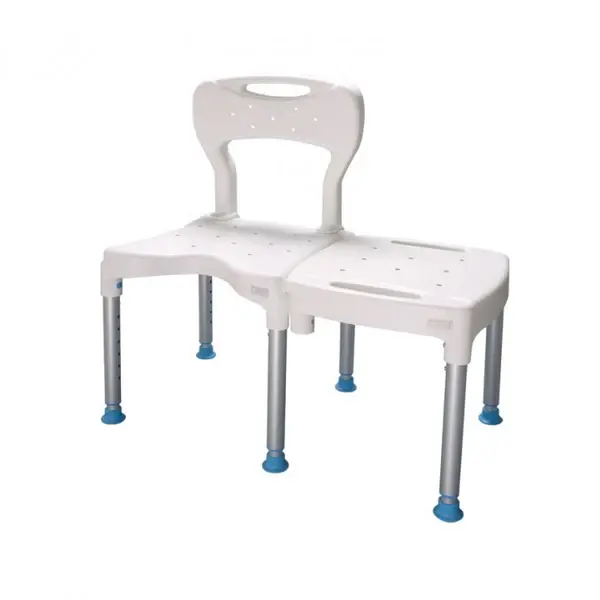
The two-piece modular design with adjustable 15-21-inch height enables transfer bench or bath chair configurations while aluminum frame with rubber-tipped legs, integrated drain holes delivers 250-lb capacity plus wet-environment stability.

    • Why Modular Two-Piece Design?

      The modular two-piece construction represents a fundamental advancement in bathroom safety equipment by addressing the diverse and evolving needs of users with mobility limitations who require bathing assistance. Traditional fixed-configuration bath benches force users to commit to a single setup—either an over-tub transfer bench spanning the bathtub rim or a standalone shower chair positioned entirely within the tub or shower stall—creating significant limitations when living situations change, mobility needs evolve, or users need equipment versatility for travel or temporary housing. The two-piece modular system separates the bench into two independent sections that can be configured together as a full-width transfer bench for over-tub transfers, or used separately as individual bath chairs when positioned entirely within tub or shower enclosures. This adaptability proves essential across multiple scenarios: users recovering from hip or knee surgery may initially require the full transfer bench configuration during early recovery when stepping over tub rims presents fall risk, then transition to the standalone chair configuration as strength improves; individuals alternating between homes with different bathroom configurations (parent's home with tub, assisted living with roll-in shower) can reconfigure the same equipment rather than purchasing separate devices; couples sharing a bathroom where one spouse requires transfer assistance while the other prefers a standard chair benefit from the dual-configuration capability. The modular design also accommodates bathroom architectural variations including narrow tub surrounds where full-width benches don't fit, shower stalls requiring compact seating, and combination tub-shower units with sliding doors that necessitate removable seat sections to allow door closure. Beyond functional versatility, the two-piece construction simplifies transport and storage—the separated sections stack compactly for vehicle transport during travel or store efficiently in limited closet space when not in daily use. This modularity extends equipment useful life significantly, as users can continue using familiar, properly-fitted equipment across changing circumstances rather than purchasing new devices with each life transition.

      Key Features

      • Modular Two-Piece Construction: Independent sections configure as full transfer bench (over-tub) or separate bath chairs (in-tub/shower) for versatile applications
      • Adjustable Height Range: 15-21 inches (6 inches of adjustment) accommodates varying tub rim heights and user anthropometry
      • Wide Seating Surface: 33.5 inches width × 16.5 inches depth provides stable support for lateral transfers and comfortable seated bathing
      • 250-lb Weight Capacity: Aluminum frame structure safely supports average adult body weights with engineering safety margins
      • Lightweight Aluminum Frame: Corrosion-resistant construction (approximately 10-15 lbs total) enables easy repositioning while maintaining structural strength
      • Rubber-Tipped Legs: Non-slip feet with suction properties provide stable contact on wet tile, fiberglass, or acrylic tub surfaces
      • Integrated Drain Holes: Perforated seat allows water drainage, preventing pooling that could create slipping hazards or bacterial growth
      • Removable Seat Panel: Some configurations feature detachable seat sections enabling shower curtain or door closure for privacy and water containment
      • Tool-Free Height Adjustment: Push-pin or snap-button mechanisms enable quick height changes without requiring tools or technical knowledge

      Benefits

      • Maximized Equipment Investment: Single purchase serves multiple configurations, eliminating need for separate transfer bench and bath chair purchases (saving $100-200)
      • Adaptable to Life Changes: Equipment evolves with user's recovery progress, bathroom modifications, or relocation without requiring new device purchases
      • Enhanced Transfer Safety: Wide stable surface reduces lateral fall risk during vulnerable seated transfers across tub rim (40-60% safer than standing step-over)
      • Improved Bathing Independence: Secure seated position enables self-bathing for users unable to stand safely in tub or shower environments
      • Reduced Caregiver Strain: Transfer bench configuration decreases physical lifting requirements, protecting caregivers from back injury during assisted bathing
      • Bathroom Compatibility: Modularity accommodates varied tub widths, shower stall dimensions, and door configurations common across housing types
      • Travel-Friendly Design: Two-piece construction separates for compact transport in vehicles, enabling equipment use at multiple locations
      • Long-Term Durability: Aluminum construction resists bathroom humidity and water exposure without rusting, maintaining function for 5-10 years typical service life
      • Easy Maintenance: Non-porous materials wipe clean easily; drain holes prevent water accumulation that could harbor mildew or bacteria

      Clinical Applications

      ✓ Post-operative hip replacement recovery requiring non-weight-bearing tub transfer protocols
      ✓ Post-operative knee replacement with restricted flexion limiting step-over capability
      ✓ Total joint arthroplasty patients following hip precautions (no bending beyond 90 degrees)
      ✓ Stroke survivors with hemiplegia requiring seated lateral transfers
      ✓ Multiple sclerosis patients with lower extremity weakness and balance deficits
      ✓ Parkinson's disease with freezing gait and fall risk during bathroom transitions
      ✓ Spinal cord injury with incomplete paralysis maintaining seated balance
      ✓ Cerebral palsy adults with ambulatory limitations but functional trunk control
      ✓ Muscular dystrophy with progressive lower extremity weakness
      ✓ Chronic obstructive pulmonary disease with dyspnea during standing activities
      ✓ Congestive heart failure patients requiring energy conservation during activities of daily living
      ✓ Arthritis affecting multiple joints with pain during weight-bearing and position changes
      ✓ Peripheral neuropathy with balance impairment and fall history
      ✓ Geriatric frailty with reduced endurance and orthostatic hypotension
      ✓ Pregnancy-related balance changes in third trimester requiring bathing safety equipment
      ✓ Temporary mobility limitations from sports injuries, fractures, or surgical procedures
      ✓ Bariatric patients up to 250 lbs requiring stable wide seating for bathing assistance

      Usage & Application

      Initial Assembly and Configuration Selection: Upon receiving the modular transfer bench, unpack all components and identify the two main sections: the inner section (designed to sit inside the tub) and the outer section (designed to rest outside the tub rim), or the two independent chair sections if configuring for standalone use. For transfer bench configuration, position the inner section inside the bathtub against the far wall, ensuring all four legs contact the tub floor securely. Place the outer section outside the tub adjacent to the inner section, aligning the connection points if the model features mechanical connectors, or simply butting the sections together if they operate as independent pieces sharing the tub rim. For standalone bath chair configuration, select either section (both typically function independently) and position entirely within the tub or shower stall as desired. The two-piece separation allows flexibility in placement based on bathroom dimensions and user preferences.

      Height Adjustment and Leveling: Before use, adjust the bench height to align with the bathtub rim for transfer configuration, or to the user's preferred seated height for bath chair configuration. Most models feature independent height adjustment on each leg using push-pin or snap-button mechanisms. To adjust, depress the pin or button, slide the inner leg tube to the desired height setting (typically marked in 1-inch increments from 15-21 inches), and release the pin to engage the nearest adjustment hole. Ensure all four legs (or all eight legs if using both sections as a transfer bench) lock securely at the chosen height with pins fully seated in adjustment holes. Verify that the seat surface sits level by placing a carpenter's level across the seat or observing whether water pools in one direction. On unlevel bathroom floors, you may need to set different leg heights—for example, if the floor slopes toward the drain, the legs nearest the drain may need to be set 1-2 inches higher than the opposite legs. Once height is set, test stability by pressing firmly downward on multiple points of the seat surface to confirm no rocking, wobbling, or leg movement occurs.

      Rubber Tip Inspection and Positioning: Before each use, inspect the rubber tips on all leg ends for wear, cracks, or damage that could compromise traction. Replace worn tips immediately, as they provide critical slip resistance on wet surfaces. Clean the bathroom floor and tub bottom of soap residue, shampoo, or body oils that could reduce tip friction. Position each leg so the rubber tip contacts the floor or tub bottom completely with full surface area engagement. Some models feature suction-cup style tips that create additional holding force—ensure these make complete contact with smooth surfaces and that any release tabs or edges don't prevent full suction engagement. On textured or non-slip tub bottoms, standard rubber tips work well, but suction tips may not seal properly; if suction tips lift easily, they're not providing benefit and should be considered standard friction tips only. Verify that all legs bear weight evenly by sitting gently on the seat and checking that no single leg appears to carry disproportionate load or that the bench rocks between leg pairs.

      Transfer Technique for Over-Tub Configuration: When using the bench as an over-tub transfer device, approach from outside the tub and back up to the outer section of the bench until you feel it contact the back of your legs. The bench should be positioned perpendicular to the tub with the long axis spanning across the tub rim. Using a wall grab bar, shower door frame, or having a caregiver provide steadying support, lower yourself onto the outer section of the bench in a seated position. Your buttocks should be positioned toward the outside edge initially. Scoot or shift your weight laterally across the bench surface, moving from the outer section across the tub rim to the inner section. This lateral scooting motion eliminates the need to step over the tub rim while standing. Once positioned on the inner section fully inside the tub, you can adjust to face the showerhead or faucets as preferred. Some users find it helpful to lift each leg individually over the tub rim after they're seated rather than attempting the maneuver while standing. When exiting, reverse the process: scoot laterally from the inner section across to the outer section, then stand from the outer section with grab bar support.

      Seated Bathing Position and Techniques: Once positioned on the bench or chair, sit toward the back of the seat surface to maximize stability and utilize the full depth of the seating surface. Your feet should rest flat on the tub bottom if possible, or you may use a foot stool or bath mat to provide foot support if leg length doesn't reach comfortably. The drain holes in the seat prevent water accumulation beneath you, but slight water collection is normal—this drains away when you shift weight. Use a handheld showerhead if available, as this provides better control for seated bathing compared to overhead fixed showerheads. If using a fixed showerhead, adjust the angle so water streams flow toward the drain rather than pooling on the seat. Some users find that placing a folded washcloth on the seat provides additional comfort and friction, though this retains water—if using a cloth, wring it thoroughly after bathing to prevent mildew. Reach carefully to soap dispensers, shampoo, or bathing items; consider using a shower caddy within arm's reach rather than requiring excessive stretching that could compromise balance.

      Removable Seat Panel Function: If your model includes a removable seat panel or section, this feature allows you to maintain shower curtain or door functionality for privacy and water containment. In the transfer bench configuration, the removable panel typically sits at the junction between the inner and outer sections, bridging across the tub rim. To close a shower curtain or sliding door, remove this panel by lifting it from its mounting brackets or releasing the securing clips per your model's specific design. This creates a gap allowing the curtain or door to close within the tub perimeter. The gap doesn't eliminate the bench's function—you can still perform lateral transfers by scooting across the space where the panel was located, though this requires slightly more core strength and balance than having a continuous surface. After bathing, replace the removable panel for maximum stability during the exit transfer. This feature proves particularly valuable in shared bathrooms where other household members use the tub conventionally and require normal shower enclosure operation.

      Transitioning Between Configurations: As your mobility improves or circumstances change, you may wish to transition from the full transfer bench configuration to a standalone bath chair configuration. To make this change, simply separate the two pieces and remove the outer section from the bathroom entirely, or reposition it for other uses. Use only the inner section as a standard bath chair positioned fully within the tub or shower. This configuration requires that you can step over the tub rim independently while using grab bars or other support, as the bench no longer provides a seated transfer pathway. The standalone chair configuration provides a smaller footprint beneficial in compact shower stalls, saves floor space outside the tub, and may improve bathroom aesthetics. If you're unsure whether you're ready to transition from transfer bench to bath chair use, consult your physical therapist or occupational therapist, who can assess your balance, lower extremity strength, and step-over capability to determine safety appropriateness.

      Cleaning and Maintenance: After each use, rinse the bench thoroughly with clean water to remove soap residue, shampoo, body oils, and any loosened skin cells that could accumulate in drain holes or surface textures. Use a soft brush or cloth to scrub accessible surfaces, paying particular attention to drain holes where debris can accumulate and create bacterial growth or mildew. Once weekly, clean with a mild bathroom cleaner or diluted bleach solution (1 part bleach to 10 parts water), allowing appropriate contact time for disinfection, then rinse thoroughly. Avoid abrasive cleaners or scouring pads that could scratch the aluminum finish or create rough surfaces where bacteria can harbor. Inspect rubber tips weekly for wear patterns, compression, or separation from the leg tubes; replace tips when tread depth diminishes significantly or cracks appear. Check height adjustment mechanisms monthly to ensure pins or buttons engage properly without excessive play or difficult operation. Tighten any loose fasteners if your model includes bolted connections. Store the bench in a dry, well-ventilated area if not in daily use, as prolonged exposure to bathroom humidity may accelerate rubber degradation even on corrosion-resistant aluminum frames.

      Safety Considerations and Fall Prevention: While transfer benches significantly improve bathing safety compared to standing bathing, they don't eliminate fall risk entirely. Always use grab bars or other support when transferring onto or off the bench. Never attempt to stand on the bench surface itself—it's designed for seated use only. Avoid lateral leaning or reaching that shifts your center of gravity beyond the base of support; instead, reposition yourself on the seat to bring items within easy reach. If using bath oils or similar products that create slippery surfaces, exercise extra caution as these can make both the bench surface and your skin more slippery than soap alone. Consider placing a small non-slip mat on the bench surface if excessive sliding occurs, though ensure it doesn't block drain holes completely. If you experience any close calls, near-falls, or actual falls while using the bench, report these to your healthcare provider and request a home safety assessment from an occupational therapist who can identify contributing factors and recommend modifications.

      Bathroom Modification Integration: The transfer bench works most effectively when integrated with other bathroom safety modifications. Install a grab bar on the wall adjacent to where the outer section of the bench sits, positioned to allow you to grasp it while lowering to seated position or rising to standing. The grab bar should be mounted into wall studs or blocking rather than anchored to drywall alone to ensure adequate strength. Install a second grab bar on the wall inside the tub where you can reach it while seated on the inner section for stability while bathing. Ensure adequate lighting in the bathing area so you can clearly see the bench surface, tub edges, and flooring. Consider installing a handheld showerhead with a slide bar so you can lower the showerhead to seated height, greatly improving bathing efficiency and comfort. Remove unnecessary bath mats, towels, or other tripping hazards from the bathroom floor to create clear approach paths to the bench. If bathroom space allows, consider adding a small table or caddy outside the tub where you can stage clothing, towels, and bathing supplies within reach without requiring standing transfers.

      Technical Specifications

      Model Information
      Product Type: Modular Transfer Bench and Bath Chair
      Configuration Options: Two-piece design for transfer bench or standalone bath chair use
      Primary Application: Bathtub and shower seated transfer and bathing assistance

      Seating Dimensions
      Seat Width: 33.5 inches (85 cm) - provides wide lateral transfer surface
      Seat Depth: 16.5 inches (42 cm) - accommodates varied body sizes
      Note: Some model variants feature 30.5 inches width × 13.5 inches depth - confirm specific model dimensions
      Seat Surface: Perforated with integrated drain holes for water flow-through

      Height Adjustment
      Minimum Height: 15 inches (38 cm) from floor to seat surface
      Maximum Height: 21 inches (53 cm) from floor to seat surface
      Total Adjustment Range: 6 inches of height variation
      Adjustment Mechanism: Push-pin or snap-button on each leg (tool-free adjustment)
      Height Increments: Typically 1-inch spacing between adjustment positions

      Weight Specifications
      Weight Capacity: 250 lbs (113 kg) maximum user weight
      Bench Weight: Approximately 10-15 lbs total (4.5-6.8 kg) depending on configuration
      Weight Distribution: Load distributed across 4 legs (single section) or 8 legs (two-section transfer bench)

      Frame Construction
      Material: Aluminum alloy tubing (corrosion-resistant, rust-proof)
      Finish: Powder-coated or anodized for moisture protection
      Leg Design: Height-adjustable telescoping legs with push-pin locking
      Leg Tips: Rubber non-slip feet with optional suction capability on smooth surfaces

      Modular Configuration
      Number of Pieces: 2 independent sections
      Section 1: Inner section for placement inside bathtub
      Section 2: Outer section for placement outside bathtub (or use either as standalone chair)
      Connection Type: Butt-together configuration or mechanical connectors (model-specific)
      Removable Panel: Some models feature detachable seat section for door/curtain closure

      Functional Features
      Drain Holes: Multiple perforations in seat surface for water drainage
      Backrest: Typically not included; some models may offer optional backrest attachments
      Armrests: Typically not included; focus on open transfer design
      Tool Requirements: None for height adjustment; possible for initial assembly

      Stability and Safety
      Leg Spread: Wide stance base provides lateral stability on tub bottom and bathroom floor
      Tip Material: Non-marking rubber with tread pattern for slip resistance
      Suction Features: Enhanced grip on smooth fiberglass, acrylic, or tile surfaces (model-specific)
      Anti-Tip Design: Low center of gravity and wide base prevent tipping during transfers

      Dimensional Specifications
      Overall Width (Transfer Configuration): Approximately 33.5 inches spanning tub rim
      Overall Depth (Single Section): Approximately 16.5 inches front-to-back
      Clearance Requirements: Ensure adequate space for leg positioning inside and outside tub

      Compatibility
      Tub Rim Width Compatibility: Fits standard residential bathtubs with 3-6 inch wide rim surfaces
      Shower Stall Use: Single sections function as standalone chairs in shower stalls
      Door Clearance: Removable panel models accommodate sliding shower doors and curtains

      Maintenance Requirements
      Cleaning: Rinse after each use; weekly disinfection with mild cleaner
      Tip Replacement: Replace rubber tips annually or when wear indicators visible
      Storage: Store dry when not in regular use; resistant to bathroom humidity exposure

      Compliance and Standards
      Intended Use: Bathroom safety equipment for mobility-limited individuals
      User Population: Adults and larger adolescents up to 250 lb body weight
      Environment: Wet bathroom environments including bathtubs and showers

      Package Contents
      2 bench sections (inner and outer, or Section A and Section B)
      8 height-adjustable legs with rubber tips installed
      Assembly hardware (if required for specific model)
      User manual with configuration instructions and safety guidelines

    • No reviews yet

      Add yours

    Testimonials from Google

    See all reviews

    Your cart — 0

    You cart is currently empty

    Login

    By using our website, you agree to the use of cookies. These cookies help us understand how customers arrive at and use our site and help us make improvements. Hide this message More on cookies »