Slideshow Items

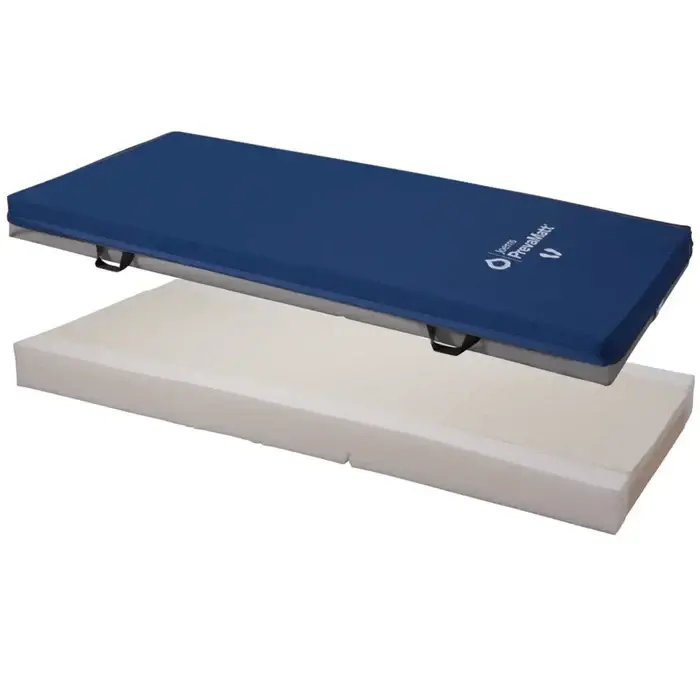
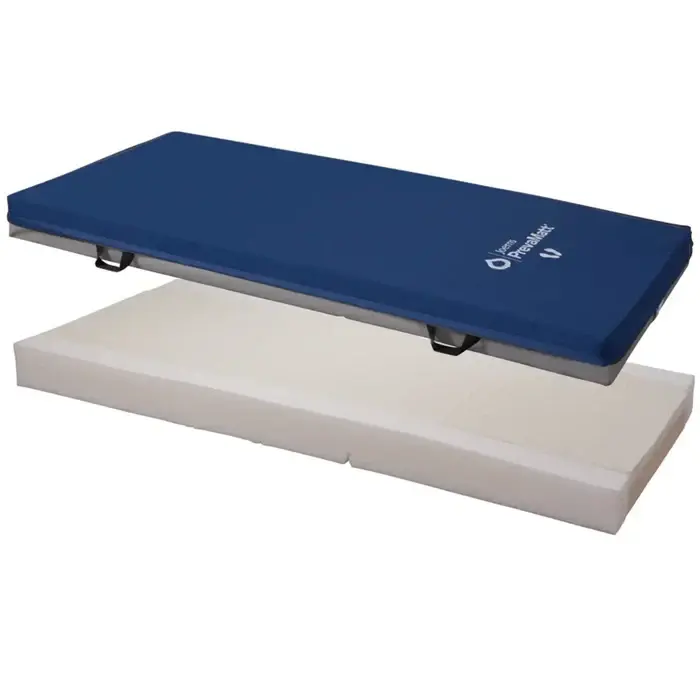
PrevaMatt Alleviate Mattress

C$1,399.00
Out of stock online
In store: Check availability

Available in store

SKU: PVAL-3580FLNA4SZP

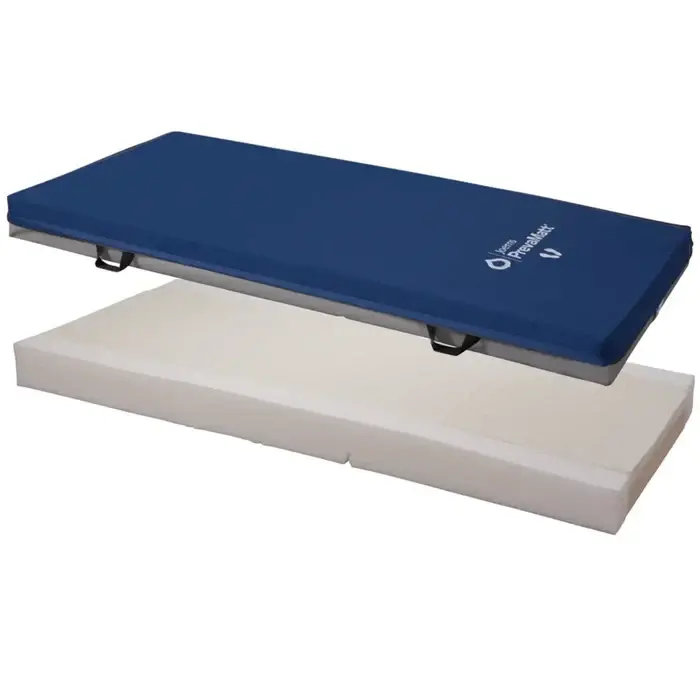
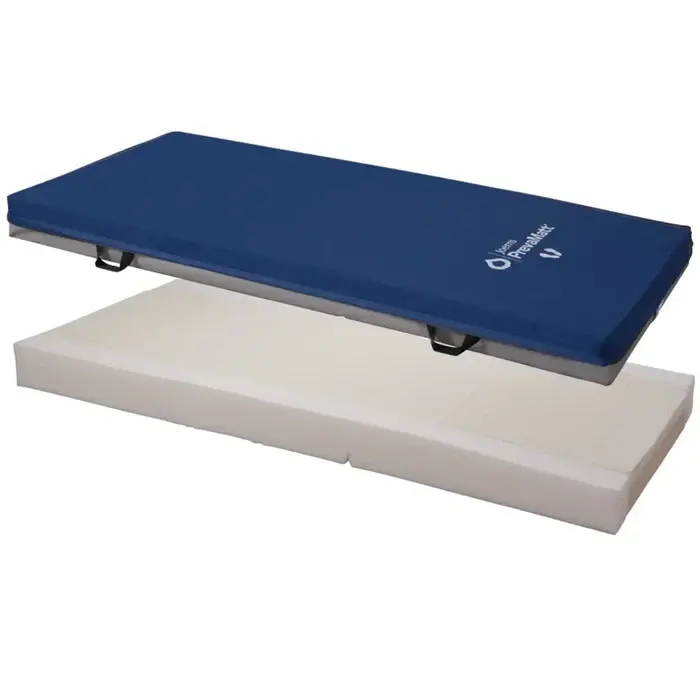
The PrevaMatt Alleviate Mattress by Joerns Healthcare is a 500 lb therapeutic multi-layer VPF foam mattress with viscoelastic topper, articulation cuts, sloped heels, firm perimeter, and fluid-resistant stretch cover for institutional beds.

    • Why the PrevaMatt Alleviate for Long-Term Clinical Pressure Management?

      The PrevaMatt Alleviate is positioned differently from standard therapeutic foam mattresses — not as a commodity foam replacement but as a clinically engineered system whose individual design elements each address a specific and documented clinical problem in long-term care and homecare pressure management. The Variable Pressure Foaming (VPF™) technology that forms the mattress core is not a marketing designation for generic multi-density foam — it is a manufacturing process in which different zones of the foam core are formed with precisely calibrated density and firmness specifications during a single continuous foaming operation rather than by laminating separately manufactured foam layers. This continuous zone-differentiated manufacturing produces a mattress in which the foam density transitions between zones are gradual and structurally integrated rather than abrupt lamination boundaries, which is clinically relevant because lamination boundaries in multi-layer foam mattresses are the sites of progressive delamination failure under the repeated flexion and compression cycles of adjustable hospital bed use. VPF technology eliminates this failure mode at the source, contributing directly to the 7-year warranty durability of the Alleviate in demanding institutional use environments.

      The articulation cuts in the PrevaMatt Alleviate are engineering features specifically designed for the mechanical demands of adjustable hospital beds — a context that destroys standard flat-panel foam mattresses at accelerated rates by imposing repeated bending stress at the head and knee elevation flex points. When an electric hospital bed elevates the head section, the mattress is forced to fold against itself at the articulation point, and this repeated bending creates cumulative fatigue at the foam's bend zone that progressively weakens and eventually separates the foam at that location. In a standard foam mattress without articulation relief cuts, this failure typically manifests as visible foam breakdown and surface irregularity at the head-of-bed crease zone within one to two years of daily use in an adjustable bed environment. The strategically placed relief cuts in the Alleviate create stress-free flex zones at the anticipated articulation points, allowing the mattress to bend smoothly at these locations without the shear stress concentration that causes foam fatigue — the equivalent of the pre-scored fold lines in cardboard that allow clean, controlled bending without tearing. The result is a mattress that maintains its full surface integrity and pressure redistribution geometry throughout the adjustable bed's full range of head and knee positioning over the product's service life.

      The firm perimeter edge of the Alleviate addresses a clinical safety need that is specific to the hospital bed and homecare bed environment and that standard therapeutic foam mattresses — which tend to have soft, compliant edges matching the surface foam specification — do not adequately support. For patients who are semi-independent in their mobility, bed transfers require the ability to sit on the edge of the mattress and transfer to a bedside chair, wheelchair, or standing position using the edge as a stable push-off platform. A soft foam mattress edge compresses under the patient's seated body weight, tilting the patient's pelvis toward the mattress centre and significantly increasing the effort and instability involved in the transfer — for patients with limited leg strength, hip precautions, or balance impairments, a collapsing mattress edge creates a fall risk and may prevent independent transfer entirely. The Alleviate's firm perimeter maintains its geometry under the patient's seated edge weight, providing the stable, non-compressing platform that enables safer and more independent transfers across the full population of patients who use the bed.

      The heel slope design — integrated into the foot zone of the Alleviate foam core — is a passive heel pressure redistribution feature that addresses the specific anatomy of the supine patient's heel contact zone without requiring separate heel offloading equipment. In the standard supine position on a flat foam surface, the calcaneal prominence concentrates body weight at a very small contact area at the posterior heel, producing peak interface pressures at the calcaneus that can exceed safe tissue tolerance even on therapeutic foam surfaces. The heel slope transitions the foam geometry at the foot end of the mattress from a flat horizontal surface to a gentle downward incline, allowing the posterior heel to rest in a slightly plantarflexed position that shifts the primary contact from the calcaneal apex toward the broader plantar surface of the heel — distributing the contact force over a larger tissue area and reducing the peak pressure at the calcaneal prominence. This integrated geometric solution complements the foam's surface pressure redistribution with an anatomical positioning effect that no flat-surface mattress achieves.

      Key Features

      • Variable Pressure Foaming (VPF™) technology creates zone-differentiated foam density in a single continuous manufacturing operation without lamination boundaries
      • Viscoelastic memory foam topper layer provides body-contouring surface pressure redistribution for bony prominence offloading
      • Strategically placed articulation cuts allow stress-free flexion at adjustable bed head and knee elevation points, extending mattress service life
      • Heel slope design shifts calcaneal contact from the apex to the broader plantar heel surface to reduce peak heel interface pressure
      • Firm perimeter edge maintains geometry under seated patient weight to enable stable, safer independent transfers
      • Fluid-proof antibacterial antifungal low-shear 4-way stretch cover reduces friction, moisture exposure, and surface pathogen load
      • 4-way stretch construction allows the cover to follow mattress contouring and adjustable bed articulation without bunching or tension
      • 500-pound weight capacity and 7-year warranty support the demanding performance requirements of institutional long-term care environments

      Benefits

      • VPF technology eliminates lamination boundary delamination failure — the most common structural failure mode in layered foam mattresses on adjustable beds
      • Articulation cuts prevent the foam fatigue and surface breakdown at head and knee flex zones that standard mattresses develop in adjustable bed use
      • Heel slope reduces calcaneal peak pressure passively through geometric design without requiring supplemental heel offloading equipment
      • Firm perimeter supports patient independence during bed transfers, reducing caregiver transfer assistance requirements and fall risk
      • Viscoelastic topper provides the body-contouring pressure redistribution that reduces sacral, trochanteric, and shoulder bony prominence loading
      • Fluid-proof cover with antibacterial and antifungal treatment supports infection control protocols in shared institutional environments
      • 4-way stretch cover minimizes friction and shear forces during patient repositioning and bed linen management activities
      • 7-year warranty provides the long-term institutional procurement confidence appropriate for a high-use clinical environment mattress investment

      Clinical and Care Applications

      ✓ Long-term care residents requiring a durable therapeutic mattress replacement on adjustable hospital beds used daily over multi-year periods ✓ Homecare patients on electric adjustable beds where standard foam would fail at the articulation flex zones within one to two years ✓ Post-operative patients recovering at home or in rehabilitation where firm perimeter edge support facilitates independent bed transfers ✓ Patients with heel pressure injury risk requiring passive calcaneal offloading at the foot section of the mattress ✓ Semi-independent patients whose bed transfer safety depends on a firm, non-compressing mattress edge as a push-off platform ✓ Long-term care facilities implementing pressure injury prevention programs requiring consistent therapeutic support surface documentation ✓ Bariatric patients up to 500 pounds requiring durable foam construction that maintains pressure redistribution performance at high body weights ✓ Rehabilitation programs where patients are progressing from full bed rest to edge-sitting and transfer training requiring stable edge support ✓ Wound care programs incorporating therapeutic mattress as a component of pressure injury prevention and treatment protocols ✓ Facilities requiring cover durability and infection control performance — fluid-proof antibacterial antifungal cover with low-shear stretch properties ✓ AADL and insurance-funded homecare equipment programs where therapeutic mattress replacement with clinical safety features is an authorized benefit ✓ Patients with fall risk or balance impairment where bed transfer instability from soft mattress edges is a documented safety concern

      Usage & Application

      Installation on Adjustable Hospital Beds Position the PrevaMatt Alleviate on the adjustable bed frame with the heel slope section at the foot of the bed — the slope geometry is directional and must be correctly oriented to position the heel contact zone at the calcaneal location of the supine patient. Confirm the articulation cut positions align with the bed frame's head section and knee section flex points — the cuts are designed for standard hospital bed articulation geometry, and correct mattress orientation ensures the cuts are at the correct anatomical position when the bed is adjusted. The 4-way stretch cover should lay flat without tension or bunching on the correctly positioned mattress. Test the head and knee elevation through the full range of motion before patient placement to confirm the mattress flexes smoothly at the cut zones without surface distortion.

    • No reviews yet

      Add yours

    Testimonials from Google

    See all reviews

    Recently viewed

    Your cart — 0

    You cart is currently empty

    Login