Why a Level II Powered Air Mattress and Why Rental Makes Clinical Sense?
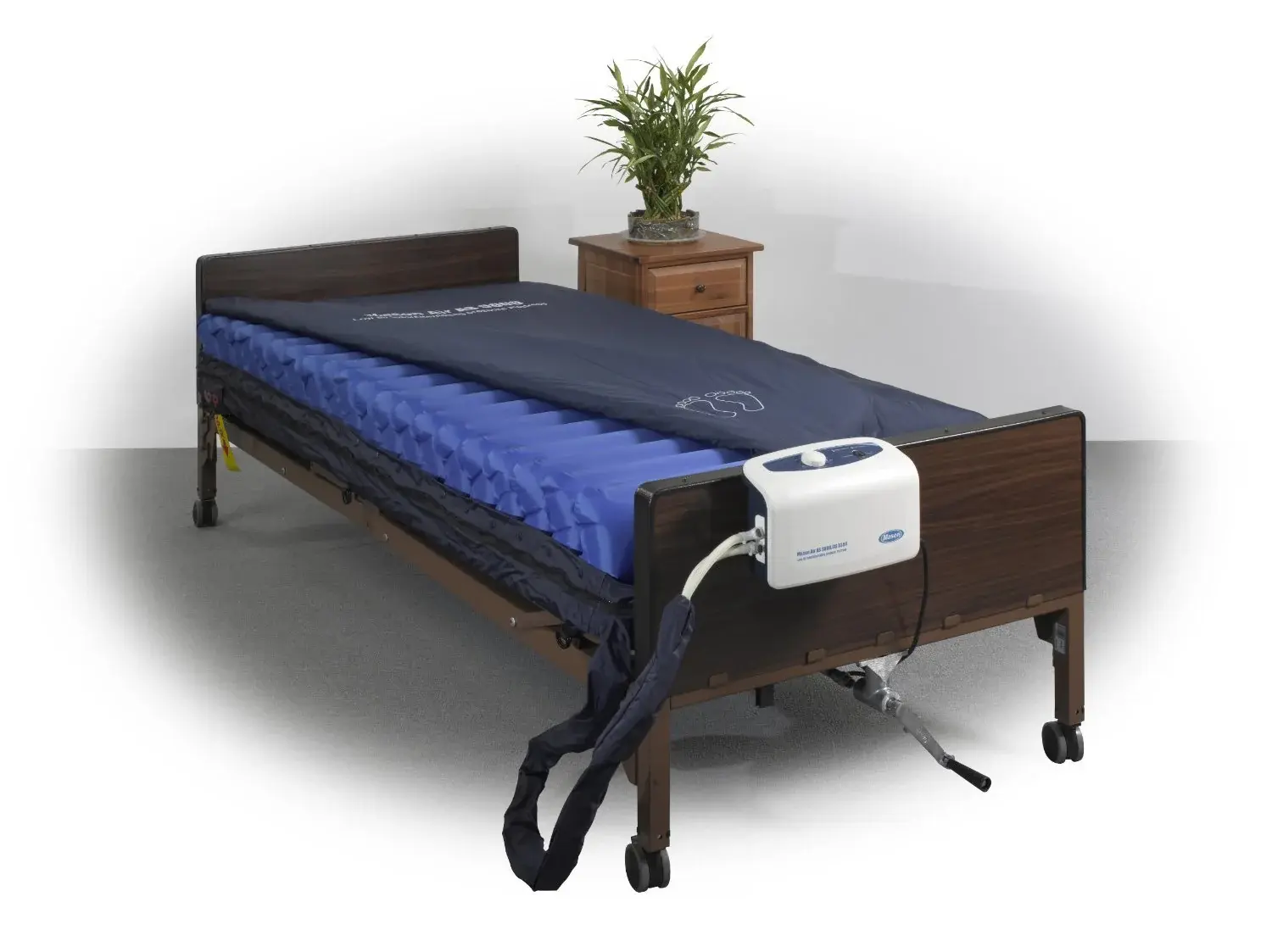
The clinical support surface hierarchy used in pressure injury prevention practice classifies mattresses and overlays into levels based on the complexity and mechanism of the therapeutic support they provide. A Level I support surface — typically a high-density foam mattress or a static air overlay — provides passive pressure redistribution through material compliance: the foam or static air conforms to the body's contours, reducing peak interface pressure at bony prominences compared to a standard hospital mattress. A Level II support surface introduces a powered, active pressure redistribution mechanism — alternating pressure air cells that cycle through inflation and deflation sequences under a programmed control system — to achieve pressure relief that passive surfaces cannot deliver. The Level II designation of this air mattress system identifies it as an active therapeutic surface appropriate for patients whose pressure injury risk level or existing wound status has been assessed as requiring more than passive foam redistribution alone can provide: patients with Braden scale scores indicating moderate to high risk, patients with existing Stage II or Stage III pressure injuries, and patients whose immobility, nutritional status, or skin fragility places them in the risk tier where active surface therapy is clinically indicated.
The mechanism by which alternating pressure cells deliver their therapeutic benefit is fundamentally different from the passive compliance mechanism of foam. In a passive foam mattress, the foam deforms under the patient's body weight and maintains that deformation continuously — the bony prominence is supported at a lower peak pressure than on a hard surface, but that reduced pressure is sustained without interruption for as long as the patient lies in the same position. Continuous pressure above the threshold of capillary closing pressure — approximately 32 mmHg in most tissue vascular beds — impairs the local microcirculation even at levels below the peak pressures a standard mattress would generate. Alternating pressure cells address this limitation by actively removing pressure from each body area on a cyclical basis: as one set of air cells deflates beneath a body segment, the tissue over that segment experiences a period of near-zero interface pressure that allows microcirculatory reperfusion before the opposing cell set deflates and the first set re-inflates to support the body weight again. This cyclical reperfusion is the mechanism that prevents the cumulative ischaemia of continuous loading even at reduced pressure levels — and it is a mechanism that no passive foam surface, regardless of its density or compliance specification, can replicate.
The rental model for the Level II air mattress system addresses a clinical supply management reality that makes purchase impractical for the majority of patients who need it. Post-surgical recovery patients, patients recovering from an acute illness exacerbation, and patients in short-duration palliative care programs require a Level II surface for a defined period — typically weeks to a few months — after which their mobility improves, their wound heals, or their care needs change to a permanent care environment that supplies its own equipment. Purchasing a powered alternating pressure mattress system for a period of post-surgical or acute recovery use, then storing or disposing of it, is economically irrational when the rental model provides the same clinical equipment for the duration of the need at a fraction of the acquisition cost. The rental model also includes delivery and setup by the supply provider, ensuring the pump is correctly configured for the patient's weight and the system is confirmed functional before the patient depends on it — a quality assurance step that ad hoc equipment acquisition does not provide.
The adjustable settings of the Level II air mattress system allow the pump's inflation pressure and cycle timing to be calibrated to the patient's body weight and clinical condition — a calibration step that is essential to the system's therapeutic performance. If the air cell inflation pressure is set too low for the patient's weight, the cells will fully bottom out under the patient's heaviest body segments during the inflation phase, eliminating the air cushion and providing no better pressure redistribution than a bare mattress surface. If the inflation pressure is set too high, the cells will be over-firm during the inflation phase, concentrating interface pressure rather than distributing it. The correct inflation pressure setting distributes the patient's body weight across the full contact surface of the inflated cells without bottoming out — and this setting is specific to the patient's body weight, which is why weight-based adjustment is a standard part of air mattress system commissioning.
Key Features
- Alternating pressure air cells cycle through programmed inflation and deflation sequences to deliver cyclical microcirculatory reperfusion at all body contact zones
- Electric air pump and compressor maintains consistent cell pressure throughout the inflation phase and manages the alternating cycle timing
- Waterproof breathable mattress cover controls moisture at the skin surface while maintaining the breathability that reduces maceration risk
- Adjustable weight-based settings allow inflation pressure calibration to the patient's body weight for optimal pressure redistribution performance
- Designed for hospital bed and homecare bed frame compatibility for use in both institutional and home care environments
- Rental format includes delivery, setup, and pickup — appropriate for acute recovery, post-surgical, and short-duration palliative care needs
Benefits
- Active alternating pressure mechanism delivers cyclical reperfusion that passive foam surfaces cannot provide, addressing the continuous loading failure mode of static surfaces
- Level II classification identifies the surface as clinically appropriate for moderate-to-high Braden risk patients and existing Stage II and III pressure injury management
- Weight-based pump settings ensure the inflation pressure is calibrated to prevent bottoming out under the patient's specific body weight
- Waterproof cover prevents fluid infiltration into the air cell and pump system during incontinence episodes common in high-risk patient populations
- Rental model provides Level II therapeutic equipment for the duration of clinical need without the acquisition cost of purchase for short-term use
- Delivery and setup service ensures correct system configuration and operational confirmation before patient use begins
- Reduces repositioning frequency burden on caregivers by providing continuous active pressure redistribution between manual repositioning turns
Clinical Applications
✓ Post-surgical recovery patients at elevated pressure injury risk from immobility, surgical tissue trauma, or anaesthesia-related haemodynamic changes ✓ Patients with Braden scale scores of 12 or below indicating high pressure injury risk where passive foam is insufficient as the sole support surface ✓ Existing Stage II or Stage III pressure injury management where active surface therapy is indicated alongside wound care ✓ Homecare patients with limited mobility requiring Level II surface therapy without institutional admission ✓ Palliative and end-of-life care at home where comfort and skin integrity management are priorities alongside other care goals ✓ Long-term care residents with deteriorating skin condition or new pressure injury development requiring surface tier escalation ✓ Post-stroke, post-fracture, or neurological condition patients during the acute recovery phase before return of independent mobility ✓ Hospital bed overflow or homecare transition planning where hospital-grade active pressure surfaces are needed in a home environment ✓ Patients with obesity where the higher body weight accelerates bottoming out of passive foam surfaces and requires active cell pressure management ✓ Patients with peripheral vascular disease or diabetes where impaired tissue perfusion lowers the pressure tolerance threshold for injury development
Usage & Application
Initial Setup and Pump Configuration Upon delivery and setup, confirm the pump is correctly positioned — typically at the foot end or side of the bed frame, not on the sleeping surface — and that the air hose connection between the pump and the mattress cell assembly is secure and free of kinking along its routing path. Confirm the pump power cable is connected to a reliable mains outlet and that the pump is powered on. Set the inflation pressure adjustment to the setting appropriate for the patient's body weight — consult the pump's weight reference chart printed on the unit or in the product guide. Run the pump through at least one complete alternating cycle before the patient is placed on the mattress to confirm the cells are inflating and deflating in the correct alternating sequence and that no cells remain deflated throughout the cycle (indicating a cell connection or pump fault).


 780 409-1509
 Get directions