Slideshow Items

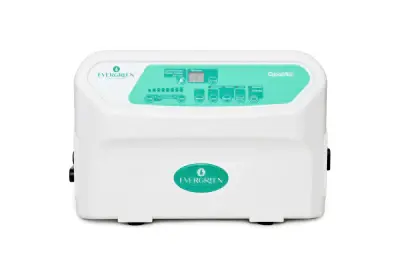
The Replacement Battery for the Evergreen OpalAir Air Mattress is the backup power module for the OpalAir pump maintaining alternating pressure and low air loss mattress therapy when mains power is interrupted or the patient is transported.
Loading…
Alternating pressure and low air loss mattress systems operate on the principle that continuous redistribution of pressure across the patient’s body surface prevents the sustained tissue compression that initiates pressure injury. The therapeutic mechanism is not passive — it requires the pump to actively cycle air between cells on a defined timing interval, typically cycling the full mattress surface every five to ten minutes. When the pump stops — for any reason, including a power interruption — the cells that are currently deflated remain deflated and the cells that are currently inflated remain inflated, and the patient’s weight is redistributed onto the static inflated cell pattern within minutes of pump stoppage. For a patient on an alternating pressure surface because of high pressure injury risk or because of existing tissue damage, the transition from a cycling surface to a static pressure pattern is not a temporary inconvenience — it is a reversion to the tissue loading condition the therapeutic surface was prescribed to prevent. Clinical guidance on pressure injury prevention identifies sustained pressure at the same anatomical points as the primary tissue damage mechanism, and the value of the alternating pressure surface is entirely contingent on the pump maintaining its cycle. Backup battery capacity is therefore a patient safety specification for the OpalAir system in any environment where mains power reliability cannot be guaranteed.
The specific vulnerability of the OpalAir system to power interruption is amplified by the patient population for whom it is typically prescribed. Alternating pressure mattresses are prescribed for patients at Stage 3 or Stage 4 risk on pressure injury assessment scales — patients who are largely immobile, cannot reposition independently, and often have compromised tissue perfusion from diabetes, peripheral vascular disease, or reduced cardiac output. For this population, the window between pump stoppage and the onset of tissue ischemia at high-pressure anatomical points — the sacrum, heels, trochanters, and occiput — is shorter than for a healthy, mobile individual. Research on tissue tolerance identifies significant pressure ischemia beginning within one to two hours of sustained loading in high-risk patients, which is well within the duration of a typical power outage event. The backup battery’s function is to bridge this window — maintaining the pump’s cycle during the power interruption and preventing the transition to static loading that could initiate tissue damage before power is restored.
Battery capacity degradation is the failure mode that makes replacement of this component a scheduled maintenance requirement rather than a reactive one. Lead-acid and lithium battery chemistries both lose capacity through charge-discharge cycling over their service life — a battery that provides the rated backup duration when new may provide only sixty or seventy percent of that duration after two years of normal standby use, and the capacity reduction accelerates as the battery ages. The critical characteristic of battery capacity degradation is that it is invisible during normal operation: the pump runs on mains power under normal conditions, and the battery remains in a charged standby state. The battery’s degraded capacity is not apparent until the first power interruption occurs and the battery’s actual remaining capacity determines whether the pump continues through the outage or stops before power is restored. In a long-term care facility with a high-risk patient population, a battery that fails during its first real outage because its capacity had degraded below functional threshold is an avoidable patient safety event. Proactive battery replacement on a defined interval — typically every two to three years depending on the battery chemistry and the facility’s power interruption history — prevents this silent degradation from becoming a therapy failure event.
The patient transport scenario is the second major battery use case that distinguishes the OpalAir battery as a clinical tool rather than a convenience accessory. Patients on therapeutic air surfaces in long-term care or acute settings are sometimes transported within the facility — between rooms, to diagnostic imaging, or to a procedure suite — while remaining on the mattress. These transport periods disconnect the pump from mains power for the duration of the move, and for a high-risk patient who cannot be repositioned during transport, the pump must continue cycling to prevent the static loading that the transport’s duration would otherwise impose. The backup battery capacity available during transport must be sufficient to cover the transport duration plus a return-to-room period — a total disconnection time that may range from thirty minutes to several hours depending on the facility’s layout and the procedure’s duration. A battery whose capacity has degraded to below the transport duration threshold prevents the patient from being transported on the therapeutic surface, forcing a decision between delaying the procedure and moving the patient to a standard surface — neither of which is the intended clinical workflow for a patient at active pressure injury risk.
✓ Power outage backup — OpalAir pump units in homecare or long-term care environments where mains power interruptions occur, for patients at Stage 3 or 4 pressure injury risk for whom pump stoppage is a patient safety event ✓ Scheduled proactive replacement — battery replacement at the manufacturer-recommended service interval (typically two to three years) before capacity degradation reduces backup duration below the functional threshold ✓ Capacity-fail replacement — battery replacement after an outage event in which the battery did not sustain pump operation for the expected duration, confirming capacity has degraded below specification ✓ Within-facility patient transport — battery condition confirmation and replacement before transporting a high-risk patient on the OpalAir surface within the facility for a procedure or diagnostic imaging ✓ Homecare equipment commissioning — battery inspection and replacement when an OpalAir system is transferred to a new homecare patient, confirming backup capacity before the system enters service ✓ Long-term care facility preventive maintenance program — battery replacement included in the facility’s scheduled therapeutic surface service protocol, with replacement dates tracked per pump unit
Testimonial items
Very welcoming and informative. We went in to rent a Walker for my mom to see if she would use it. They had no rentals left so he gave us a brand new one on rental. Highly recommend this company for all your ADL needs.
Tara Maye
The rating of this product is 5 out of 5
Fantastic service and experience, from delivery to pickup we could not have asked for anything more! We rented a hospital bed, and I do not believe you would get better service anywhere. Highly recommended!
Shawn Dillon
The rating of this product is 5 out of 5
Super friendly and very helpful! Delivered the wheelchair for me, special ordered other parts and took the time to show me how to install. I recommend!
Fiona Haines
The rating of this product is 5 out of 5
Can not thank the team at Med Supplies enough for their amazing service. We were in a tough spot till we got their help. Amazing service. Kind and respectful delivery. First class all the way. Thank you again.
Jon Beatty
The rating of this product is 5 out of 5
Ordered the chair on Sunday and it arrived Monday morning. Spoke to customer service to follow up on delivery times. It was already on my front door. Excellent and helpful staff. The product is sturdy and of good quality. Thank you for your help.
H D
The rating of this product is 5 out of 5
Excellent experience - website faithfully represented what was in stock (which hasn't always been my experience with other vendors sadly), and local shipping was really fast - ordered on the weekend, received it on Monday in my case. Thank you for being
Jason Hudson
The rating of this product is 5 out of 5
0/0
You cart is currently empty
780 409-1509
Get directions