Why Graduated Compression for Arm Lymphedema Management
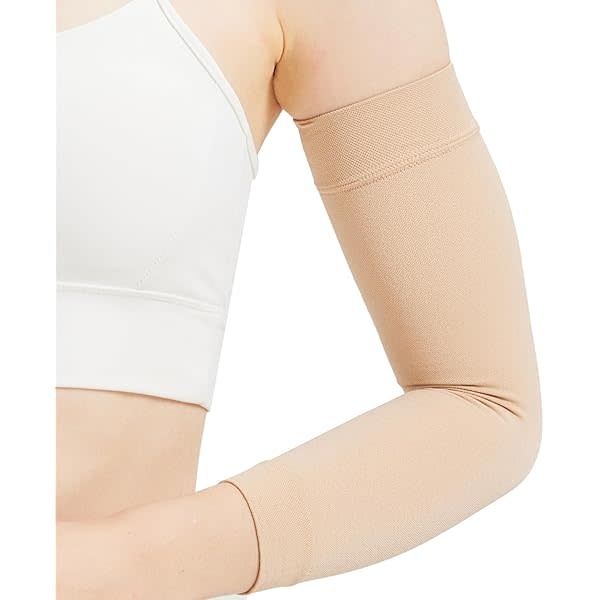
Graduated arm compression provides essential therapeutic support for lymphedema by applying firm pressure that decreases from wrist to upper arm, promoting lymphatic fluid movement toward the torso and preventing fluid accumulation in the affected limb. The 20–30 mmHg compression level offers medical-grade therapeutic pressure typically prescribed for moderate lymphedema, post-mastectomy arm swelling, chronic venous insufficiency affecting the arm, or post-surgical edema management. Unlike leg compression where gravity assists venous return, arm compression must work against multiple positions throughout the day—when arms hang down, reach overhead, or rest at sides. The grip-top silicone band is essential for preventing the sleeve from sliding down the arm during daily activities, while the beige color provides discretion under or without clothing.
Key Features & Benefits
- Firm 20–30 mmHg graduated compression for medical-grade therapeutic support
- Graduated pressure stronger at wrist, gradually decreasing up arm
- Grip-top silicone band prevents slipping and rolling during activity
- Standard length (SL) fits typical arm proportions from wrist to upper arm
- Without gauntlet—covers arm only, hand remains free
- Beige color offers neutral, discreet appearance under clothing
- Durable medical-grade knit maintains compression through repeated wear
- Smooth, breathable fabric comfortable for all-day wear
- Latex-free construction reduces allergy concerns
- Trusted Sigvaris quality for clinical lymphedema management
Clinical Applications
Appropriate for individuals with:
✓ Moderate lymphedema (Stage 1-2) in arm following breast cancer treatment ✓ Post-mastectomy arm swelling (lymphedema risk reduction) ✓ Post-surgical arm edema after lymph node removal ✓ Chronic venous insufficiency affecting upper extremity ✓ Occupational arm swelling from repetitive use or strain ✓ Post-traumatic arm swelling requiring compression therapy ✓ Lipedema affecting arms (under medical supervision) ✓ Radiation-induced arm swelling ✓ Lymphedema prevention during air travel for at-risk patients
Important: 20–30 mmHg arm compression typically requires healthcare provider evaluation and fitting by certified lymphedema therapist or compression garment specialist. Do not use if acute infection (cellulitis), severe arterial disease, or untreated congestive heart failure present.
Usage & Application - User Guidance
For Arm Compression Sleeve Under Healthcare Provider Direction: This medical-grade arm sleeve is designed for lymphedema and venous condition management as prescribed by your healthcare provider. Proper fitting and application techniques ensure safe, effective use.
Understanding Arm Compression for Lymphedema:
- Purpose: Promotes lymphatic drainage, prevents fluid accumulation
- Compression level: 20–30 mmHg firm therapeutic pressure
- Graduated design: Strongest at wrist, decreases up arm
- Prescription recommended: Medical evaluation ensures appropriateness
- Part of complete therapy: Often combined with manual drainage, exercise, skincare
When Arm Compression is Prescribed:
- After breast cancer surgery with lymph node removal
- Documented lymphedema in arm (swelling, heaviness, tightness)
- Post-surgical arm swelling not resolving naturally
- Prevention for at-risk arms during air travel
- Chronic venous conditions affecting arm
- As directed by lymphedema therapist or physician
Professional Fitting Recommended:
- Certified lymphedema therapist or fitter should measure arm
- Multiple measurements required: wrist, forearm, elbow, upper arm circumferences
- Measure arm length from wrist to desired height
- Standard length (SL) fits typical arm proportions
- Fitting best done in morning when arm least swollen
- Re-measure every 3–6 months or with significant arm size changes
Understanding Standard Length Sizing:
- "Standard" refers to arm length measurement
- Extends from wrist to upper arm (typically 2-3 inches below armpit)
- Does not include shoulder/chest coverage
- Check Sigvaris sizing chart for exact measurements
- Proper length prevents bunching or inadequate coverage
- Too short: Won't reach high enough, fluid pools above sleeve
- Too long: Bunches, uncomfortable in armpit area
With vs. Without Gauntlet:
- This sleeve: WITHOUT gauntlet (no hand coverage)
- Hand free: Allows full hand mobility and function
- When gauntlet needed: Hand swelling present, requires separate gauntlet or full glove
- Combination use: Can wear gauntlet separately if hand involvement develops
- Provider guidance: Therapist determines if gauntlet necessary
Preparing to Apply:
- Apply in morning when arm is least swollen
- Skin should be clean, dry, and free from lotions
- Wait 30 minutes after showering to ensure skin completely dry
- Have talcum powder or cornstarch available if needed
- Sit comfortably with good lighting
- Remove jewelry from arm (rings, bracelets, watch)
Application Technique - Arm Sleeve:
- Turn sleeve inside out to approximately halfway
- Insert hand and arm into sleeve opening
- Position bottom edge at wrist (just above wrist bone)
- Begin pulling sleeve up forearm, working gradually
- Smooth fabric as you go, avoiding wrinkles
- Continue pulling up over elbow to upper arm
- Position top band 2–3 inches below armpit
- Ensure grip-top silicone band lies flat against skin
- Smooth entire sleeve, eliminating all wrinkles and bunching
- Sleeve should feel firm but not painful
Application Tips:
- Rubber gloves can help grip fabric for pulling
- Apply light dusting of powder to arm if sleeve difficult to slide
- Don't pull from top band only—work from bottom up
- Ensure even distribution of fabric around arm
- Top band should not cut into upper arm
- If top band too tight, may need larger size
Checking Proper Fit:
- Should feel firm, consistent pressure throughout arm
- Grip-top band prevents slipping without constriction
- No bunching behind elbow or in armpit area
- Fingers and hand should have normal feeling and color
- No numbness, tingling, or severe pain
- Compression should feel strongest at wrist
- Gradually less firm as sleeve goes up arm
Throughout the Day:
- Monitor for sleeve slipping down—readjust as needed
- Check periodically that top band hasn't rolled
- Smooth wrinkles that develop during movement
- Hand should maintain normal color, warmth, and sensation
- Remove immediately if severe pain, numbness, or discoloration
- Can continue normal daily activities while wearing
Activity While Wearing:
- Perform normal daily tasks and activities
- Exercise as recommended by therapist (often encouraged)
- Gentle arm exercises help promote lymphatic flow
- Avoid extreme heat exposure
- Stay well-hydrated
- Can swim in sleeve if desired (rinse and dry after)
- Remove during bathing/showering
Wear Duration:
- Typically worn during waking hours (8–16 hours)
- Put on in morning, remove at bedtime
- Usually removed at night unless provider specifies otherwise
- Some activities may require extended wear (air travel)
- Always follow healthcare provider wear schedule
- Consistency important for lymphedema management
Removing Arm Sleeve:
- Remove at end of day or as prescribed
- Sit comfortably
- Gently roll top band down from upper arm
- Work down arm slowly, gathering fabric
- Avoid pulling harshly—can damage sleeve
- Turn inside out as removing from hand
- Inspect arm after removal for any pressure marks
Skin Care for Lymphedema:
- Keep arm skin clean and well-moisturized
- Apply moisturizer at night after removing sleeve
- Allow moisturizer to absorb completely before reapplying sleeve
- Never apply lotions under compression sleeve
- Inspect skin daily for cuts, cracks, or infections
- Protect arm from injuries, cuts, burns, insect bites
- Keep fingernails trimmed to prevent skin damage
Caring for Compression Arm Sleeve:
- Hand wash daily in lukewarm water with mild detergent
- Gentle machine wash in mesh bag if needed
- No bleach, fabric softener, or harsh chemicals
- Air dry flat or hang—never use dryer heat
- Do not wring—gently squeeze excess water
- Have two sleeves to alternate while one dries
- Replace every 4–6 months or when compression weakens
- Grip-top band loses effectiveness over time
Managing Common Challenges:
- Sleeve slides down: Ensure proper size, check grip-top condition, may need narrower size
- Top band too tight: May need larger size or different style
- Difficult to put on: Use rubber gloves, light powder, or donning aid
- Bunching behind elbow: Ensure proper length, smooth carefully during application
- Hand swelling develops: Consult provider about adding gauntlet or glove
- Skin irritation: Check for proper fit, ensure skin dry before application
Complete Decongestive Therapy:
- Compression is one component of lymphedema management
- Often combined with: Manual lymphatic drainage (massage), Exercise, Skin care, Patient education
- Follow complete treatment plan prescribed by therapist
- Compression maintains gains achieved through other therapies
- Regular therapy sessions may be needed initially
Preventing Lymphedema Progression:
- Wear sleeve consistently as prescribed
- Avoid arm injuries, infections, extreme temperatures
- Practice good skincare and hygiene
- Maintain healthy weight
- Exercise regularly as recommended
- Avoid tight jewelry or clothing on affected arm
- Elevate arm when possible
- Protect arm during medical procedures (blood draws, blood pressure)
When to Contact Healthcare Provider:
- Sudden increase in arm swelling despite sleeve use
- Redness, warmth, fever (signs of infection/cellulitis)
- Pain, numbness, or tingling during wear
- Sleeve no longer fits properly due to size changes
- Skin breakdown, rashes, or irritation
- Questions about proper fit or application
- Need for different compression level or style
- Swelling spreading to hand (may need gauntlet)
Product Specifications
- Brand: Sigvaris
- Product Line: Advance
- Product Type: Arm Sleeve
- Compression Level: 20–30 mmHg (firm, graduated)
- Length: Standard (SL) - wrist to upper arm
- Top Style: Grip Top with silicone band
- Gauntlet: Not included (arm sleeve only)
- Color: Beige (neutral, discreet)
- Material: Medical-grade compression knit
- Latex: Latex-free
- Gender: Unisex design
- Prescription: Recommended for 20–30 mmHg level
- Best For: Moderate arm lymphedema, post-mastectomy care
- Wear Time: Typically daytime hours (8–16 hours)
- Care: Hand wash, air dry
- Replacement: Every 4–6 months
- Professional Fitting: Strongly recommended
- Unit of Sale: Single sleeve