
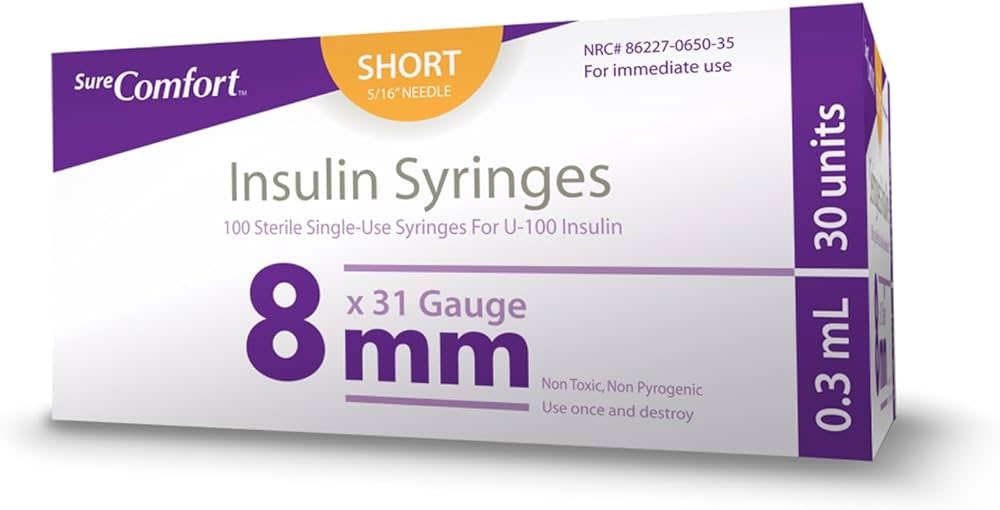
Why 31G × 5/16" with 0.3 mL Capacity for Accurate Low-Dose Insulin Administration
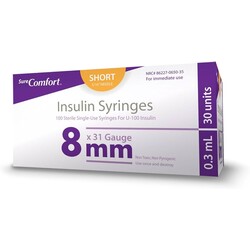
The 31-gauge needle (0.25mm outer diameter) represents one of the finest needles available for insulin injection—significantly thinner than standard hypodermic needles, reducing tissue trauma and injection pain critical for patients requiring multiple daily injections who may develop needle anxiety or injection site complications from repeated tissue damage. The short 5/16-inch (8mm) length ensures subcutaneous insulin delivery into the fatty tissue layer without reaching muscle—muscle injection causes unpredictable insulin absorption rates and increased hypoglycemia risk, while the shallow insertion appropriate for most body sites reduces the need for skin pinching except in very lean patients, particularly important for pediatric and geriatric populations with less subcutaneous tissue. The 0.3 mL (30 unit) capacity with U-100-specific graduations enables precise measurement of small insulin doses common in pediatric diabetes management, tight glycemic control protocols, and patients with high insulin sensitivity—markings calibrated specifically for U-100 insulin concentration (100 units per mL) eliminate the calculation errors that occur when using standard syringes for insulin, where each 0.01 mL equals exactly 1 unit of U-100 insulin.
Key Features & Benefits
Key Features:
- 31-gauge (31G) ultra-fine needle (0.25mm outer diameter)
- 5/16-inch (8mm) short needle length
- 0.3 mL (3/10 cc, 30 unit) barrel capacity
- U-100 insulin-specific unit graduations
- Bold, permanent barrel markings (typically 1-unit increments)
- Lubricated needle for smooth insertion
- Smooth-gliding plunger for controlled dosing
- Clear transparent barrel for dose visualization
- Integrated needle (permanently attached to barrel)
- Sterile, individually packaged
- Single-use, disposable design
- Latex-free construction
- Engineered for U-100 insulin concentration only
- Tri-bevel needle tip for comfortable penetration
- Color-coded cap (product dependent)
- Meets FDA and ISO quality standards
Benefits:
- Ultra-fine 31G minimizes injection pain and tissue trauma
- Short length prevents accidental intramuscular injection
- Appropriate for most body sites and patient types
- Small capacity ideal for low insulin doses
- U-100 graduations eliminate unit conversion errors
- Bold markings improve dose accuracy (especially important for vision-impaired)
- Lubricated needle reduces insertion force and discomfort
- Smooth plunger enables precise dose delivery
- Integrated needle prevents needle detachment during injection
- Clear barrel allows air bubble detection
- Sterile packaging ensures infection control
- Single-use prevents cross-contamination and infection
- Latex-free protects sensitive patients
- Designed specifically for insulin (not for other medications)
Clinical Applications
U-100 Insulin Syringes 31G × 5/16" are appropriate for:
✓ Type 1 diabetes insulin administration ✓ Type 2 diabetes requiring insulin therapy ✓ Gestational diabetes management ✓ Pediatric diabetes (low-dose insulin requirements) ✓ Basal insulin administration (long-acting insulins) ✓ Bolus insulin administration (rapid-acting insulins) ✓ Sliding scale insulin protocols ✓ Correctional insulin doses ✓ Multiple daily injection (MDI) regimens ✓ Intensive insulin therapy ✓ Home insulin administration ✓ Hospital inpatient diabetes management ✓ Long-term care facility insulin delivery ✓ Patients with insulin sensitivity (small doses) ✓ Patients requiring doses ≤30 units ✓ Subcutaneous insulin injection at all recommended sites ✓ Self-administration by patients of all ages
Usage & Application
CRITICAL: Insulin syringes are ONLY for U-100 insulin. Do NOT use for other medications.
Pre-Injection Preparation:
- Verify insulin and dose:
- Confirm insulin type prescribed
- Verify U-100 concentration (100 units per mL)
- Calculate dose in units
- Check blood glucose if indicated
- Review injection time (with meals, bedtime, etc.)
- Gather supplies:
- U-100 insulin syringe 31G × 5/16", 0.3 mL
- Insulin vial (U-100 concentration)
- Alcohol swabs
- Sharps container
- Cotton ball or gauze (if needed)
- Glucose meter (if checking blood sugar)
- Hand hygiene:
- Wash hands thoroughly with soap and water
- Dry completely
- Prepare insulin vial:
- Check insulin name, type, concentration (must be U-100)
- Check expiration date
- Inspect insulin:
- Clear insulins (rapid, short-acting): should be clear, no particles
- Cloudy insulins (NPH, premixed): gently roll vial between palms 20 times
- Do NOT shake (creates air bubbles, denatures insulin)
- Discard if:
- Clear insulin appears cloudy
- Cloudy insulin has clumps or crystals
- Color changed
- Frozen (even if thawed)
- Clean vial top:
- Wipe rubber stopper with alcohol swab
- Allow to air dry (reduces stinging)
Drawing Insulin from Vial:
- Remove syringe from package:
- Check package integrity
- Verify correct syringe (31G × 5/16", 0.3 mL, U-100)
- Remove from sterile wrapper
- Pull plunger to draw air:
- Pull plunger back to draw air equal to insulin dose
- Example: If dose is 15 units, pull to 15-unit mark
- Air will be injected into vial to equalize pressure
- Insert needle into vial:
- Remove needle cap (save if needed)
- Hold vial upright on table
- Insert needle straight through rubber stopper
- Push plunger to inject air into vial
- Invert vial:
- Turn vial upside down
- Keep needle tip below insulin level in vial
- Withdraw insulin:
- Pull plunger slowly to withdraw insulin
- Pull slightly past desired dose (e.g., to 17 units if dose is 15)
- This allows for air bubble removal
- Remove air bubbles:
- Check for air bubbles in barrel (appear as clear spaces)
- If bubbles present:
- Tap barrel gently with finger to move bubbles to top
- With needle still in vial, push plunger to push bubbles back into vial
- Withdraw more insulin if needed
- Repeat until no bubbles present
- Air bubbles displace insulin = incorrect dose
- Verify correct dose:
- Hold syringe at eye level
- Read dose at top of plunger (black rubber part)
- Should align exactly with prescribed dose
- Adjust if needed by pushing excess back or withdrawing more
- Remove needle from vial:
- Pull needle straight out
- Do NOT touch needle (maintain sterility)
- Replace cap carefully if not injecting immediately (one-handed technique)
Selecting Injection Site:
Recommended sites for subcutaneous insulin:
- Abdomen (preferred for most insulins):
- Best absorption
- Inject at least 2 inches (5 cm) away from navel
- Avoid area within 2 inches of navel, scars, moles
- Largest area for rotation
- Avoid waistline area (belt irritation)
- Outer thighs:
- Front and outer sides of thighs
- Middle third of thigh (avoid upper and lower thirds)
- Slightly slower absorption than abdomen
- Good for self-injection
- Upper arms:
- Back of upper arms (fatty area)
- May be difficult to reach for self-injection
- May need assistance
- Slower absorption
- Buttocks:
- Upper outer quadrants
- Often requires assistance
- Good absorption
- Less commonly used
Site rotation important:
- Rotate sites to prevent lipohypertrophy (lumpy fatty tissue buildup)
- Lipohypertrophy affects insulin absorption
- System for rotation:
- Use different quadrant each injection
- Move at least 1 inch from previous injection
- Track sites using rotation chart or pattern
- Do NOT inject into:
- Lipohypertrophy areas (lumps, hard areas)
- Bruised or scarred areas
- Areas of skin irritation, infection, or inflammation
- Within 2 inches of navel
- Directly over joints or bones
Injection Technique:
- Clean injection site:
- Wipe with alcohol swab in circular motion
- Allow to air dry completely (30 seconds)
- Wet alcohol stings—patient will feel burning if not dry
- Prepare injection:
- Remove needle cap
- Hold syringe like a pencil or dart
- Do NOT touch needle (sterility critical)
- Pinch or not pinch:
- Most patients with 5/16" (8mm) needle: NO pinch needed
- Short needle designed for injection without pinching
- Pinch skin if:
- Very lean patient (minimal subcutaneous fat)
- Risk of intramuscular injection
- Pediatric patient with low body fat
- How to pinch: Gently lift skin and fat (not muscle) between thumb and finger
- Insert needle:
- Angle: 90 degrees (straight in) for most patients
- 45-degree angle if:
- Very lean with minimal subcutaneous fat
- Pinching skin
- Pediatric patient
- Quick, smooth motion (like throwing a dart)
- Insert to full 5/16" depth (needle should be completely in)
- 31G ultra-fine = minimal pain
- Release pinch (if used):
- Release skin fold before injecting
- Allows insulin to disperse properly
- Inject insulin:
- Push plunger slowly and steadily
- Take 5-10 seconds for full injection
- Push until plunger completely depressed
- Do NOT inject too fast (causes discomfort)
- Count to 5-10:
- After plunger fully depressed, count slowly to 5-10
- Ensures complete insulin delivery
- Prevents insulin leakage when removing needle
- Especially important for larger doses
- Remove needle:
- Pull straight out at same angle inserted
- Quick, smooth motion
- Do NOT rub injection site:
- Rubbing can affect insulin absorption
- May cause insulin to leak out
- Light pressure with cotton ball acceptable if bleeding
- Apply pressure if bleeding:
- Small amount of bleeding normal
- Press gently with cotton ball or gauze
- Do NOT massage
Post-Injection Care:
- Dispose of syringe immediately:
- Do NOT recap needle (needlestick injury risk)
- Place entire syringe in sharps container
- Never reuse insulin syringes (even your own)
- Reusing dulls needle, increases pain and tissue damage
- Increases infection risk
- Record injection:
- Document time, dose, site, blood glucose (if checked)
- Note any issues (leakage, bleeding, etc.)
- Track sites for rotation
- Monitor:
- Watch for hypoglycemia symptoms (especially with mealtime insulin)
- Check blood glucose per schedule
- Note how insulin affects glucose levels
- Storage of insulin:
- In-use vial: Room temperature up to 28 days (varies by insulin type)
- Unopened vials: Refrigerate until expiration date
- Do NOT freeze
- Keep away from direct heat and sunlight
- Check package insert for specific insulin storage
Special Injection Techniques:
Mixing two insulins (if prescribed):
IMPORTANT: Only mix if provider instructs and insulins compatible
- Order matters:
- Draw clear insulin first (rapid/short-acting)
- Then draw cloudy insulin (NPH, intermediate)
- Mnemonic: "Clear before Cloudy"
- Procedure:
- Inject air into cloudy vial first (amount equal to cloudy dose)
- Remove needle without withdrawing insulin
- Inject air into clear vial (amount equal to clear dose)
- Leave needle in clear vial, withdraw clear insulin
- Remove bubbles, verify dose of clear
- Insert into cloudy vial, withdraw cloudy insulin
- Total dose should equal clear + cloudy combined
- Do NOT push any back into cloudy vial (contaminates)
- Inject mixture immediately:
- Mixed insulin should be used right away
- Do not store mixed insulins
Troubleshooting:
Air bubbles won't come out:
- Tap barrel more firmly with fingernail
- Hold syringe vertical (needle up)
- Push bubbles back into vial, try again
- May need to start over with new syringe if persistent
Insulin leaking from injection site:
- May not have counted long enough after injection
- Next time: count to 10 before removing needle
- May have injected too fast
- Not a concern unless large amount leaks
Bleeding at injection site:
- May have hit small blood vessel
- Normal occurrence occasionally
- Apply gentle pressure
- Not harmful
- Insulin still absorbed
Pain during injection:
- Alcohol may not have dried completely
- Needle may have hit nerve (rare)
- Injecting too fast causes discomfort
- Reused needle (never reuse—get new syringe)
- Insulin too cold (bring to room temperature)
Bruising at injection site:
- May have hit small blood vessel
- Normal occasionally
- Avoid site until healed
- If frequent: check injection technique, rotate sites
Lipohypertrophy (lumps) developing:
- Not rotating sites adequately
- Reusing needles (never reuse)
- Rotate sites systematically
- Do not inject into affected areas
- Lumps may take months to resolve
- Affects insulin absorption
Dose measurement difficult to see:
- Use good lighting
- Reading glasses if needed
- Bold markings help, but may need assistance
- Consider insulin pen if vision severely impaired
- Magnifying devices available
Special Considerations:
Pediatric patients:
- 0.3 mL syringe ideal for children (typically need small doses)
- 31G × 5/16" appropriate for most children
- May need to pinch skin (less subcutaneous fat)
- Parent/caregiver administration initially
- Teach age-appropriate self-injection skills
- Emotional support important (needle anxiety common)
- Rotation especially important (smaller surface area)
Geriatric patients:
- May have vision difficulties (bold markings helpful)
- May have dexterity issues (large barrel easier to handle)
- May have cognitive impairment (caregiver assistance)
- Skin fragile (extra care with technique)
- May have neuropathy (may not feel injections)
Patients with obesity:
- 5/16" (8mm) needle adequate for most injection sites
- May need longer needle (5/16" to 1/2") in some areas
- Abdomen typically has adequate subcutaneous tissue
- No pinching usually needed
Very lean patients:
- Risk of intramuscular injection even with short needle
- Pinch skin and inject at 45 degrees
- Consider even shorter needles if available (4mm)
- Extra caution to avoid muscle
Patients with vision impairment:
- Bold markings help but may not be sufficient
- May need caregiver assistance with dose measurement
- Insulin pens with dose click mechanisms alternative
- Magnifying devices available
- Prefilled syringes by caregiver option (check with provider)
- Home health nurse assistance
Patients with dexterity issues:
- Arthritis, tremor, stroke affecting hands
- May benefit from:
- Syringe magnifiers
- Needle guides
- Insulin pens
- Caregiver assistance
- Occupational therapy may help
Pregnancy (gestational diabetes):
- Insulin safe in pregnancy
- May need intensive management
- Dose requirements change throughout pregnancy
- Close monitoring by healthcare team
Traveling:
- Bring extra supplies (syringes, insulin, glucose meter)
- Carry insulin and syringes in carry-on (not checked luggage)
- Bring prescription documentation
- Consider time zone changes for dosing
- Plan for insulin storage (cooler packs if needed)
At school or work:
- Students with diabetes: notify school nurse
- Provide supplies, emergency plan
- Privacy for injections
- Sharps disposal at location
Storage and Disposal:
Syringe storage before use:
- Keep in original packaging until use
- Store at room temperature
- Keep in clean, dry area
- Protect from contamination
Sharps disposal:
- Use FDA-cleared sharps container
- Alternatives if sharps container not available:
- Heavy-duty plastic container (laundry detergent bottle)
- Label clearly "SHARPS - DO NOT RECYCLE"
- Never put loose syringes in trash
- When container 3/4 full:
- Seal permanently
- Follow local disposal regulations
- Many pharmacies accept sharps containers
- Some communities have drop-off sites
Insurance and Cost:
- Insulin syringes typically covered by insurance
- May require prescription for insurance coverage
- Various brands available (price ranges vary)
- Generic options available
- Patient assistance programs exist
- Compare prices at different pharmacies
When to Contact Healthcare Provider:
Routine contact:
- Questions about insulin technique
- Difficulty measuring doses accurately
- Need for different syringe size
- Persistent injection site issues
- Blood glucose not controlled
Urgent contact:
- Signs of severe hypoglycemia (confusion, loss of consciousness, seizures)
- Signs of infection at injection sites
- Persistent high blood glucose despite insulin
- Allergic reaction to insulin
Technical Specifications
Product Details:
- Product Type: Insulin syringe for subcutaneous injection
- Needle Gauge: 31G (0.25mm outer diameter)
- Needle Length: 5/16 inch (8mm)
- Barrel Capacity: 0.3 mL (3/10 cc, 30 units for U-100 insulin)
- Graduations: U-100 insulin units (100 units per mL)
- Graduation Increments: Typically 1-unit markings
- Marking Type: Bold, permanent barrel markings
- Needle Type: Integrated (permanently attached to barrel)
- Needle Tip: Tri-bevel for comfortable penetration
- Needle Coating: Lubricated for smooth insertion
- Barrel Material: Medical-grade polypropylene (clear transparent)
- Plunger: Smooth-gliding for precise control
- Plunger Tip: Latex-free elastomer
- Needle Material: Surgical-grade stainless steel
- Sterility: Sterile until opened
- Sterilization Method: Ethylene oxide (EtO) or gamma radiation
- Latex Content: Latex-free (no natural rubber latex)
- Packaging: Individually wrapped in sterile packaging
- Intended Use: U-100 insulin subcutaneous injection ONLY
- Patient Population: All ages with diabetes requiring insulin
- Typical Use: Multiple daily injections for diabetes management
- Shelf Life: Check package (typically 3-5 years)
- Storage: Room temperature, dry conditions
- Regulatory Status: FDA-cleared medical device
- Standards Compliance:
- ISO 7886 (sterile hypodermic syringes)
- ISO 11608 (needle-based injection systems)
- Manufacturers: BD, Terumo, Nipro, Easy Touch, others