
Slideshow Items

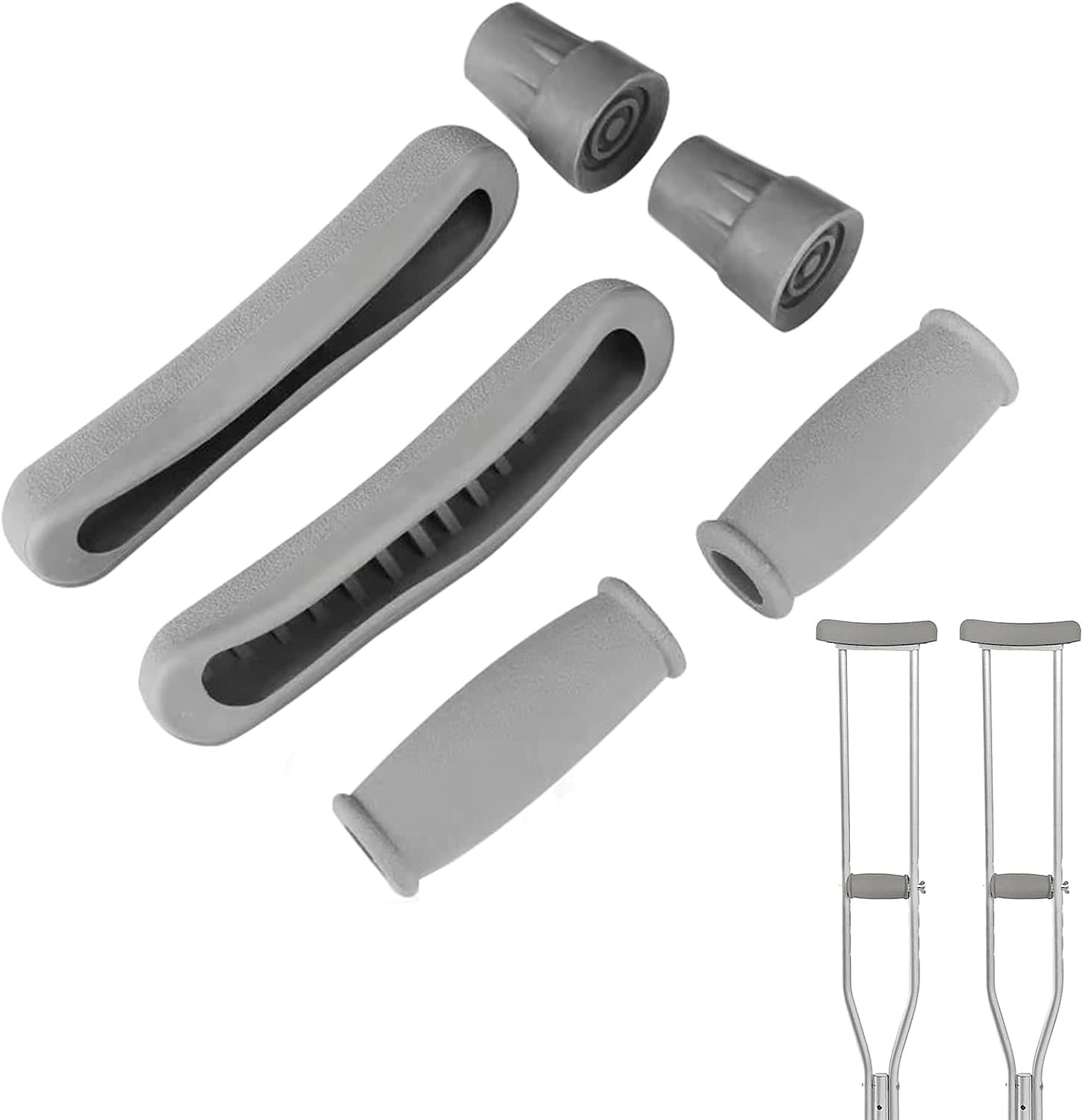
The complete accessory kit with cushioned underarm pads, textured hand grips, and non-slip rubber tips delivers restored comfort plus stability for standard aluminum or wooden crutches while tool-free installation enables quick replacement.
Loading…
Standard underarm crutches experience simultaneous wear across all three user-contact components—underarm pads, hand grips, and rubber tips—due to identical usage duration and mechanical stress exposure, making comprehensive replacement more effective than piecemeal component updates. Underarm pads compress and harden from continuous upper body weight bearing, losing cushioning capacity that causes axillary nerve compression and soft tissue irritation. Hand grips degrade from palm moisture and friction, developing surface cracks and losing texture that reduces secure hold causing hand slippage and increased grip tension fatigue. Rubber tips wear from ground contact and weight transfer, losing tread depth that compromises slip resistance especially on smooth surfaces creating fall hazards. Replacing all three components simultaneously restores factory-specification performance across the complete crutch-user interface, eliminating the comfort and safety inconsistencies that develop when only one worn component is addressed while others remain degraded. This universal-fit kit accommodates most standard adult aluminum and wooden crutches through adjustable sizing and friction-fit attachment methods, providing cost-effective maintenance solution versus purchasing brand-specific proprietary components or replacing entire crutches prematurely.
✓ Replacing worn components on aging standard underarm crutches (6-12 months typical wear)
✓ Refurbishing rental crutches between users in home health agencies
✓ Fleet maintenance programs in rehabilitation facilities and hospitals
✓ Restoring comfort for long-term crutch users with chronic mobility needs
✓ Upgrading institutional crutches in nursing homes and assisted living facilities
✓ Medical equipment retail refurbishment services
✓ Athletic injury recovery equipment maintenance in sports medicine clinics
✓ Post-operative recovery equipment optimization
✓ Preventive maintenance before component failure creates safety hazard
✓ Home user self-maintenance extending personally-owned crutch service life
✓ Emergency replacement when individual components unavailable separately
Compatibility Verification: Before purchase, confirm crutches are standard underarm (axillary) type with conventional component sizing—not specialty models with proprietary dimensions. Measure existing components if possible: underarm pad typically 10-12 inches long and 1.5-2 inches diameter; hand grip typically 4-5 inches long and 1-1.25 inches diameter; rubber tip typically fits ¾ to 7/8 inch outer diameter crutch shaft. If measurements significantly different from these ranges, verify kit compatibility with supplier before ordering. Note: Forearm crutches use different components—this kit is specifically for underarm crutches.
Wear Assessment & Replacement Indicators: Inspect all three components systematically for replacement indicators. Underarm pads: compressed flat losing cushioning (less than ½ inch thickness when squeezed), vinyl covering cracked or torn exposing foam, foam hardened or crumbling, pad loose or rotating on crutch shaft. Hand grips: surface worn smooth eliminating texture, visible cracks or tears in material, grip loose or rotating on shaft, material feels sticky or degraded. Rubber tips: tread pattern worn smooth (less than 2mm depth remaining), visible cracks or chunks missing from rubber, tip slides laterally when moderate pressure applied to stationary crutch (indicates worn tread), tip fits loosely on shaft. If any component shows significant wear, replace entire kit—components age at similar rates.
Tools & Supplies: Universal crutch accessory replacement kit (complete with pads, grips, tips for one pair crutches), clean lint-free cloth, rubbing alcohol or mild soap and water, warm water (optional—aids installation if components fit tight), hair dryer (optional—warms rubber for easier installation), flathead screwdriver or similar tool (for removing stubborn old components only—avoid damaging crutch shafts). No adhesives or fasteners required—all components friction-fit or snap onto crutches.
Old Component Removal - Underarm Pads: Grasp one end of pad and twist while pulling away from crutch shaft. Worn pads typically slide off easily as material has stretched. If pad stuck, apply these progressively: (1) Pour small amount of rubbing alcohol around pad-shaft junction, wait 2-3 minutes, retry twisting and pulling; (2) Warm pad with hair dryer on low setting for 30-60 seconds to soften, retry removal; (3) Carefully cut through pad lengthwise with utility knife (don't cut into shaft), peel away in sections. After removal, clean shaft surface thoroughly removing residual adhesive, foam, or debris using rubbing alcohol on cloth. Dry completely before installing new pad.
Old Component Removal - Hand Grips: Follow same process as underarm pad removal—twist and pull, using alcohol or heat if stuck. Some hand grips may have set screws or clips securing them—inspect carefully before forcing removal. If clips present, depress or release before pulling grip. After removal, clean shaft section thoroughly and dry completely.
Old Component Removal - Rubber Tips: Grasp tip firmly and twist while pulling away from crutch shaft. If tip stuck due to compression fit or debris, apply these techniques: (1) Pour rubbing alcohol around tip-shaft junction allowing it to wick between surfaces, wait 2-3 minutes, retry twisting and pulling; (2) Warm tip with hair dryer to soften rubber, retry removal; (3) Insert thin flathead screwdriver between tip and shaft, work around circumference to break adhesion, taking care not to scratch shaft. After removal, clean shaft end removing any rubber residue or dirt.
Crutch Shaft Cleaning & Preparation: With all old components removed, inspect crutch shafts for damage including dents, cracks, corrosion, or severe scratches. If significant damage detected, consider professional crutch evaluation or replacement—damaged shafts compromise user safety. Clean all mounting surfaces thoroughly using rubbing alcohol or soap and water, removing all residual materials, oils, dirt, and debris. Dry completely before installing new components. Smooth any rough spots or burrs on shaft surfaces using fine sandpaper (220-grit)—roughness can tear new components during installation or cause premature wear.
New Underarm Pad Installation: Determine correct pad orientation—most pads have subtle shape indicating top/bottom or front/back. If warm water method needed for tight fit, soak new pad in warm (not hot) water for 2-3 minutes to soften material temporarily. Align one end of pad with corresponding end of crutch shaft section between underarm support and hand grip. Push pad onto shaft while twisting slightly in alternating directions, progressing along pad length. Apply steady firm pressure ensuring pad advances evenly without bunching. If pad becomes stuck partway, withdraw slightly, twist, and continue. Push pad completely onto shaft until it seats fully—pad should cover entire designated shaft section with no gaps. Verify pad positioned so cushioned side faces user's underarm. Allow wet pad to air dry completely before use (returns to normal grip after drying).
New Hand Grip Installation: Identify correct grip orientation if applicable—some grips have asymmetric contouring. Follow same installation technique as underarm pad: align with shaft section designated for hand grip (between underarm pad and rubber tip, typically 30-36 inches from ground). Use warm water or light alcohol coating inside grip bore if installation tight. Push grip onto shaft using twisting motion, ensuring even advancement. Seat grip fully with no gaps. Verify grip positioned so textured surface faces user's palm. If grip has directional features (arrows, text), orient correctly.
New Rubber Tip Installation: Inspect new tip interior and crutch shaft end—tip should fit snugly over shaft with friction preventing easy removal. Align tip opening with shaft end and push tip onto shaft using firm pressure. Seat tip completely—shaft end should not protrude beyond tip bottom surface, and tip top edge should sit flush against shaft shoulder or stop point. Test tip security by attempting to pull off with moderate force—tip should remain firmly attached. If tip slides off easily, it may be wrong size for shaft diameter—verify compatibility before use.
Post-Installation Verification - Complete System Check: After all components installed on both crutches, perform comprehensive safety inspection before user operation. Underarm pads: Attempt to twist or rotate pads on shafts—should remain absolutely stationary; squeeze pads checking for adequate cushioning (minimum ½ inch compression); verify symmetry—both pads positioned identically. Hand grips: Test rotation resistance—grips should not rotate under firm twisting force; verify textured surfaces face correct direction; confirm symmetric positioning between crutches. Rubber tips: Test security by attempting to pull tips off—should remain firmly attached; inspect tread pattern—should be deep and consistent; place crutches on floor and apply moderate downward pressure testing slip resistance. Overall crutch inspection: Verify all adjustment mechanisms tight and locked; confirm height settings identical between crutches; test stability—crutches should not wobble or feel loose.
Break-In Period & Initial Use: New components may feel different from well-worn originals. Allow 1-2 days break-in period during which materials conform slightly to individual use patterns. During this period, monitor comfort and component security. Underarm pads may compress slightly during initial use—this is normal. Hand grips may feel firmer than worn grips—material softens subtly with use. Rubber tips provide better traction than worn tips—users may need to adjust walking cadence slightly. If significant discomfort persists beyond break-in, verify components installed correctly and oriented properly.
User Education on Proper Use: Remind users of correct crutch technique maximizing component longevity and safety. Underarm pads: Never bear weight directly on underarms—weight should transfer through hands to hand grips; pads provide cushioning during standing rest only. Hand grips: Maintain firm but not excessive grip pressure—death-grip causes unnecessary fatigue; wrists should remain straight, not bent. Rubber tips: Inspect tips monthly for wear; replace when tread depth reduces to 2mm or less; avoid dragging tips on ground—lift crutches during swing phase.
Maintenance for Long-Term Performance: Clean all components weekly during active use. Underarm pads: Wipe with mild soap and water or alcohol wipes, rinse if applicable, dry thoroughly—prevents material degradation from accumulated sweat and skin oils. Hand grips: Same cleaning protocol as pads—regular cleaning maintains texture and prevents sticky feel. Rubber tips: Brush away debris trapped in tread grooves; inspect for embedded objects (glass, stones); wipe clean with damp cloth. Store crutches indoors away from extreme heat or cold—temperature extremes accelerate material aging. Avoid prolonged direct sunlight—UV radiation causes rubber hardening and plastic/vinyl degradation.
Troubleshooting Common Issues: Problem: Components don't fit crutch shafts. Solution: Verify crutches are standard adult size; measure shaft diameters and compare to kit specifications; order specialty kit if crutches have non-standard sizing. Problem: Underarm pads or grips rotate during use. Solution: Remove component, clean shaft surface thoroughly removing all oils with alcohol, ensure shaft completely dry, reinstall ensuring full seating; if rotation persists, component may be worn-out size for shaft—consider different kit. Problem: Rubber tips won't stay on. Solution: Verify tip correct size for shaft outer diameter; ensure shaft end clean and dry; consider using small amount of electrical tape around shaft end to increase diameter slightly for tighter fit (emergency measure only—proper-size tip preferred). Problem: New pads cause more underarm soreness than old pads. Solution: Verify user not bearing weight on pads (should bear weight on hands); check crutch height adjustment (too tall forces weight onto pads); allow break-in period for pads to soften; verify pads oriented correctly with cushioned side facing user. Problem: Hand grips feel uncomfortable. Solution: Verify grips oriented correctly with textured side facing palm; adjust hand position on grips; allow break-in period; ensure wrists remaining straight (bent wrists cause discomfort regardless of grip quality).
Replacement Scheduling for Institutional Fleets: Facilities maintaining multiple crutches should implement systematic accessory replacement program. Create maintenance schedule based on service hours or calendar time (recommend component inspection monthly, complete kit replacement every 6-12 months for high-use equipment or 12-24 months for occasional-use equipment). Assign each crutch pair unique ID for tracking. Maintain adequate kit inventory to enable immediate replacement when wear detected. Train staff on proper installation procedures. Document all maintenance activities with dates and components replaced. Consider preventive replacement during scheduled maintenance periods rather than reactive emergency repairs.
Carousel items
Testimonial items
Very welcoming and informative. We went in to rent a Walker for my mom to see if she would use it. They had no rentals left so he gave us a brand new one on rental. Highly recommend this company for all your ADL needs.
Tara Maye
The rating of this product is 5 out of 5
Fantastic service and experience, from delivery to pickup we could not have asked for anything more! We rented a hospital bed, and I do not believe you would get better service anywhere. Highly recommended!
Shawn Dillon
The rating of this product is 5 out of 5
Super friendly and very helpful! Delivered the wheelchair for me, special ordered other parts and took the time to show me how to install. I recommend!
Fiona Haines
The rating of this product is 5 out of 5
Can not thank the team at Med Supplies enough for their amazing service. We were in a tough spot till we got their help. Amazing service. Kind and respectful delivery. First class all the way. Thank you again.
Jon Beatty
The rating of this product is 5 out of 5
Ordered the chair on Sunday and it arrived Monday morning. Spoke to customer service to follow up on delivery times. It was already on my front door. Excellent and helpful staff. The product is sturdy and of good quality. Thank you for your help.
H D
The rating of this product is 5 out of 5
Excellent experience - website faithfully represented what was in stock (which hasn't always been my experience with other vendors sadly), and local shipping was really fast - ordered on the weekend, received it on Monday in my case. Thank you for being
Jason Hudson
The rating of this product is 5 out of 5
0/0
You cart is currently empty
780 409-1509
Get directions