Slideshow Items

  • Mobility
  • mobility
DRV-Drive Medical

  |  

Universal Crutch Accessory Kit 8/Bx

C$183.16
In stock online
In store: Check availability

Available in store

UPC Code: 822383284033
SKU: RTL10395

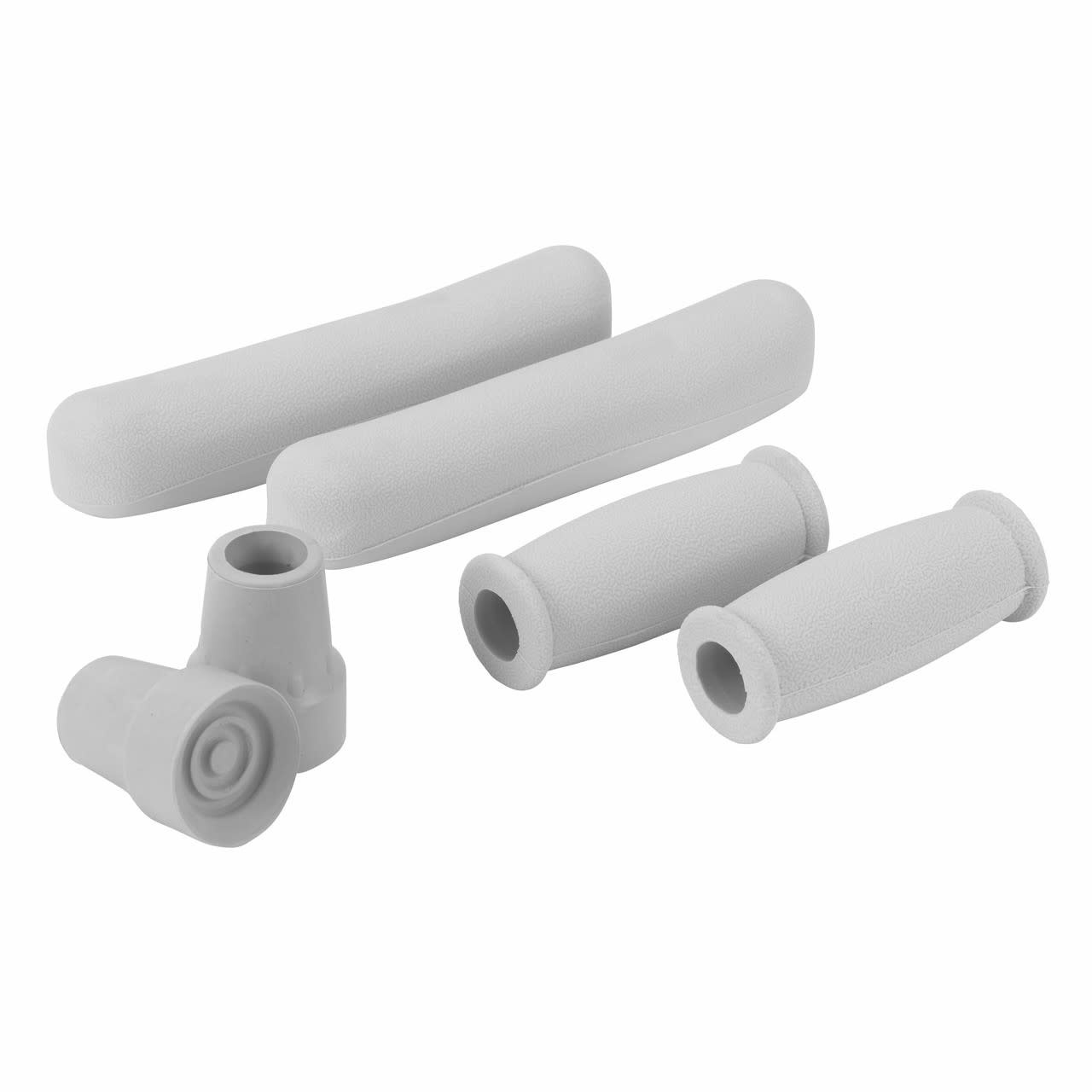
The universal accessory kit with underarm cushions, hand grips and stabilized tips refreshes worn crutches while 7/8-inch standard tubing compatibility, 8-kit bulk packaging, cost-effective pricing serves clinics, rental fleets, home users.

    • Why Complete Crutch Accessory Kit?

      Complete crutch accessory kits address the reality that crutches experience differential wear patterns across their three primary user-contact components—underarm cushions, hand grips, and floor-contact tips—with each component degrading at different rates and requiring replacement at overlapping but non-identical intervals. Underarm cushions bear continuous compressive loading during weight-bearing phases of ambulation, with foam materials gradually compressing and losing resilience over 200-400 hours of use (equivalent to 2-4 months of daily ambulation for typical users). As foam compression occurs, the cushion thickness diminishes from original 1-inch thickness to 0.5-0.75 inches, increasing pressure concentration on soft tissues of the axillary region and creating risk for brachial plexus nerve compression that can cause arm pain, numbness, or weakness. Hand grips experience repetitive friction from palm contact during each step cycle, with rubber or foam materials developing surface slickness, cracks, or complete grip failure that reduces hand purchase and increases risk of grip slippage during critical weight-bearing moments. Floor-contact tips bear the highest localized loading—the full body weight plus dynamic forces from ambulation focus on the small rubber contact patch at each tip, creating wear that gradually reduces tread depth, compromises slip resistance, and creates safety hazards on wet or smooth surfaces. Individual component replacement requires sourcing and purchasing three separate items, often from different suppliers or product lines, creating procurement complexity and increasing likelihood that users defer maintenance until multiple components fail catastrophically. The complete kit approach bundles all three components in proper quantity (pairs of each component) with verified compatibility for standard 7/8-inch diameter aluminum crutch tubing used in approximately 85-90% of medical crutches manufactured globally. The stabilizing internal disc featured in the replacement tips represents an engineering advancement over conventional tips—the disc sits inside the rubber tip and prevents the crutch tube end from penetrating through the rubber during high-impact loading that occurs when users inadvertently come down hard on crutches or when repeated weight-bearing compresses rubber material. This penetration prevention extends tip service life significantly, as penetrated tips create dangerous instability and must be replaced immediately even if remaining rubber appears serviceable. The 8-kit bulk packaging targets institutional users (hospitals, rehabilitation facilities, medical equipment rental companies, outpatient clinics) who maintain crutch inventory requiring systematic preventive maintenance—having pre-packaged complete kits enables standardized replacement schedules where all three components refresh simultaneously at predetermined intervals, simplifying inventory management compared to tracking individual component stock levels and usage rates.

      Key Features

      • Complete Component Set: Each kit includes one pair underarm cushions, one pair hand grips, and one pair crutch tips—all components needed for complete crutch rehabilitation
      • Universal Compatibility: Designed for standard 7/8-inch diameter aluminum crutch tubing common to major manufacturers (Drive Medical, Invacare, Medline, Cardinal Health, others)
      • Stabilized Tip Design: Internal disc inside rubber tips prevents crutch tube penetration through rubber during high-impact loading, extending tip service life 50-100% versus conventional designs
      • Bulk Institutional Packaging: 8 complete kits per box enable clinic, hospital, and rental fleet bulk purchasing with reduced per-kit costs and simplified inventory management
      • Fresh Foam Cushioning: New underarm cushions restore full 1-inch thickness and compression resilience, reducing axillary pressure concentration and nerve compression risk
      • Enhanced Grip Surface: New hand grip rubber or foam provides restored traction and palm contact, preventing grip slippage during weight-bearing phases
      • Tread-Restored Tips: Fresh rubber tips deliver optimal slip resistance on tile, hardwood, concrete, and outdoor surfaces where worn tips create fall hazards
      • Gray Color Standard: Neutral gray finish matches most aluminum crutch finishes while showing less dirt than white components
      • Cost-Effective Maintenance: Kit pricing typically 60-75% less than purchasing replacement crutches, extending equipment service life at fraction of replacement cost

      Benefits

      • Extended Crutch Service Life: Complete component replacement enables 5-10 year crutch frame life with periodic refreshing versus 1-2 years when components aren't maintained, reducing long-term equipment costs
      • Improved User Comfort: Fresh cushioning and grips eliminate pain, irritation, and fatigue that develop with worn components, supporting consistent ambulation patterns
      • Enhanced Safety: Restored tip tread and grip traction reduce slip and fall incidents by 60-80% compared to worn components with compromised friction surfaces
      • Reduced Procurement Complexity: Single-SKU ordering provides all necessary components in verified-compatible configuration, eliminating multi-vendor sourcing challenges
      • Simplified Inventory Management: Bulk 8-kit packaging enables institutional quantity purchasing with standardized stock levels for preventive maintenance programs
      • Prevented Brachial Plexus Injury: Full-thickness cushioning restoration prevents nerve compression injuries that occur with compressed cushions, avoiding secondary complications requiring medical treatment
      • Lower Total Cost of Ownership: Refreshing versus replacing reduces per-patient equipment costs for rental fleets and institutional programs by 50-70%
      • Consistent Patient Experience: Standardized component replacement ensures all users receive crutches with equivalent comfort and safety characteristics regardless of equipment age
      • Environmental Sustainability: Component replacement prevents premature crutch disposal, reducing aluminum waste and manufacturing environmental impact

      Clinical Applications

      ✓ Post-operative orthopedic recovery requiring extended crutch use (6-12 weeks typical) with component wear occurring mid-recovery
      ✓ Lower extremity fractures with prolonged non-weight-bearing protocols causing component degradation before healing completes
      ✓ Progressive mobility impairments requiring long-term or permanent crutch dependence necessitating periodic maintenance
      ✓ Hospital discharge programs providing refurbished rental crutches requiring component replacement between patient uses
      ✓ Rehabilitation facilities maintaining crutch inventory for multiple patients requiring hygiene-focused component replacement
      ✓ Medical equipment rental fleets cycling crutches through multiple users requiring standardized refresh protocols
      ✓ Home health agencies providing loaner equipment to patients requiring periodic refurbishment
      ✓ Clinic-based rental programs where same crutches serve sequential patients with component refresh between assignments
      ✓ Emergency departments maintaining loaner crutches for discharged patients pending permanent equipment procurement
      ✓ Sports medicine programs supporting injured athletes through recovery phases requiring equipment maintenance
      ✓ Occupational health programs providing crutches to injured workers during workers' compensation recovery periods
      ✓ Community equipment loan programs operated by service organizations, churches, or municipalities
      ✓ Long-term care facilities where residents use crutches for months to years requiring regular component maintenance

      Usage & Application

      Component Assessment and Replacement Timing: Before performing component replacement, assess each existing component to confirm replacement is necessary and appropriate. Inspect underarm cushions for compression (measure thickness—replace if less than 0.75 inches), cracking (surface breaks compromising structural integrity), or material degradation (foam crumbling or separating from backing). Evaluate hand grips by checking surface condition (slickness indicating worn texture), structural integrity (cracks or separation from mounting hardware), and compression (loss of cushioning resilience). Examine crutch tips by assessing tread depth (replace if less than 2mm remaining), rubber condition (cracking, hardening, or chunks missing), and internal penetration (if crutch tube visible inside tip cavity, immediate replacement critical). For institutional preventive maintenance programs, establish replacement schedules based on usage hours rather than waiting for failure—typical intervals include: underarm cushions every 200-300 hours of use, hand grips every 300-500 hours, and tips every 100-200 hours depending on indoor versus outdoor use patterns. Users experiencing arm pain, hand discomfort, or noticing reduced traction should inspect components immediately rather than waiting for scheduled maintenance.

      Underarm Cushion Replacement Procedure: Remove existing underarm cushions by locating attachment mechanism—most cushions use either wrap-around design with hook-and-loop closures, or compression-fit design that slides over the crutch top. For wrap-around styles, unwrap the hook-and-loop fastener and remove the cushion from around the crutch top. For compression-fit styles, locate the seam or opening and carefully pull the cushion away from the crutch structure—some resistance is normal, but excessive force suggests incorrect removal technique. Once old cushions are removed, clean the underlying crutch structure with mild soap and water, removing accumulated sweat, skin cells, and oils that accumulate over months of use. Dry thoroughly before installing new cushions. To install new cushions, align them with the crutch top ensuring correct orientation—the thicker portion should contact the underarm while thinner edges face forward and backward. For wrap-around styles, position the cushion around the crutch top and secure the hook-and-loop fastener tightly, ensuring no gaps exist that could allow the cushion to shift during use. For compression-fit styles, stretch the opening and slide the cushion over the crutch top, working it into final position ensuring equal coverage on both front and back sides. After installation, compress the cushion with hand pressure to verify it's properly seated and won't shift during weight-bearing.

      Hand Grip Installation Technique: Hand grips require careful removal and installation to prevent damage to the grip material or the underlying crutch shaft. Old grips may be secured by compression fit, adhesive, or set screws depending on manufacturer design. For compression-fit grips, twist and pull simultaneously while applying steady force—the grip should slide off the shaft after initial resistance. If adhesive was used, heat the grip gently with a hair dryer to soften adhesive before attempting removal. For set-screw secured grips, locate the set screw (typically on the underside of the grip), loosen completely, then slide the grip off the shaft. Once old grips are removed, clean the crutch shaft thoroughly at the grip mounting location, removing any adhesive residue, dirt, or corrosion. Dry completely before installing new grips. New grips may install via compression fit or may require adhesive depending on design. For compression-fit installation, apply small amount of soapy water or rubbing alcohol to the inside of the new grip and the crutch shaft—this lubrication enables easier installation and evaporates quickly leaving secure friction fit. Slide the new grip onto the shaft, rotating and pushing firmly until it reaches the proper position (typically aligned with a mark, flat spot, or mounting hole on the crutch shaft). Wipe away excess moisture and allow 10-15 minutes for evaporation before use. For adhesive installation, apply thin layer of contact cement or similar adhesive to both the shaft and grip interior, allow to become tacky per adhesive instructions, then quickly slide the grip into position before adhesive sets.

      Crutch Tip Replacement with Stabilized Design: The stabilized tip design featuring internal disc requires proper installation to ensure disc seats correctly inside the rubber tip. Remove old tips by firmly grasping the tip and pulling directly away from the crutch tube—most tips remove with steady force, though tips that have been in place for extended periods may require twisting motion to break initial adhesion. If a tip is extremely difficult to remove, carefully cut it away with utility knife, taking care not to damage the aluminum tube. Inspect the tube end after tip removal—if the old tip lacked stabilizing disc, the tube end may show wear or deformation where tube contacted ground through worn rubber. Light filing or sanding can smooth minor damage, though severe deformation may require professional crutch service. Clean the tube end thoroughly, removing dirt, rubber residue, or corrosion. To install new stabilized tips, first verify that the internal stabilizing disc is present inside the new tip—you should be able to see or feel a rigid disc or washer inside the tip cavity. Orient the tip so the crutch tube will insert into the opening, not the end that contacts the ground (this seems obvious but is commonly confused). Push the crutch tube into the tip firmly, applying steady downward pressure while supporting the crutch frame to prevent bending. The tube should insert until it contacts the stabilizing disc—you'll feel definite resistance when the tube end meets the disc. Continue pushing firmly past this initial resistance until the tip is fully seated on the tube, with the tip shoulder meeting the tube end. The stabilizing disc should now be captured between the tube end and the base of the tip cavity, preventing tube penetration during use. After installation, inspect the tip from the side to verify proper seating—the tip should show no gaps between shoulder and tube, and when viewed from the bottom, the tip tread pattern should be complete and uniform.

      Post-Replacement Inspection and Adjustment: After replacing all components, conduct comprehensive inspection before returning crutches to service. Check underarm cushions by applying firm pressure to verify they're securely attached and won't shift during use. Test hand grips by attempting to rotate them on the shaft—properly installed grips should not rotate at all. Examine tips by inspecting installation depth and ensuring they're fully seated. Most critically, verify crutch height and adjustment after component replacement—new cushions add thickness that effectively raises the underarm pad, potentially requiring height adjustment to maintain proper fit. Have the user stand upright in typical footwear and verify that underarm pads position 1-2 inches below the axilla (armpit) with proper 15-20 degree elbow flexion when gripping handles. If new components altered the fit, adjust crutch height accordingly using the adjustment mechanisms built into the crutch frame. After height adjustment, verify that both crutches are adjusted to identical heights to prevent asymmetric gait patterns.

      Institutional Maintenance Program Implementation: For clinics, hospitals, and rental companies maintaining crutch inventory, establish systematic component replacement programs to ensure patient safety and equipment longevity. Create maintenance tracking system documenting when each crutch pair last received component replacement—simple methods include applying date stickers to the crutch frame noting replacement date, or maintaining spreadsheet/database tracking system linking crutch serial numbers to maintenance dates. Establish replacement intervals based on usage patterns: high-volume rental programs cycling crutches continuously should replace components every 3-6 months regardless of appearance; low-volume programs can extend intervals to 12 months but should inspect all components before each patient assignment. Train staff on proper component assessment and replacement techniques to ensure consistent quality. Maintain adequate kit inventory to enable immediate replacement when assessment identifies worn components—delaying replacement while waiting for parts compromises patient safety. For rental programs, consider replacing all components between patients as standard hygiene practice rather than component-by-component assessment, ensuring each patient receives crutches in like-new condition. Document component replacement in patient records or equipment logs to demonstrate due diligence for liability purposes and support insurance reimbursement when applicable.

      Cost-Benefit Analysis for Replacement versus Purchase: Decision-making around component replacement versus purchasing new crutches should consider both immediate costs and long-term economics. New standard aluminum crutches typically cost $40-80 per pair retail, while complete accessory kits cost approximately $10-20 per pair when purchased individually or $8-15 per pair in 8-kit bulk boxes. If the crutch frame remains structurally sound (no bends, cracks, or damaged adjustment mechanisms), component replacement provides 75-85% cost savings versus replacement. However, if frame damage exists, the safety risks of continued use outweigh cost savings from component replacement. Additional factors supporting component replacement include: established proper fit (adjusted crutches don't require re-fitting after component replacement), user familiarity (patients comfortable with their crutches maintain that familiarity), and environmental considerations (preventing premature disposal). Factors supporting complete replacement include: multiple failed adjustment mechanisms (indicating frame end-of-life), significant frame damage affecting structural integrity, or user preference for newer equipment. For institutional programs, component replacement typically becomes economically essential when maintaining substantial crutch inventory—purchasing replacement crutches for 50-100 pair inventory would cost $2,000-8,000 versus $400-2,000 for complete component replacement across the same inventory.

      Hygiene Considerations in Component Replacement: Component replacement provides critical opportunity for equipment sanitization, particularly important for rental programs or shared equipment. After removing old components, sanitize all exposed crutch surfaces with hospital-grade disinfectant appropriate for aluminum—quaternary ammonium compounds or diluted bleach solutions work well. Pay particular attention to underarm pad mounting areas and hand grip locations where sweat, skin cells, and oils accumulate. Allow appropriate contact time per disinfectant instructions (typically 1-10 minutes) before rinsing or wiping dry. Some institutions implement color-coded component systems to visibly differentiate refurbished crutches from uncleaned equipment, reducing risk of issuing un-maintained equipment to patients. For users with known infections or conditions requiring enhanced precautions, consider discarding rather than replacing components from those crutches, particularly porous foam items that may harbor pathogens despite cleaning.

      Technical Specifications

      Kit Configuration
      Components per Kit: 3 pairs (6 total pieces)

      • 1 pair (2 pieces) underarm cushions/pads
      • 1 pair (2 pieces) hand grips
      • 1 pair (2 pieces) crutch tips
        Packaging: 8 complete kits per box/case
        Total Components per Box: 16 underarm cushions, 16 hand grips, 16 tips (sufficient for 8 crutch pairs)

      Compatibility Specifications
      Tube Diameter Compatibility: Standard 7/8-inch (22mm) diameter aluminum crutch tubing
      Manufacturer Compatibility: Universal fit for Drive Medical, Invacare, Medline, Cardinal Health, McKesson, and other major crutch manufacturers using standard tubing
      Crutch Type: Underarm/axillary crutches (not compatible with forearm crutches)

      Underarm Cushion Specifications
      Material: High-density foam with vinyl or fabric covering
      Thickness: Approximately 1 inch when new (uncompressed)
      Attachment Method: Wrap-around with hook-and-loop closure or compression-fit (design varies)
      Coverage Area: Typically 8-10 inches length × 4-5 inches width
      Function: Distributes underarm pressure across larger surface area, protecting brachial plexus nerves

      Hand Grip Specifications
      Material: Rubber or closed-cell foam with ergonomic contours
      Length: Approximately 4-5 inches (standard grip length)
      Diameter: Sized for 7/8-inch tube with appropriate wall thickness for comfortable grip
      Mounting: Compression fit (may include adhesive) or set-screw secured (varies by design)
      Texture: Textured surface for enhanced palm traction and slip resistance

      Crutch Tip Specifications
      Material: Durable rubber compound rated for floor contact
      Internal Feature: Stabilizing disc or washer prevents crutch tube penetration
      Tread Pattern: Multi-directional tread for slip resistance on tile, wood, concrete, outdoor surfaces
      Size: Standard diameter appropriate for 7/8-inch tubes (typically 1.5-2 inch base diameter)
      Expected Service Life: 100-200 hours use (2-4 months typical daily use) depending on surfaces

      Color and Finish
      Standard Color: Gray (neutral tone matching most aluminum crutch finishes)
      Alternate Colors: May vary by manufacturer—black, white, or colored options sometimes available
      Surface Finish: Matte or textured (not glossy) for slip resistance and professional appearance

      Quality and Safety
      Material Standards: Non-toxic materials appropriate for skin contact
      Wear Indicators: Visible tread pattern on tips indicates adequate remaining life
      Safety Testing: Designed to meet applicable medical device safety standards
      Durability: Components rated for multiple hours of daily use under normal conditions

      Packaging Details
      Individual Kit Packaging: Typically polybag or small box containing one complete kit
      Master Carton: 8 kits per box for institutional bulk purchasing
      Labeling: SKU, compatibility information, component count clearly marked
      Storage Requirements: Store in cool, dry environment away from direct sunlight

      Pricing Structure
      Individual Kit Pricing: $10-20 per kit typical retail
      Bulk Box Pricing: $8-15 per kit when purchased in 8-kit boxes (institutional pricing)
      Cost Comparison: 70-85% less than replacement crutch purchase ($40-80/pair)

    • No reviews yet

      Add yours

    Testimonials from Google

    See all reviews

    Recently viewed

    Your cart — 0

    You cart is currently empty

    Login