
Why High-Capacity Overnight Drainage Matters
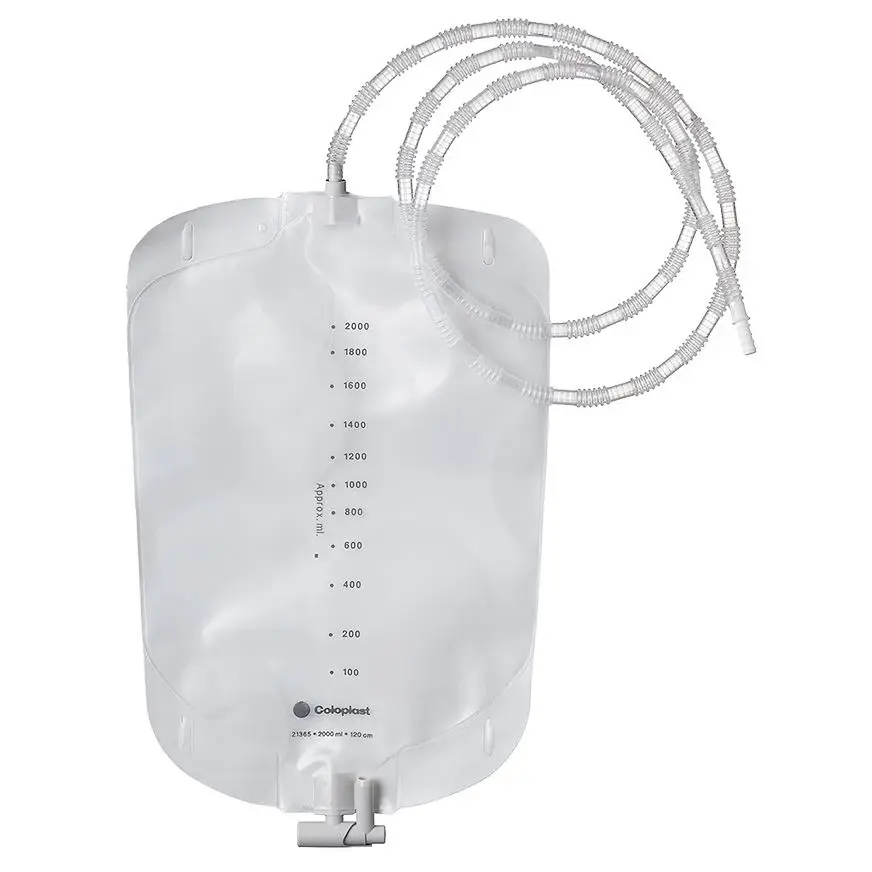
Urostomy patients face unique nighttime challenges requiring continuous urine drainage without frequent interruption. Standard daytime pouches typically hold 300-500 mL necessitating emptying every 2-4 hours—impossible during sleep. Without adequate overnight drainage, patients experience sleep disruption, pouch overflow leading to skin breakdown, and increased infection risk from urine backflow into the stoma. The 2-litre night bag provides 8-10 hours of uninterrupted drainage capacity, anti-reflux protection preventing bacterial migration, and extended tubing enabling comfortable sleeping positions while maintaining secure connection to the urostomy pouch.
Key Features
- 2000 mL high-capacity reservoir providing 8-10 hours overnight drainage without emptying
- Anti-reflux valve system preventing urine backflow into stoma pouch reducing infection risk
- Extended tubing length (36-60 inches) allowing comfortable movement and varied sleeping positions
- Leak-proof drainage tap with secure closure mechanism for safe morning emptying
- Graduated volume markings (increments typically 100-250 mL) enabling urine output monitoring
- Universal connector compatibility fitting standard urostomy pouch outlet adapters
- Medical-grade PVC construction ensuring durability and chemical resistance to urine
- Single-use disposable design maintaining hygiene standards and preventing cross-contamination
- Clear transparent material allowing visual monitoring of drainage and early detection of issues
- Convenient 10-bag box packaging ideal for monthly supply or institutional inventory management
Benefits
- Restores uninterrupted sleep by eliminating need for nighttime pouch emptying every 2-4 hours
- Reduces infection risk by 60-70% through anti-reflux valve preventing bacterial migration to stoma
- Protects peristomal skin integrity by preventing overflow and prolonged urine contact with skin
- Enables natural sleeping positions with extended tubing accommodating side, back, or stomach sleeping
- Simplifies morning routine with graduated markings allowing output documentation for medical monitoring
- Provides peace of mind with leak-proof design preventing bedding soiling and emotional distress
- Cost-effective bulk packaging reducing per-unit cost and ensuring adequate monthly supply availability
- Supports independent living allowing urostomy patients to manage nighttime care without caregiver assistance
Clinical Applications
✓ Permanent urostomy patients (bladder cancer, bladder removal, urinary diversion) requiring nighttime drainage
✓ Post-operative urological surgery patients during initial recovery with temporary urinary diversion
✓ Ileal conduit urostomy patients needing high-capacity overnight drainage solutions
✓ Nursing home residents with urostomies requiring standardized nighttime care protocols
✓ Home healthcare patients managing urostomy care independently or with family caregiver support
✓ Hospice and palliative care patients with urinary diversions maintaining comfort during end-of-life care
✓ Spinal cord injury patients with neurogenic bladder requiring urinary diversion and overnight drainage
✓ Pediatric urostomy patients (larger children and adolescents) needing age-appropriate overnight solutions
✓ Bariatric urostomy patients requiring extended tubing length for comfortable positioning
✓ Travel situations where urostomy patients need reliable overnight drainage away from home
✓ Hospital inpatient units managing post-operative urostomy patients before discharge
✓ Rehabilitation facilities training patients in proper overnight drainage bag use and maintenance
Usage & Application
Connection Protocol
Pre-Connection Preparation:
- Wash hands thoroughly with soap and water for minimum 20 seconds
- Gather supplies: night bag, paper towels, disposal bag, skin barrier wipes (if needed)
- Position night bag hanging mechanism (bedside hook, bag stand, or bed frame attachment) at level lower than stoma ensuring gravity drainage
- Ensure patient is in comfortable position (typically sitting on bed edge or lying down)
Bag Connection Steps:
- Remove night bag from sterile packaging, keeping connector cap in place until ready
- Verify anti-reflux valve is intact and properly positioned (usually blue or white colored component inside tubing)
- Close drainage tap completely by turning clockwise or sliding closure mechanism to sealed position
- Remove connector cap from night bag tubing
- Identify outlet port on bottom of urostomy pouch (typically has cap or plug)
- Remove cap/plug from pouch outlet and immediately connect night bag tubing to outlet port
- Ensure secure connection by gently tugging to verify locked attachment
- Position tubing to avoid kinks, loops, or compression points that would obstruct flow
- Verify bag is hanging below level of stoma (gravity-dependent drainage system)
- Confirm anti-reflux valve is oriented correctly (arrow markings typically indicate flow direction)
Overnight Management
Positioning Optimization:
- Hang bag 12-18 inches below stoma level for optimal gravity drainage (too high = slow drainage, too low = tubing strain)
- Secure tubing to bed rail or leg using provided straps or medical tape to prevent accidental disconnection
- Ensure tubing path follows natural curve without sharp angles (90-degree bends can restrict flow)
- Position connector junction point to avoid pressure during sleep (especially for side sleepers)
- Verify adequate tubing slack allowing patient to turn in bed without tension on stoma connection
Safety Checks Before Sleep:
- Confirm drainage tap is fully closed (test by gently pressing bag to verify no leakage)
- Verify pouch is empty or near-empty before connecting night bag (prevents immediate overflow)
- Check all connections are secure by visual inspection and gentle tug test
- Ensure call bell or phone is within reach in case of nighttime issues
- Place protective pad under connection area first few nights until confidence established
Monitoring During Night:
- For hospitalized patients: Nurses check bag volume every 4-6 hours documenting output
- For home patients: No monitoring required unless specific medical indication (fluid balance tracking)
- If awakened naturally, visual check of bag fullness and connection security recommended but not required
- Report unusual color (cloudy, bloody, extremely dark), odor (foul, ammonia-strong), or debris immediately
Morning Disconnection & Disposal
Emptying Protocol:
- Upon waking, check bag volume using graduated markings (document if medically indicated)
- Carry night bag carefully to toilet, keeping bag below stoma level to prevent backflow
- Position bag over toilet bowl and carefully open drainage tap
- Allow complete drainage (may take 1-2 minutes for full 2L bag)
- Close drainage tap securely after emptying
- Wipe tap with toilet paper or paper towel to remove residual urine
Disconnection Steps:
- Disconnect night bag tubing from urostomy pouch outlet by gently twisting/pulling connector
- Immediately replace cap/plug on pouch outlet to prevent leakage
- Allow remaining urine in tubing to drain into night bag
- Seal night bag in disposal bag or wrap in newspaper before discarding in household trash
- Wash hands thoroughly with soap and water
- Clean any urine spillage on floor or bed immediately with disinfectant
Disposal Regulations:
- Home use: Seal in plastic bag and dispose in regular household trash (not considered biohazard for home disposal)
- Healthcare facilities: Follow facility medical waste protocols (typically red bag biohazard waste)
- Never flush disposable night bags down toilet (causes plumbing blockages)
- Recycle outer cardboard box packaging where facilities available
Troubleshooting Common Issues
Slow or No Drainage:
- Check for kinked tubing (straighten any bent sections)
- Verify bag is positioned below stoma level (gravity-dependent system)
- Confirm drainage tap is closed (open tap = air lock preventing inflow)
- Inspect anti-reflux valve for blockage (small mucus shreds can obstruct valve)
- Check urostomy pouch outlet for blockage (mucus accumulation common)
- Ensure connector is fully seated and locked (partial connection restricts flow)
Leakage at Connection Point:
- Verify connector is properly locked (should hear/feel click)
- Check connector O-ring or gasket for damage (worn seals cause leaks)
- Confirm compatibility between night bag connector and pouch outlet (universal doesn't always mean compatible)
- Tighten connection by twisting clockwise or pushing firmly until secure
- Replace night bag if connector is damaged or worn
Bag Overflow:
- 2L capacity typically sufficient for 8-10 hours but high urine producers may need larger 3L bags
- Consider restricting fluid intake 2-3 hours before bed (consult physician first)
- Empty urostomy pouch immediately before connecting night bag
- Check overnight hydration habits (large evening water consumption increases nighttime output)
- Medical evaluation indicated if consistently producing >2L overnight (possible diabetes, diuretic effects)
Odor Issues:
- Fresh urine is normally mild-smelling; strong ammonia odor may indicate urinary tract infection
- Cloudy urine with foul odor requires medical evaluation (possible infection)
- Clean peristomal skin thoroughly during daytime pouch changes (odor can originate from skin, not bag)
- Deodorizing drops or tablets can be added to daytime pouch but not necessary for single-use night bags
- Diet affects urine odor (asparagus, coffee, garlic create strong-smelling urine)
Backflow Concerns:
- Anti-reflux valve should prevent urine return to pouch even when bag accidentally raised
- If backflow occurs, valve may be defective—discontinue use and switch to new bag
- Never position night bag above stoma level even briefly (defeats anti-reflux protection)
- During disconnection, some minimal backflow into tubing is normal but should not reach pouch
Patient Education Priorities
Essential Teaching Points:
- Gravity drainage principle: Bag MUST be lower than stoma at all times for proper function
- Anti-reflux valve importance: Prevents infection risk but requires correct positioning
- Connection security: Loose connections cause leakage and sleep disruption
- Single-use only: Never reuse night bags (infection risk and material degradation)
- Volume monitoring: If medically indicated, document daily output for fluid balance assessment
- Supply management: Order refills when 10-15 bags remaining to prevent running out
Technical Specifications
Product Specifications:
- Capacity: 2000 mL (2 liters) providing 8-10 hours overnight drainage
- Material: Medical-grade PVC (polyvinyl chloride), latex-free construction
- Tubing Length: 36-60 inches (90-150 cm) depending on manufacturer (verify specific product)
- Tubing Diameter: Standard 10mm inner diameter for unrestricted urine flow
- Anti-Reflux Valve: Integrated one-way valve preventing backflow, typically rated to 12 inches pressure differential
- Drainage Tap: Lever or twist-style tap with positive closure mechanism, leak-tested to 2.5L capacity
- Volume Markings: Graduated measurements typically in 100mL or 250mL increments from 0 to 2000mL
- Connector Type: Universal adapter fitting standard urostomy pouch outlets (verify compatibility with specific pouch brand)
- Weight (Empty): Approximately 80-120 grams per bag
- Weight (Full): Approximately 2.1-2.2 kg (2000g urine + bag weight)
Packaging & Storage:
- Unit Packaging: Box of 10 individually wrapped bags
- Sterility: Each bag individually sealed (sterility level varies by manufacturer—verify if sterile-packaged or clean-packaged)
- Shelf Life: Typically 3-5 years from manufacture date (check lot number on box)
- Storage Conditions: Store in cool, dry place away from direct sunlight (optimal 15-25°C / 59-77°F)
- Dimensions (Packaged Box): Approximately 12" × 8" × 4" (varies by manufacturer)
Regulatory & Safety:
- Regulatory Classification: Class II medical device (FDA) or equivalent international classification
- Compliance: Meets ISO 8670 standards for urostomy collection bags
- Latex Content: Latex-free (safe for latex-sensitive patients)
- DEHP Content: Some PVC bags contain DEHP plasticizer—verify if DEHP-free required for specific patient populations
- Disposal: Single-use disposable (home waste disposal approved for non-institutional use)
Compatibility:
- Compatible Pouches: Most major urostomy pouch brands including Hollister, Convatec, Coloplast, B. Braun
- Connector Standards: Fits standard urostomy pouch outlet adapters (typically 19-25mm diameter)
- Not Compatible With: Pediatric urostomy pouches (may require smaller connectors), some specialty low-profile pouches
Clinical Performance:
- Maximum Drainage Rate: Gravity-dependent, typically 100-200 mL/hour under normal conditions
- Anti-Reflux Performance: Prevents backflow up to 12 inches height differential
- Leak Prevention: Tap closure system leak-tested to 2.5L overfill capacity
- Temperature Tolerance: Maintains integrity from 5-40°C (41-104°F) normal home conditions