
Slideshow Items

  • Foam Mattress
  • mattresses/foam-mattress
  • Mattresses
  • mattresses
VC-Vitacare

  |  

Vitacare Convoluted Overlays Mattress (3-1/2" x 36" x 80")

C$160.00
3+ Day Shipping
In store: Check availability

Available in store

SKU: 1203-3680

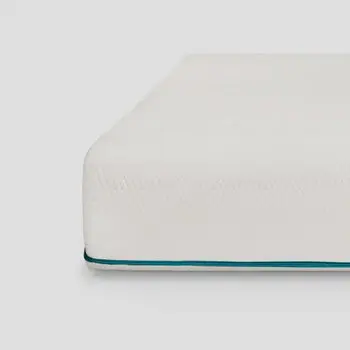
The Vitacare Convoluted Overlay Mattress 3.5 by 36 by 80 inch is a medical-grade polyurethane foam overlay providing pressure redistribution, enhanced airflow, and skin integrity support on homecare, long-term care, and post-operative beds.

    • Why a Convoluted Foam Overlay for Pressure Injury Prevention?

      Pressure injuries — historically called pressure ulcers or bedsores — are among the most preventable and most costly complications of prolonged immobility in homecare, long-term care, and post-operative recovery settings. They develop when sustained mechanical pressure at a bony prominence exceeds the capillary closure pressure of the overlying tissue — typically around 32 mmHg — occluding blood flow to the compressed skin and subcutaneous layer, causing ischaemia that progresses from reversible blanching to irreversible tissue necrosis within hours to days depending on the pressure intensity, the contact duration, and the individual's tissue tolerance. The sacrum, heels, greater trochanters, ischial tuberosities, and occiput are the anatomical sites of greatest risk in bed-bound individuals because these are the points where the deepest bony prominences concentrate body weight against the mattress surface. At these sites, even standard residential mattresses — which are designed for normal body weight distribution across periodic sleeping rather than continuous full-day loading of compromised tissue — create sustained interface pressure well above the capillary closure threshold in immobile individuals.

      The convoluted egg-crate surface geometry of the Vitacare overlay addresses this pressure concentration problem through a specific physical mechanism. The alternating peaks and valleys of the convoluted foam surface allow the tissue overlying bony prominences to sink into the valleys when loaded, redistributing contact force across a greater area of foam surface compared to a flat overlay of equivalent density. The increased contact area reduces the peak interface pressure at any single point — the same load distributed over twice the surface area produces half the pressure per unit area. This pressure redistribution effect is the primary functional mechanism of the convoluted overlay and is the reason the egg-crate geometry has been a standard feature of foam-based pressure redistribution products in hospital and homecare settings for decades. The foam itself contributes a second mechanical effect — the controlled deformation of the polyurethane cells under load, which dissipates peak pressure through elastic compression rather than transmitting it directly to the underlying bony prominence as a rigid surface would.

      The airflow enhancement produced by the egg-crate convoluted surface addresses the second major environmental risk factor for pressure injury development — moisture and skin temperature elevation at the mattress interface. Prolonged contact between the skin and a flat, non-permeable mattress surface creates a humid, warm microenvironment at the skin interface that progressively macerates the stratum corneum, reducing its mechanical resilience and making it significantly more vulnerable to shear and friction damage during repositioning. The open channel structure of the convoluted surface creates air passages between the skin contact points that allow moisture vapour to dissipate laterally rather than accumulating against the skin surface, moderating both the skin surface humidity and the local skin temperature that accelerate skin barrier deterioration in immobile patients. This moisture and temperature management function is distinct from the pressure redistribution function but is equally important in the comprehensive skin integrity protection profile of the overlay.

      The overlay format of the Vitacare — a separate layer placed on top of an existing mattress rather than a replacement mattress — provides the practical and economic flexibility that makes it the appropriate solution for the majority of homecare and long-term care pressure redistribution needs. For homecare patients, the overlay allows a family to improve the pressure redistribution performance of a standard home mattress without replacing it — a significantly lower cost and logistically simpler intervention than mattress replacement or the rental of a powered alternating pressure mattress system. For long-term care facilities managing diverse resident acuity levels, convoluted foam overlays allow the pressure support level of individual beds to be adjusted to match resident risk without modifying the facility's standard bed mattress stock. For patients requiring basic to moderate pressure redistribution support — NPUAP/EPUAP risk category low to moderate, as assessed by the Braden or Waterlow scale — a high-quality convoluted foam overlay provides clinically meaningful risk reduction at a cost-to-benefit ratio that is difficult to match with more complex powered support surfaces.

      Key Features

      • Convoluted egg-crate surface geometry redistributes interface pressure by increasing the contact area across the foam surface
      • Enhanced airflow through open convoluted channels dissipates moisture vapour and moderates skin surface temperature at the interface
      • Medical-grade polyurethane foam provides controlled elastic deformation that absorbs and redistributes peak pressure loads
      • 3.5 inch thickness delivers adequate foam depth for pressure redistribution without excessive height addition to the bed surface
      • 36 inch width by 80 inch length fits standard hospital and homecare bed dimensions without overhang or gap
      • Reduces friction and shear forces during patient repositioning by providing a consistent compliant surface between patient and mattress
      • Lightweight overlay format places easily on existing mattress without tools, mounting, or structural modification to the bed
      • Vitacare medical-grade foam construction for consistent density and deformation characteristics throughout the overlay surface

      Benefits

      • Reduces peak interface pressure at bony prominences by distributing load across the convoluted surface contact geometry
      • Improved airflow through convoluted channels reduces skin surface humidity and temperature that accelerate skin maceration
      • Cost-effective pressure redistribution upgrade to existing mattresses without mattress replacement or powered surface rental
      • Supports skin integrity programs in long-term care, homecare, and post-operative recovery settings
      • Reduces friction and shear forces on fragile skin during the turning, repositioning, and transfer activities that create mechanical skin damage
      • Simple installation and removal supports cleaning, repositioning, and replacement without bed disassembly
      • 3.5 inch depth provides meaningful pressure redistribution benefit while keeping the bed surface height within safe transfer range
      • Compatible with standard bed linens, mattress protectors, and hospital-style cover pads used in homecare and facility settings

      Clinical and Care Applications

      ✓ Homecare patients with limited mobility requiring daily pressure redistribution support on home mattresses ✓ Long-term care residents at low to moderate pressure injury risk requiring enhanced pressure support on facility beds ✓ Post-operative surgical recovery patients with restricted mobility during the immediate post-operative bed rest period ✓ Palliative and end-of-life care patients requiring comfort-focused pressure relief during extended bed-bound periods ✓ Patients recovering from lower limb fractures, hip or knee replacement, or spinal procedures with restricted repositioning ✓ Stroke and neurological rehabilitation patients during the acute immobility phase of post-stroke recovery ✓ Oncology patients experiencing fatigue, cachexia, and reduced tissue tolerance during cancer treatment recovery ✓ Individuals with chronic pain conditions including fibromyalgia and degenerative joint disease requiring extended bed rest periods ✓ Homecare programs implementing NPUAP/EPUAP pressure injury prevention protocols for low-to-moderate risk individuals ✓ Bariatric homecare patients requiring broad-surface pressure redistribution support on standard mattress dimensions ✓ Respite care and temporary care settings where a portable overlay provides pressure support without equipment installation ✓ Hospital discharge planning where an overlay bridges the transition from hospital support surface to home mattress environment

      Usage & Application

      Assessing Appropriateness for the Patient's Risk Level Before deploying the Vitacare Convoluted Overlay as the primary pressure redistribution intervention, assess the patient's pressure injury risk using a validated tool such as the Braden Scale or Waterlow Score. A convoluted foam overlay is appropriate for patients at low to moderate risk — Braden scores 15-23, Waterlow scores 10-14 — where the foam's passive pressure redistribution mechanism provides meaningful risk reduction. For patients at high risk — Braden scores below 13, existing Stage 1 or Stage 2 pressure injuries over bony prominences, history of previous pressure injuries, or severe moisture and nutrition compromise — a powered alternating pressure or low air loss support surface provides the active pressure relief that foam overlays cannot match. The overlay's role in higher-risk patients should be discussed with the treating nurse or wound care specialist before deployment as the sole support surface.

    • No reviews yet

      Add yours

    Testimonials from Google

    See all reviews

    Your cart — 0

    You cart is currently empty

    Login

    By using our website, you agree to the use of cookies. These cookies help us understand how customers arrive at and use our site and help us make improvements. Hide this message More on cookies »