Why Wooden Pallets Remain the Standard Platform for Storage and Freight Logistics?
Wooden pallets have served as the foundational unit load platform of global supply chain logistics for over a century, and despite the introduction of plastic, metal, and composite alternatives, hardwood pallets remain the dominant choice across warehouse, retail, freight, and medical equipment distribution environments for a combination of reasons that no single alternative fully replicates. The load-bearing capacity of hardwood — typically southern yellow pine, oak, or hardwood species selected for their density and shear strength — allows a standard pallet to support static loads of several thousand pounds distributed evenly across the deck boards while maintaining structural integrity through the repeated dynamic loading cycles of forklift tine engagement, pallet jack blade insertion, and gravity-stack compression from upper pallet tiers. The dimensional stability of seasoned hardwood under load is the material property that makes wooden pallets reliable as a unit load base — the pallet deck and stringer sections do not creep, deform, or fatigue under sustained load the way that some polymer alternatives do at elevated temperatures or under point loading from heavy packaged goods.
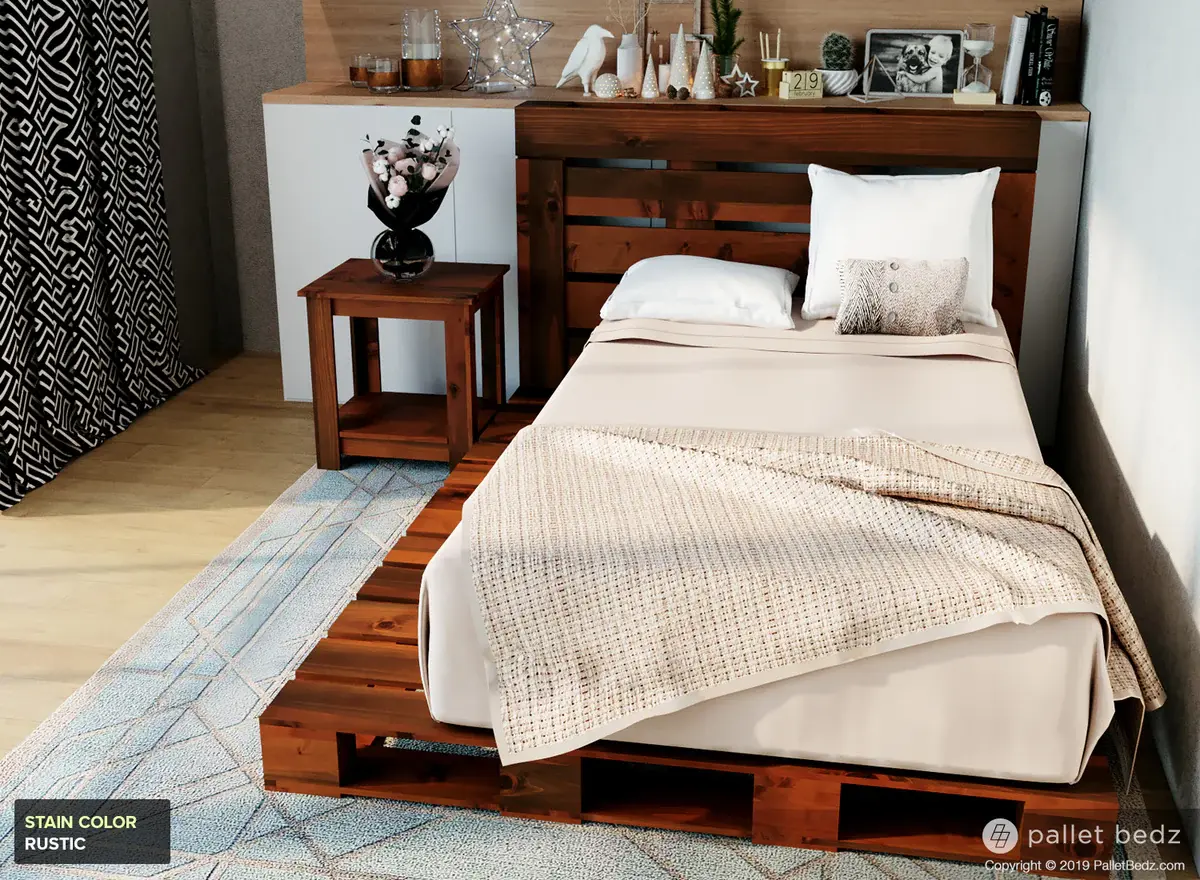
The five-size range of this pallet series — Small through Twin XL — addresses the fundamental logistics challenge that a single pallet dimension cannot efficiently serve the full spectrum of freight and storage applications encountered across a medical supply distribution operation. A standard GMA 48×40-inch pallet dimensioned for grocery and general merchandise handling is correctly sized for boxed inventory, cartons, and medium-weight medical equipment cases but is poorly matched to mattress-length products like therapeutic mattresses, hospital bed frames, and long mobility aids that extend beyond the pallet's deck length when laid flat. The Twin XL designation — matching the 80-inch length specification of the Twin XL mattress standard — addresses this specific product category by providing a deck that accommodates the full length of a mattress or bed component without overhang, which is the primary cause of freight damage to long products on standard-length pallets. The Small and Medium sizes serve the opposite end of the freight spectrum: compact medical equipment, boxed supplies, and individual product units where a full-size pallet would create an inefficient storage density ratio that increases warehouse floor space consumption without adding load-bearing benefit.
The ventilated board spacing of the pallet deck — the gaps between deck boards that allow airflow through the load from below — serves multiple functions in the storage and transport environment. In warehouse storage, the gap spacing allows air circulation beneath and through the stacked load, which is relevant for temperature-sensitive or moisture-sensitive goods and for compliance with fire suppression system design requirements: warehouse fire suppression standards specify pallet and rack configurations that allow sprinkler water penetration through the load, and solid-deck pallets that block sprinkler coverage are non-compliant with these standards in many commercial warehouse fire code jurisdictions. In outdoor or semi-covered storage environments where pallets are used to elevate goods from ground-contact moisture, the gap spacing allows condensation and ground moisture to drain away from the pallet base rather than accumulating under the deck boards and wicking into the load from below. The floor-elevation function of the pallet — raising the load above direct floor contact — is the primary contamination and moisture protection mechanism that makes palletized storage safer than floor-stacked storage for medical equipment, supplies, and other goods where floor moisture contamination would represent a product quality or infection control risk.
The repairability of wooden pallets — the ability to replace individual damaged deck boards, broken stringers, or failed fasteners without scrapping the entire pallet — is an economic and environmental advantage that distinguishes wooden pallets from their plastic and composite alternatives in high-throughput commercial environments. In an active warehouse or distribution operation where pallets are cycled through thousands of load, transport, and unload events annually, individual board splits, stringer cracks, and nail-pull failures are expected maintenance events rather than catastrophic failures requiring full pallet replacement. A wooden pallet with a single broken deck board can be repaired in minutes with a replacement board and fasteners, returning to full structural capacity — a plastic pallet with a cracked stringer or a failed entry throat that cannot accept a pallet jack blade must be discarded entirely, with no repair pathway available. This repairability significantly reduces the total cost of ownership of wooden pallets over a multi-year operational period in environments where pallet damage rates are high.
Key Features
- Heavy-duty hardwood construction provides the static and dynamic load-bearing capacity required for warehouse stacking, forklift handling, and freight transportation
- Five-size range — S, M, L, XL, Twin XL — addresses the full spectrum of freight dimensions from compact boxed supplies to full-length therapeutic mattresses and bed frames
- Forklift and pallet jack entry throats on all standard faces allow mechanical handling from multiple approach angles in warehouse and loading dock environments
- Stackable design allows multiple pallet tiers to be stacked in warehouse rack systems and floor storage areas to maximize vertical storage density
- Ventilated board spacing allows airflow through stored loads, condensation drainage, and fire suppression water penetration compliance
- Reusable construction survives multiple load-transport-unload cycles without structural failure under normal handling conditions
- Repairable individual deck boards and stringers allow damaged sections to be replaced without full pallet discard, extending service life
- Floor-elevation design protects stored goods from direct contact with floor moisture, contamination, and ground-level debris
Benefits
- Load-bearing hardwood construction protects heavy and fragile medical equipment during transport and storage without deck deformation under point loads
- Five-size availability ensures the correct pallet-to-product dimension ratio for each product category — eliminating load overhang damage and inefficient floor space use
- Twin XL size specifically accommodates full-length therapeutic mattresses, hospital bed frames, and long mobility aids without requiring custom freight solutions
- Ventilated deck design supports fire code compliance in commercial warehouse environments and protects moisture-sensitive medical supplies during storage
- Floor elevation prevents ground moisture from contacting palletized goods — critical for medical equipment, sterile supplies, and moisture-sensitive products
- Forklift and pallet jack compatibility enables mechanical handling that reduces manual lifting injury risk for warehouse and loading dock staff
- Repairability reduces total cost of ownership compared to non-repairable pallet alternatives in high-throughput distribution environments
Applications
✓ Medical equipment warehouse storage — pallet-racked storage of mobility aids, home care equipment, and durable medical equipment inventory ✓ Therapeutic mattress and bed frame storage — Twin XL pallets for full-length mattress and adjustable bed component storage without overhang ✓ Inbound freight receiving — palletized shipments from medical equipment suppliers, mattress manufacturers, and medical supply distributors ✓ Outbound product shipment — pallet-loaded outgoing freight for medical supply delivery and equipment installation programs ✓ Retail display and floor organization — palletized product floor displays at warehouse-format medical supply stores ✓ Loading dock staging — short-term pallet staging at receiving and shipping docks during inbound and outbound freight processing ✓ Cross-docking and distribution center operations — pallet-level unit load management across transfer facilities ✓ Seasonal and overflow inventory storage — additional pallet capacity for inventory surges during high-demand periods ✓ Cold storage and controlled environment warehousing — ventilated deck supports airflow requirements in temperature-controlled storage zones ✓ Medical equipment rental fleet storage — pallet-organized storage of rental equipment fleets during between-rental inventory periods
Size Selection Guide
Small (S) Appropriate for compact loads including small medical device cartons, boxed accessories, individual product units, and low-weight supplies where a standard pallet would create an inefficient use of storage floor area. Small pallets are also useful for staging individual product orders before final packing and shipping when the order volume does not justify a full-size pallet.

 780 409-1509
 Get directions