Slideshow Items

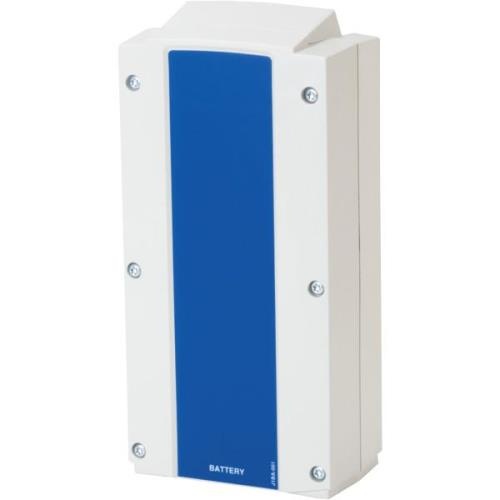
Replacement Battery for Joerns|Hoyer Lifts Advance-E and HPL402

C$291.90
In stock online
In store: Check availability

Available in store

SKU: 400-3003

Rechargeable 24-volt replacement battery pack for Joerns Hoyer Advance-E and HPL402 electric patient lifts, restoring full lift motor performance and transfer completion reliability for safe daily patient handling in homecare and clinical environments.

    • Why the Battery Pack Is the Transfer Safety Boundary and the Lift Operation Enabler of the Hoyer Electric Patient Lift Simultaneously

      The battery pack on a Joerns Hoyer Advance-E or HPL402 electric patient lift serves two structurally distinct functions that are both essential to the lift's clinical and operational performance, and that a single power component must satisfy simultaneously. The first function is transfer safety: the battery is the power source that drives the lift motor through the full range of motion required to complete a patient transfer — from the lowered pickup position through the full raised position and back. A battery pack that has lost sufficient capacity to complete a full transfer cycle under patient load will reach a low-charge cutoff during the transfer sequence, stopping the lift at an intermediate position with the patient suspended in the sling. An interrupted transfer with the patient suspended is not a recoverable situation in a single-caregiver homecare context — it requires additional personnel, secondary equipment, or emergency intervention to complete the transfer safely. The battery pack is therefore not an ancillary power component — it is the transfer safety boundary that determines whether the lift can complete a full transfer cycle under maximum rated load without interruption.

      The second function the battery pack must satisfy simultaneously is lift operation continuity across multiple transfers between charges. A patient lift in active homecare or clinical use is operated for multiple transfers per day — morning and evening transfers at minimum, with additional transfers for hygiene, therapy, and repositioning events. A battery pack that can complete only a single transfer cycle per charge requires the caregiver to recharge between every transfer, introducing a charging dependency into the care schedule that delays transfers when the battery is depleted at the point of need. The battery pack's charge capacity must therefore be sufficient to support the full daily transfer load of the care environment it is deployed in, not merely to complete a single transfer cycle under laboratory conditions.

      The 24-volt output specification of the Hoyer replacement battery — typically configured as two 12-volt sealed lead-acid cells in series — is not an interchangeable parameter with lower or higher voltage alternatives. The lift's control system and actuator motor are designed around the 24-volt supply voltage, and the motor's torque output across the full lift range of motion is dependent on maintaining this supply voltage above the motor's minimum operating threshold throughout the discharge cycle. A battery pack whose individual cells have capacity-degraded unevenly produces a supply voltage that drops below the motor's operating threshold before the nominal pack capacity is exhausted, stopping the lift mid-transfer even though the battery has not yet reached its full discharge state. The OEM 400-3003 replacement battery's matched cell specification ensures that both cells discharge at the same rate, maintaining supply voltage above the motor's operating threshold for the full rated capacity of the pack.

      The quick-release removable design of the Advance-E and HPL402 battery pack interface allows battery exchange without tools or technical skill, enabling caregivers to swap a depleted battery for a charged unit between transfers rather than waiting for the depleted pack to recharge on the lift. In a care environment where a second charged battery pack is maintained, the quick-release interface reduces transfer delay from a full recharge cycle to the time required to exchange the battery pack — restoring the lift's operational readiness immediately rather than after a multi-hour charge interval.

      KEY FEATURES

      • 24-volt rechargeable battery pack — voltage specification matched to the Advance-E and HPL402 lift motor control system, ensuring full motor torque output across the complete transfer range of motion under maximum rated patient load
      • Matched dual 12-volt cell configuration — cells matched for consistent discharge rate, maintaining supply voltage above the motor's operating threshold for the full rated pack capacity and preventing premature mid-transfer voltage dropout
      • Compatible with Hoyer Advance-E and HPL402 lifts — battery pack interface, voltage, and physical dimensions match the OEM specification for these models, ensuring secure mounting and correct electrical connection at the lift control unit
      • Quick-release removable design — allows tool-free battery exchange between transfers, enabling charged-pack swap without waiting for a full recharge cycle when a second charged pack is available
      • Multiple-transfer charge capacity — capacity sufficient to support the daily transfer load of homecare and clinical use environments, not only single-cycle laboratory conditions

      BENEFITS

      • Restores transfer completion reliability — replacing a capacity-degraded battery before it fails to complete a full transfer cycle under patient load, removing the suspended-transfer risk that a depleted battery creates mid-lift
      • Multiple-transfer operation between charges — restored capacity supports the full daily transfer schedule of homecare and clinical use without mid-schedule recharge delays
      • Matched cell specification prevents premature voltage dropout — both cells discharge at consistent rate, eliminating the mid-transfer motor stop that unmatched or degraded cells produce when supply voltage drops below the motor's operating threshold
      • Quick-release interface enables charged-pack exchange — restoring lift operational readiness between transfers without waiting for a full recharge cycle when a second charged pack is available
      • No special tools required for installation — removable pack design allows battery replacement by caregivers in homecare and clinical environments without technical assistance

      TYPICAL APPLICATIONS

      Capacity failure replacement — immediate battery replacement when charge capacity has fallen below the level required to complete a full transfer cycle under patient load, restoring transfer safety before the next scheduled transfer

      Voltage dropout replacement — replacement when cell imbalance is causing mid-transfer motor stops before nominal pack capacity is exhausted, identified by lift stopping at intermediate positions during normal transfer cycles

      Scheduled maintenance replacement — battery replacement on a defined service interval before capacity degradation reaches the transfer completion threshold, avoiding a failed transfer event in homecare and clinical environments

      Second battery purchase — additional charged battery pack maintained alongside the primary pack, enabling quick-swap exchange between transfers and eliminating recharge delay as a constraint on transfer scheduling

      Lift refurbishment and recommissioning — battery inspection and replacement when a Hoyer Advance-E or HPL402 lift is recommissioned after storage or transfer to a new care environment, confirming charge capacity and cell balance before the lift enters active use

    • No reviews yet

      Add yours

    Testimonials from Google

    See all reviews

    Your cart — 0

    You cart is currently empty

    Login

    By using our website, you agree to the use of cookies. These cookies help us understand how customers arrive at and use our site and help us make improvements. Hide this message More on cookies »