
Why 21G Ć 1" Thin Wall Design for Optimized Flow with Reduced Resistance
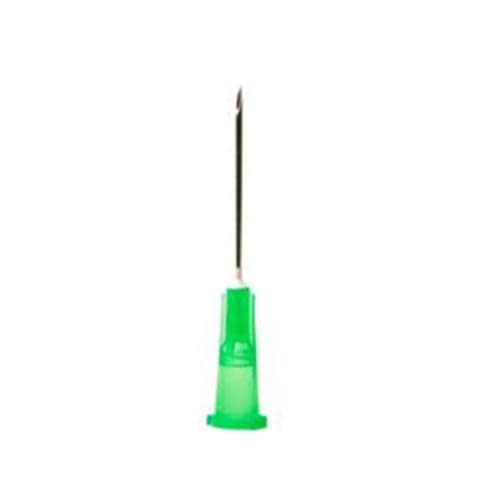
The thin wall construction features reduced cannula wall thickness compared to regular wall needles, creating a larger internal lumen diameter while maintaining the same 21-gauge (0.8mm) outer diameterāthis innovative design increases the cross-sectional area available for fluid flow, significantly reducing the resistance encountered during aspiration of blood specimens or injection of viscous medications, critical for drawing blood samples without hemolysis, administering oil-based medications that would clog standard needles, and performing procedures where flow rate directly impacts success such as rapid medication delivery in emergency situations or comfortable injection of large-volume formulations where excessive pressure causes patient discomfort. The 21-gauge caliber represents the versatile mid-range size that balances adequate flow capacity for blood collection, IM medication administration, and fluid aspiration while maintaining patient comfort superior to larger 18-19 gauge needlesāappropriate for routine venipuncture in most adults, intramuscular injections in average-to-large muscle groups, and subcutaneous administration of medications requiring good flow without the excessive tissue trauma and pain associated with larger bore needles. The 1-inch (25mm) length provides the reach necessary for standard intramuscular injections in deltoid, vastus lateralis, and ventrogluteal sites in average-sized adults, adequate depth for venipuncture in antecubital and forearm veins without excessive penetration risk, and appropriate length for subcutaneous injections in patients with normal adipose tissue distribution, while avoiding the complications of unnecessarily long needles that increase the risk of nerve damage, bone contact, or inadvertent intravenous injection during intended intramuscular administration.
Key Features & Benefits
Key Features:
- 21-gauge (21G) needle with 0.8mm outer diameter
- Thin wall construction with larger internal lumen
- 1-inch (25mm) needle length
- PrecisionGlide tri-bevel cutting edge
- Precision manufacturing for sharp, smooth penetration
- Universal Luer connection (Luer Lock and Luer Slip compatible)
- Color-coded green hub (21G per ISO 6009 standard)
- Stainless steel construction
- Sterile, individually packaged
- Single-use, disposable design
- Protective needle shield
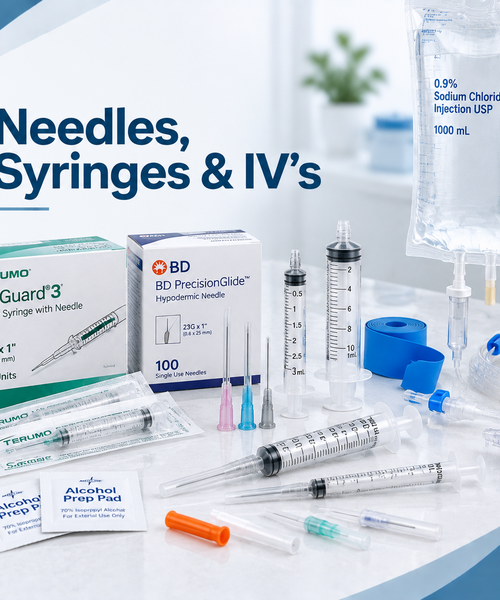
- Box of 100 needles for clinical inventory
- Latex-free
- Manufactured by BD (Becton, Dickinson and Company)
- Meets USP and ISO quality standards
Benefits:
- Thin wall increases flow rate compared to regular wall
- Reduced resistance during aspiration and injection
- Better for viscous medications and oils
- Faster blood collection without increased gauge
- 21G provides good flow with moderate patient comfort
- Versatile for multiple clinical applications
- 1-inch length appropriate for most IM and venipuncture
- Tri-bevel tip ensures smooth, less painful insertion
- Sharp design reduces tissue trauma
- Universal Luer fits all standard syringes
- Green color-coding enables instant identification
- Sterile packaging ensures infection control
- Single-use prevents cross-contamination
- Latex-free protects sensitive patients and staff
- Trusted BD quality and reliability
Clinical Applications
BD PrecisionGlide 21G Ć 1" Thin Wall Needles are appropriate for:
ā Routine venipuncture and blood collection ā Blood culture collection ā Intramuscular injections (deltoid, vastus lateralis, ventrogluteal) ā Subcutaneous injections (larger volumes or viscous medications) ā Viscous medication administration (oils, suspensions) ā Hormone therapy injections (testosterone, progesterone in oil) ā Vitamin supplementation (B12, others requiring IM) ā Antibiotic administration (some formulations) ā Vaccine administration (when 21G specified) ā Allergy immunotherapy ā Joint aspiration and injection procedures ā Drawing medication from vials ā IV line access (with appropriate catheter) ā Blood transfusion administration (with appropriate setup) ā Laboratory specimen collection ā Emergency medication delivery ā Any procedure requiring 21G Ć 1" needle
Usage & Application
IMPORTANT: Needles should be used by trained healthcare professionals following proper technique and safety protocols.
Pre-Use Preparation:
- Verify indication and appropriateness:
- Confirm procedure type
- 21G Ć 1" thin wall appropriate for:
- Blood draws from most adult veins
- IM injections in average-sized adults
- Viscous medications requiring good flow
- Procedures needing balance of flow and comfort
- Consider alternatives if:
- Pediatric patient (smaller gauge usually preferred)
- Very large patient needing longer IM needle
- Subcutaneous insulin (use insulin syringe)
- Gather supplies:
- BD PrecisionGlide 21G Ć 1" thin wall needle
- Appropriate syringe
- Alcohol swabs
- Gauze pads
- Adhesive bandage
- Gloves
- Sharps container
- Medication or blood collection tubes
- Hand hygiene and don gloves
- Inspect package:
- Check integrity and expiration
- Verify 21G Ć 1" and thin wall designation
- Ensure sterile seal intact
Attaching Needle to Syringe:
- Open needle package:
- Peel open sterile package
- Do NOT touch needle or hub tip
- Attach to syringe:
- For Luer Lock syringe:
- Align needle hub threads with syringe tip threads
- Push and twist clockwise until firmly seated
- Verify secure with gentle tug
- For Luer Slip syringe:
- Push needle hub straight onto syringe tip
- Firm pressure until fully seated
- Should fit snugly
- Remove needle shield:
- Pull straight off (do not twist)
- Do NOT touch needle
- Save shield if recapping will be needed (not recommended)
Drawing Medication from Vial:
- Prepare vial:
- Check medication name, concentration, expiration
- Remove cap
- Clean rubber stopper with alcohol
- Allow to dry
- Draw air equal to medication volume:
- Pull syringe plunger back
- Air equalizes vial pressure
- Insert needle into vial:
- Hold vial on flat surface
- Insert needle through stopper
- Push plunger to inject air
- Invert and withdraw medication:
- Turn vial upside down
- Keep needle tip below fluid level
- Pull plunger slowly
- Thin wall design enables smooth aspiration
- Draw slightly more than needed
- Remove air bubbles:
- Tap barrel to float bubbles up
- Push plunger gently to expel
- Adjust to exact dose
- Remove needle from vial:
- Pull straight out
- Replace needle before injection if drawing from vial
- Vial access dulls needle, causes more pain
Venipuncture Technique:
- Select vein:
- Antecubital fossa preferred (median cubital, cephalic, basilic)
- Forearm veins acceptable
- Palpate, don't just visualize
- Apply tourniquet:
- 3-4 inches above site
- Not on >1 minute
- Clean site:
- Alcohol swab in circular motion
- Allow to dry 30 seconds
- Do NOT touch after cleaning
- Anchor vein:
- Pull skin taut below insertion site
- Stabilizes vein
- Insert needle:
- Bevel up
- 15-30 degree angle
- Smooth, confident insertion
- 21G enters easily in most veins
- Watch for blood flashback in hub or tube
- Collect blood:
- Thin wall design:
- Faster blood flow than regular wall
- Reduces hemolysis risk (less shear stress)
- Comfortable for patient (quicker collection)
- Fill tubes in correct order
- Release tourniquet before removing needle
- Remove needle:
- Place gauze over site
- Withdraw needle quickly
- Apply immediate pressure
- Apply pressure:
- Patient or provider holds firmly
- 2-5 minutes (longer if anticoagulated)
- Apply bandage when bleeding stopped
Intramuscular Injection:
- Select site:
- Deltoid (common for vaccines, small volume)
- Vastus lateralis (preferred for infants, large volumes)
- Ventrogluteal (large volumes, adults)
- 1-inch adequate for average adults at these sites
- Position patient:
- Comfortable, muscle relaxed
- Proper positioning reduces pain
- Identify landmarks:
- Proper site selection critical
- Avoid nerves and blood vessels
- Clean site:
- Alcohol swab
- Allow to dry
- Stretch skin taut:
- Pull skin tight (do not pinch for IM)
- Insert needle:
- 90-degree angle
- Quick, dart-like motion
- Insert to full 1-inch depth
- 21G thin wall:
- Less resistance entering muscle
- Smoother penetration
- Aspirate (per protocol):
- Pull back plunger slightly
- Check for blood return
- If blood: Withdraw, discard, new injection
- Note: CDC recommends no aspiration for vaccines
- Inject medication:
- Slow, steady pressure
- Thin wall enables smooth injection
- Less pressure needed for viscous medications
- Typical rate: 1 mL per 10 seconds
- Withdraw needle:
- Quick, smooth removal
- Apply gentle pressure
- Massage area gently (unless contraindicated)
Subcutaneous Injection:
- Select site:
- Abdomen, thigh, upper arm, back
- Rotate sites
- Pinch or not:
- 21G Ć 1" may be long for SubQ
- Pinch skin for most patients
- Insert at 45-degree angle
- Or use 90 degrees without pinch in obese patients
- Insert and inject:
- Smooth insertion
- Slow injection
- Count 5-10 after injection complete
Viscous Medication Administration:
- Thin wall advantages:
- Oil-based medications flow better
- Testosterone, progesterone in oil
- Reduced clogging compared to regular wall
- Less pressure needed
- Warming medication:
- Warm to body temperature if allowed
- Reduces viscosity
- Easier injection
- Technique:
- May take longer to inject
- Steady, consistent pressure
- Don't force
- Thin wall design makes viscous injection tolerable
Post-Procedure Care:
- Dispose immediately:
- Do NOT recap needle (needlestick risk)
- Exception: One-handed scoop technique if absolutely necessary
- Place in sharps container immediately
- Never reuse needles
- Remove gloves and hand hygiene
- Document:
- Procedure performed
- Site used
- Patient tolerance
- Any complications
Troubleshooting:
Needle won't attach to syringe:
- Verify both Luer Lock or both Luer Slip
- Check threads not damaged
- Ensure proper alignment
Needle bends during insertion:
- May have hit bone or tough tissue
- Discard and use new needle
- Reassess site selection
Difficult to draw blood:
- Vein may have collapsed
- Reposition needle slightly
- Release tourniquet briefly
- May need different vein
Resistance injecting:
- Medication may be too viscous even with thin wall
- Warm medication if allowed
- Use steady pressure, don't force
- May need larger gauge (20G or 18G)
Medication won't draw from vial:
- Ensure adequate air in vial
- Check needle not clogged
- Verify bevel fully in liquid
Blood flashback but won't flow:
- Needle may be against vein wall
- Rotate slightly
- Pull back or advance 1-2mm
- May have gone through vein
Special Considerations:
Pediatric patients:
- 21G usually too large for young children
- May be appropriate for adolescents
- Consider 23G-25G for most pediatric
Geriatric patients:
- 21G appropriate for most elderly
- May have fragile veins (gentle technique)
- Skin may be thin
- May be on anticoagulants (pressure longer)
Obese patients:
- 1-inch may be inadequate for IM
- May need 1.5-inch needle for IM
- Adequate for venipuncture
Thin patients:
- 1-inch appropriate for most IM sites
- May be excessive for deltoid in very thin
- Good for venipuncture
Patients with needle anxiety:
- 21G moderate size
- Explain procedure
- Distraction techniques
- Quick, confident insertion reduces pain
Anticoagulated patients:
- Apply pressure longer (5-10 minutes)
- Monitor for hematoma
- Avoid IM if possible (prefer SubQ)
Diabetic patients:
- Not for routine insulin (use insulin syringes)
- May be used for other medications
Advantages of Thin Wall Design:
vs. Regular Wall 21G:
- Thin wall advantages:
- Faster flow rate
- Reduced resistance
- Better for viscous medications
- Faster blood collection
- Less hemolysis during draws
- More comfortable for patient (quicker procedure)
- Same outer diameter (same tissue trauma)
Clinical Applications Especially Benefiting from Thin Wall:
- Blood collection (faster, less hemolysis)
- Viscous IM injections (oils, suspensions)
- Large-volume injections (less pressure needed)
- Rapid medication delivery
Infection Control:
- Strict aseptic technique
- Never reuse needles
- Never share between patients
- Dispose in sharps immediately
- Change needle between drawing and injection
Needle Gauge Selection Guide:
When 21G appropriate:
- Routine adult blood draws
- IM injections average adults
- Viscous medications
- Balance flow and comfort
When larger gauge better:
- Rapid blood collection (18G-20G)
- Blood transfusion (18G)
- Very viscous medications
When smaller gauge better:
- Pediatric patients (23G-25G)
- Subcutaneous injections (25G-27G)
- Thin/fragile veins (23G)
- Insulin injections (insulin syringes)
Storage:
- Store at room temperature
- Keep in original packaging until use
- Protect from damage
- Check expiration dates
- Rotate stock using FIFO
When to Contact Provider:
- Unable to complete procedure
- Suspected nerve injury (shooting pain)
- Excessive bleeding
- Signs of infection after injection
- Hematoma formation
- Questions about appropriate use
Technical Specifications
Product Details:
- Brand: BD PrecisionGlideā¢
- Manufacturer: BD (Becton, Dickinson and Company)
- Product Type: Hypodermic thin wall needle
- Needle Gauge: 21G (0.8mm outer diameter)
- Wall Type: Thin wall (larger internal diameter than regular wall)
- Needle Length: 1 inch (25mm)
- Needle Tip: Tri-bevel PrecisionGlide cutting edge
- Needle Material: Stainless steel
- Hub Color: Green (per ISO 6009 color coding for 21G)
- Connection Type: Universal Luer (compatible with Luer Lock and Luer Slip)
- Sterility: Sterile until opened
- Sterilization Method: Ethylene oxide (EtO) or gamma radiation
- Latex Content: Latex-free (no natural rubber latex)
- Packaging: Individually packaged in rigid protective shield
- Box Quantity: Typically 100 needles per box
- Intended Use: Injections and fluid aspiration with syringes
- Patient Population: Primarily adults, some adolescents
- Shelf Life: Typically 5 years from manufacture
- Storage: Room temperature, dry conditions
- Regulatory Status: FDA-cleared medical device
- Standards Compliance:
- ISO 7864 (sterile hypodermic needles)
- ISO 6009 (needle color coding)
- USP standards