
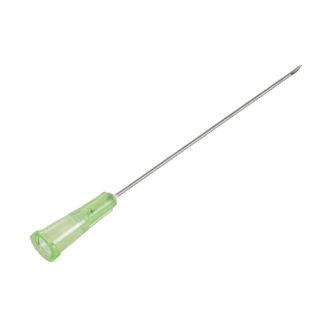
Why 21G × 2" Extended Length for Deep Intramuscular and Specialized Procedures
The 21-gauge (0.8mm outer diameter) needle caliber provides the optimal balance between adequate flow capacity for drawing viscous medications or blood specimens and patient comfort superior to larger 18-19 gauge needles—this mid-range size delivers sufficient lumen diameter for oil-based medications, thick suspensions, and rapid fluid aspiration while maintaining the relatively fine profile that reduces tissue trauma and injection pain compared to larger bores, making 21G the versatile choice for routine intramuscular injections, venipuncture in most adults, and procedures requiring balance between flow efficiency and patient tolerance. The extended 2-inch (50mm) length provides the critical reach necessary for deep intramuscular injections in large-bodied or obese patients where standard 1-1.5 inch needles fail to penetrate through substantial adipose tissue to reach muscle, gluteal injections requiring depth to access the ventrogluteal or dorsogluteal sites safely without risk of subcutaneous deposition that compromises medication absorption and causes local irritation, and specialized procedures including joint injections, trigger point therapy, and certain aspirations where anatomical depth demands the longer shaft—this extended length proves essential in clinical scenarios where inadequate needle length results in procedure failure, medication malabsorption, patient discomfort from subcutaneous instead of intramuscular delivery, or inability to access target tissue planes. The regular bevel design delivers reliable tissue penetration through the standard cutting angle appropriate for general clinical use, avoiding the ultra-sharp bevels that might be more prone to damage and the blunt configurations intended only for specific applications, while the universal Luer connection ensures compatibility with both Luer Lock and Luer Slip syringes eliminating the need to match specific needle-syringe connection types during urgent procedures or high-volume clinical workflows.
Key Features & Benefits
Key Features:
- 21-gauge (21G) needle with 0.8mm outer diameter
- 2-inch (50mm) extended needle length
- Regular bevel cutting edge
- Stainless steel construction
- Universal Luer connection (Luer Lock and Luer Slip compatible)
- Color-coded green hub (21G per ISO 6009 standard)
- Rigid protective needle shield
- Sterile, individually packaged
- Single-use, disposable design
- Latex-free construction
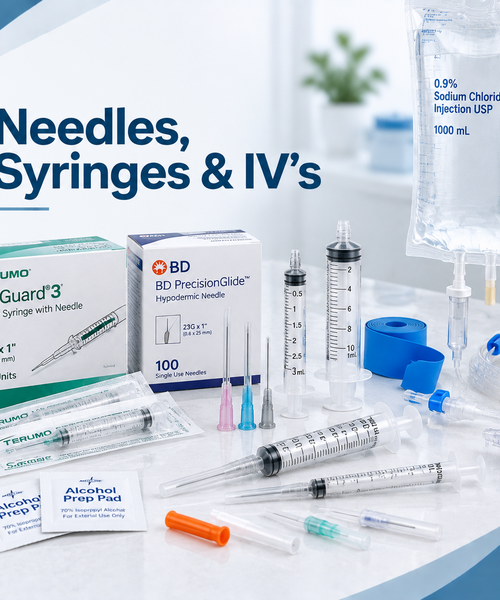
- Box of 100 needles
- Manufactured by BD (Becton, Dickinson and Company)
- Meets USP and ISO quality standards
Benefits:
- 21G provides good flow for medications and blood
- Balanced gauge for comfort and function
- 2-inch length reaches deep IM sites
- Essential for obese patients
- Appropriate for gluteal injections
- Enables specialized deep procedures
- Regular bevel ensures reliable penetration
- Versatile for multiple clinical applications
- Universal Luer fits all standard syringes
- Green color-coding enables instant identification
- Rigid shield protects needle until use
- Sterile packaging ensures infection control
- Single-use prevents cross-contamination
- Latex-free protects sensitive patients and staff
- Box of 100 convenient for clinical inventory
- Trusted BD quality and reliability
Clinical Applications
BD 21G × 2" Needles are appropriate for:
✓ Deep intramuscular injections (obese patients) ✓ Gluteal injections (ventrogluteal, dorsogluteal) ✓ Large-volume IM injections ✓ Oil-based medication injections (testosterone, others) ✓ Viscous medication administration ✓ Blood collection (venipuncture) ✓ Joint injections (some large joints) ✓ Trigger point injections ✓ Aspiration of deep fluid collections ✓ Vaccine administration (when deeper IM needed) ✓ Hormone therapy injections ✓ Long-acting antipsychotic injections ✓ Contraceptive injections (depot formulations) ✓ Drawing medication from vials ✓ Fluid transfer procedures ✓ Bariatric patient injections ✓ Athletic/muscular patient injections ✓ Any procedure requiring deep tissue access
Usage & Application
IMPORTANT: Needles should be used by trained healthcare professionals following proper technique and safety protocols.
Pre-Use Preparation:
- Verify indication and appropriateness:
- Confirm procedure requires 2-inch length
- 21G × 2" appropriate for:
- Deep IM in obese patients
- Gluteal injections
- Large-volume IM medications
- Viscous medications
- Deep procedures
- NOT appropriate for:
- Standard adult deltoid IM (use 1-1.5")
- Pediatric patients (too long)
- Subcutaneous injections (too long)
- Gather supplies:
- BD 21G × 2" needle
- Appropriate syringe (Luer compatible)
- Medication
- Alcohol swabs
- Gauze pads
- Adhesive bandage
- Gloves
- Sharps container
- Hand hygiene and don gloves
- Inspect package:
- Check integrity and expiration
- Verify 21G × 2" specifications
- Ensure sterile seal intact
Attaching Needle to Syringe:
- Open needle package:
- Peel open sterile package
- Do NOT touch needle or hub tip
- Attach to syringe:
- For Luer Lock:
- Align threads
- Push and twist clockwise until secure
- Tug to verify tight connection
- For Luer Slip:
- Push straight onto syringe tip
- Firm pressure until fully seated
- Remove needle shield:
- Pull straight off
- Do NOT touch needle
Drawing Medication:
- Prepare vial:
- Check medication, concentration, expiration
- Clean stopper with alcohol
- Draw air equal to dose:
- Insert needle and inject air:
- 2-inch length: Only insert partway into vial
- Don't need full depth for vial access
- Inject air
- Invert and withdraw:
- Turn vial upside down
- Withdraw medication
- 21G provides good flow
- Remove air bubbles
- Verify dose
- Consider needle replacement:
- May replace with fresh 21G × 2" before injection
- Vial access dulls needle
- Fresh needle less painful
Deep Intramuscular Injection:
CRITICAL: 2-inch needles require proper technique to avoid complications.
Site Selection for 2-inch Needle:
- Ventrogluteal (PREFERRED):
- Safest gluteal site
- 2-inch appropriate for obese patients
- Less risk of nerve/vessel injury
- Large muscle accommodates volume
- Dorsogluteal (use with CAUTION):
- Risk of sciatic nerve injury
- Only if ventrogluteal not accessible
- Proper landmarks critical
- 2-inch reaches muscle in obese patients
- Vastus lateralis (thigh):
- 2-inch may be needed for very obese patients
- Usually 1-1.5 inch adequate
- NOT for deltoid:
- Deltoid too small for 2-inch needle
- Risk of bone contact
- Use 1-1.5 inch maximum
Patient Assessment:
Determine if 2-inch needed:
- Body habitus assessment critical
- Obese patients (BMI >30): Often need 2-inch for gluteal
- Very obese (BMI >40): Definitely need 2-inch
- Average weight: Usually 1-1.5 inch adequate
- Lean patients: NEVER need 2-inch (risk of bone contact)
Injection Technique:
- Position patient:
- Ventrogluteal: Lateral recumbent or standing
- Dorsogluteal: Prone position
- Muscle relaxed
- Identify landmarks:
- CRITICAL for deep injection
- Ventrogluteal:
- Place palm on greater trochanter
- Index finger on anterior superior iliac spine
- Middle finger toward iliac crest
- Form V - inject in center
- Dorsogluteal:
- Draw imaginary line from posterior superior iliac spine to greater trochanter
- Inject in upper outer quadrant
- Proper landmarks prevent sciatic nerve injury
- Clean site:
- Alcohol swab
- Allow to dry 30 seconds
- Stretch skin taut:
- Pull skin tight
- Z-track technique recommended:
- Pull skin laterally 1-1.5 inches
- Hold during injection
- Release after withdrawal
- Prevents medication leakage
- Insert needle:
- 90-degree angle (perpendicular)
- Quick, firm, dart-like motion
- Insert to appropriate depth:
- Obese patients: May need full 2 inches
- Large but not obese: May insert 1.5 inches
- Do NOT force to bone
- 2-inch needle requires confidence
- Aspirate:
- Pull back plunger 5-10 seconds
- Check for blood return
- If blood:
- Indicates intravascular placement
- Withdraw completely
- Discard needle and medication
- Prepare new injection
- No blood: Proceed with injection
- Inject medication:
- Slow, steady pressure
- Large volumes (>2 mL): 10 seconds per mL
- Oil-based medications: May take longer
- 21G adequate flow even for viscous
- Wait 10 seconds:
- After plunger fully depressed
- Allows medication to disperse
- Reduces leakage
- Withdraw needle:
- Quick, smooth removal
- If using Z-track: Release skin after withdrawal
- Apply gentle pressure
- Do NOT massage (can force medication back out)
Venipuncture:
- Site selection:
- Antecubital veins
- 21G appropriate for routine blood draws
- Apply tourniquet:
- Clean site:
- Insert needle:
- Bevel up
- 15-30 degree angle
- 21G good blood flow
- Watch for flashback
- Collect blood:
- 2-inch length: Only insert partway
- 1 inch or less penetration adequate
- Fill tubes in correct order
- Remove:
- Release tourniquet first
- Gauze over site
- Quick withdrawal
- Apply pressure 2-5 minutes
Special Procedures:
Joint injections:
- Some large joints may require 2-inch
- Proper anatomical knowledge essential
- Sterile technique critical
Trigger point injections:
- 2-inch may be needed for deep trigger points
- Specific technique required
Post-Procedure Care:
- Dispose immediately:
- Do NOT recap (needlestick risk)
- 2-inch needles especially dangerous if exposed
- Place in sharps container
- Never reuse
- Hand hygiene
- Document:
- Medication, dose, site, depth
- Patient tolerance
- Aspirate results
Troubleshooting:
Cannot insert to full depth:
- Do NOT force
- May encounter resistance (fascia, dense tissue)
- Use steady, controlled pressure
- If hitting bone: Too deep, withdraw slightly
Hit bone:
- Pull back 1/4 inch
- Reassess landmarks
- May not need full 2-inch depth
Blood on aspiration:
- Intravascular placement
- Must withdraw and discard
- Do NOT inject into blood vessel
- Prepare new injection
Medication leaking from site:
- Should have waited 10 seconds before withdrawal
- Z-track technique helps prevent
- Apply pressure (don't massage)
Patient severe pain during injection:
- May have hit nerve
- Withdraw immediately
- Assess patient
- May need to report injury
Needle bent:
- May have hit bone
- Discard
- Use new needle
- Reassess technique
Special Considerations:
Obese patients:
- Primary indication for 2-inch needles
- Essential for gluteal injections
- May need full 2-inch depth
- Proper site selection critical
- Z-track technique recommended
Bariatric patients (BMI >40):
- 2-inch may still be inadequate
- Some need 3-inch needles (special order)
- Consider consultation for extremely obese
Athletic/muscular patients:
- May have thick muscle requiring deeper injection
- 2-inch appropriate for some
- Less adipose but more muscle mass
Average weight patients:
- Usually do NOT need 2-inch
- Standard 1-1.5 inch adequate
- Reserve 2-inch for specific indications
Lean patients:
- NEVER use 2-inch (will hit bone)
- Use 1-1.5 inch maximum
- Risk of serious injury
Pediatric patients:
- NOT appropriate for children
- Too long, dangerous
- Use age/size appropriate lengths
Geriatric patients:
- May have less muscle mass
- Often don't need 2-inch
- Assess individually
Patients with bleeding disorders:
- Deep IM increases hematoma risk
- Apply prolonged pressure (10+ minutes)
- Monitor carefully
Oil-based medications:
- Testosterone, progesterone in oil
- 21G handles viscous medications well
- 2-inch ensures IM delivery (not SubQ)
- Slow, steady injection
Long-acting antipsychotics:
- Often thick, oily formulations
- Large volumes (2-5 mL)
- 2-inch needed in many patients
- Proper IM delivery critical for efficacy
Depot contraceptives:
- Some formulations thick
- 2-inch may be needed for obese patients
- Follow product guidelines
Infection Control:
- Strict aseptic technique
- Never reuse needles
- Never share between patients
- Single-use only
- Dispose in sharps immediately
Safety Considerations:
2-inch needles present increased risks:
- Greater injury potential if exposed
- Longer reach increases danger
- Careful handling essential
- Never recap
- Immediate disposal critical
Advantages of 21G × 2":
21G gauge:
- Good flow for medications and blood
- Handles viscous formulations
- Adequate for most IM medications
2-inch length:
- Reaches muscle in obese patients
- Essential for gluteal injections in large patients
- Enables deep procedures
- Prevents subcutaneous deposition
When 21G × 2" needed:
- Obese patients requiring IM
- Gluteal injections
- Large-volume IM (>2 mL)
- Viscous medications
- Deep procedures
21G × 2" vs. Other Sizes:
vs. Shorter needles (1-1.5"):
- 2-inch advantages:
- Reaches muscle in obese
- Necessary for gluteal
- Enables deep access
- Shorter advantages:
- Adequate for average patients
- Safer (less injury risk)
- More comfortable psychologically
vs. Larger gauges (18G-20G):
- 21G advantages:
- Less painful
- Adequate flow for most
- Larger advantages:
- Faster flow (rarely needed)
Storage:
- Store at room temperature
- Keep in original packaging
- Protect from damage
- Check expiration dates
- Rotate stock using FIFO
- Typical shelf life 5 years
When to Contact Provider:
- Severe patient pain during injection
- Suspected nerve injury
- Excessive bleeding
- Patient complications
- Questions about appropriate use
- Needlestick injury
Technical Specifications
Product Details:
- Manufacturer: BD (Becton, Dickinson and Company)
- Product Type: Sterile hypodermic needle
- Needle Gauge: 21G (0.8mm outer diameter)
- Needle Length: 2 inches (50mm)
- Needle Tip: Regular bevel
- Needle Material: Stainless steel
- Hub Color: Green (21G per ISO 6009 color coding)
- Connection Type: Universal Luer (Luer Lock and Luer Slip compatible)
- Needle Shield: Rigid protective shield
- Sterility: Sterile until opened
- Sterilization Method: Ethylene oxide (EtO) or gamma radiation
- Latex Content: Latex-free (no natural rubber latex)
- Packaging: Individually packaged in rigid protective shield
- Box Quantity: 100 needles per box
- Intended Use: Deep intramuscular injections, venipuncture, specialized procedures
- Patient Population: Adults requiring deep IM access (NOT pediatric)
- Shelf Life: Typically 5 years
- Storage: Room temperature, dry conditions
- Regulatory Status: FDA-cleared medical device
- Standards Compliance:
- ISO 7864 (sterile hypodermic needles)
- ISO 6009 (needle color coding)
- USP standards