
Why Luer Lock Connection with 1 mL Capacity for Precision Medical Dosing
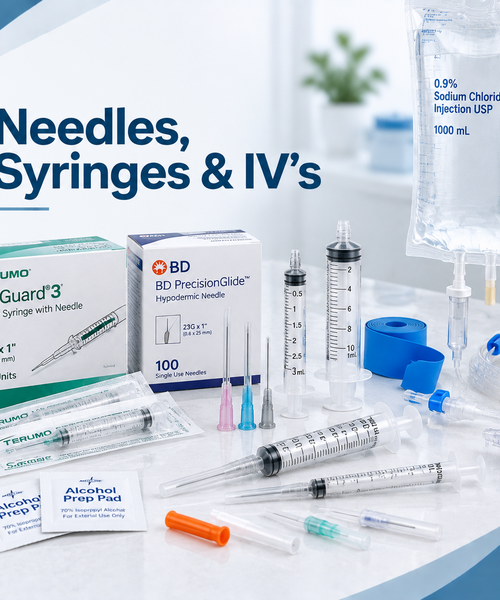
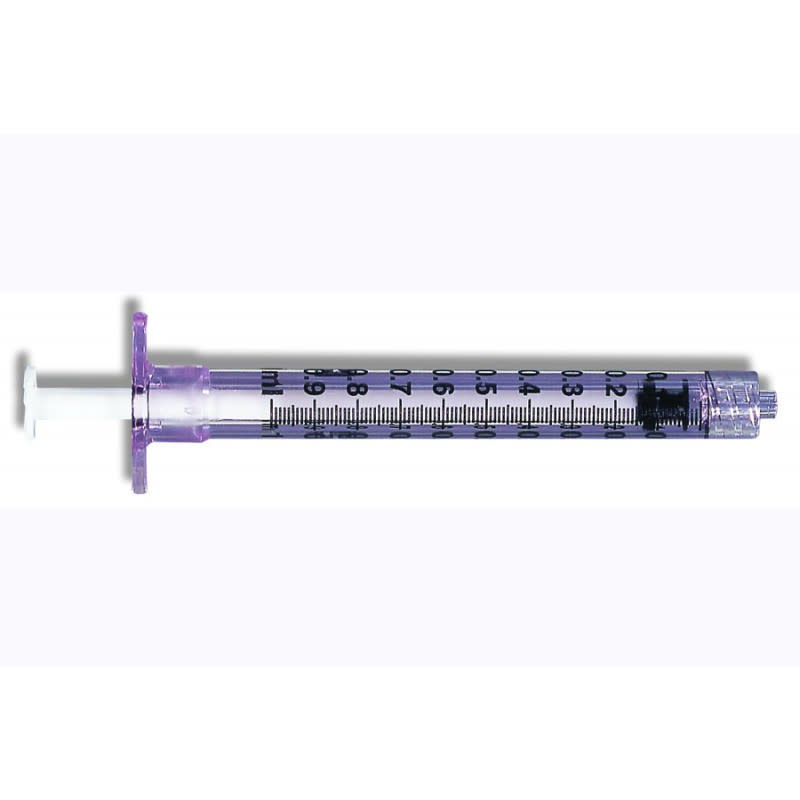
Luer Lock syringes feature a threaded tip that allows needles to be twisted and locked securely into place, eliminating the risk of needle disconnection during injection or aspiration—critical for high-pressure applications, viscous medications, or procedures requiring absolute connection security. The 1 mL capacity with fine graduation markings (typically 0.01 mL increments) enables precise measurement of small-volume medications where accuracy is paramount, such as pediatric dosing, insulin administration, intradermal injections, tuberculin testing, and medication compounding. BD's reputation for manufacturing precision ensures consistent barrel dimensions, smooth plunger action, and clear markings that meet USP (United States Pharmacopeia) standards for accuracy. The latex-free construction eliminates allergic reaction risks for sensitive patients and healthcare workers, while sterile individual packaging ensures infection control compliance in clinical settings.
Key Features & Benefits
Key Features:
- 1 mL (1 cc) barrel capacity for small-volume precision dosing
- Luer Lock threaded tip for secure, twist-on needle connection
- Clear polypropylene or polycarbonate barrel for fluid visualization
- Bold, easy-to-read graduation markings (typically 0.01 mL increments)
- Smooth plunger with positive stop to prevent accidental plunger removal
- Latex-free construction for allergy safety
- Sterile, individually packaged in peel-open pouches
- Meets USP standards for accuracy and precision
- Manufactured by BD (Becton, Dickinson and Company), trusted global medical device leader
- Compatible with all standard Luer Lock needles and accessories
- Pyrogen-free for patient safety
- Single-use, disposable design
- Box of 100 syringes for clinical inventory management
Benefits:
- Secure Luer Lock connection prevents needle detachment during use
- Precise measurement capability ensures accurate medication dosing
- Reduces medication errors with clear, bold graduation markings
- Smooth plunger action allows controlled injection and aspiration
- Latex-free design protects patients and staff with latex sensitivities
- Sterile packaging maintains infection control standards
- Versatile capacity suitable for multiple clinical applications
- Trusted BD quality ensures consistent performance
- Cost-effective bulk packaging for medical facilities
- Reduces waste and cross-contamination with single-use design
Clinical Applications
BD 1 mL Luer Lock syringes are appropriate for:
✓ Subcutaneous medication administration (vaccines, insulin, biologics) ✓ Intramuscular injections requiring small medication volumes ✓ Intradermal injections (tuberculin testing, allergy testing) ✓ Pediatric medication dosing requiring high precision ✓ Vaccine administration (especially pediatric and multi-dose vials) ✓ Insulin administration (with appropriate insulin needles) ✓ IV medication preparation and reconstitution ✓ Drawing blood samples from IV lines or catheters ✓ Medication compounding in pharmacy settings ✓ Laboratory specimen preparation and handling ✓ Veterinary medication administration ✓ Research and laboratory fluid handling ✓ Aspiration procedures requiring secure needle connection ✓ Medication waste removal from multi-dose vials ✓ Home healthcare medication administration ✓ Irrigation of wounds or catheters with precise fluid volumes
Usage & Application
Pre-Use Preparation:
- Verify order and medication: Confirm medication name, dose, route, patient identity, and any allergies. Perform "5 Rights" check (right patient, medication, dose, route, time).
- Gather supplies: BD 1 mL Luer Lock syringe (sterile package), appropriate Luer Lock needle (gauge and length for intended route), medication vial or ampule, alcohol swabs, sharps container, gloves, and medication administration record.
- Hand hygiene: Wash hands thoroughly with soap and water for at least 20 seconds or use alcohol-based hand sanitizer. Don clean gloves if required by facility protocol.
- Inspect syringe package: Check sterile package for tears, moisture, or damage. Verify expiration date. Do not use if package integrity is compromised.
- Prepare medication: Check medication label against order three times (when removing from storage, before drawing up, after drawing up). Inspect medication for discoloration, particles, or expiration.
Opening Sterile Package:
- Peel-open technique: Grasp both sides of the peel-open pouch at the designated opening area. Pull apart gently to expose the sterile syringe.
- Aseptic handling: Touch only the barrel and plunger—never touch the Luer Lock tip or any part that will contact medication or needles.
- Remove syringe: Carefully remove syringe from package without touching the Luer Lock tip.
Attaching Luer Lock Needle:
- Select appropriate needle: Choose needle gauge and length appropriate for medication viscosity, injection route, and patient characteristics (see needle selection guide below).
- Remove needle cap: Remove protective cap from Luer Lock needle while maintaining sterility of needle hub.
- Align threads: Hold syringe barrel firmly and align needle hub threads with syringe Luer Lock tip threads.
- Twist to lock: Rotate needle clockwise (turn right) until firmly seated and locked. You should feel resistance when fully locked—typically 1/4 to 1/2 turn.
- Verify connection: Gently tug on needle to confirm secure attachment. Needle should not separate from syringe with gentle pulling.
Drawing Medication from Vial:
- Remove cap: Remove plastic cap from medication vial (if new vial). Do not remove rubber stopper.
- Clean vial top: Wipe rubber stopper with alcohol swab using firm circular motion. Allow to air dry completely (15-30 seconds).
- Draw air: Pull plunger back to draw air equal to the medication volume you need to withdraw. This air will be injected into the vial to prevent vacuum formation.
- Insert needle: Hold vial upright on flat surface. Insert needle straight through rubber stopper at center, beveled edge up, with firm controlled pressure.
- Inject air: Push plunger down to inject air into the vial (into airspace above liquid, not into liquid itself). This equalizes pressure.
- Invert vial: While keeping needle inserted, invert vial so it's upside down. Keep needle tip submerged in medication.
- Withdraw medication: Pull plunger back slowly and steadily to draw medication into syringe. Pull slightly past your target volume initially.
- Check for air bubbles: Look for air bubbles in syringe barrel. If present, tap barrel gently to move bubbles toward needle tip.
- Expel air: With vial still inverted and needle submerged, push plunger slowly to expel air back into vial. Ensure medication level aligns exactly with prescribed dose marking.
- Verify dose: Double-check that medication level aligns with correct graduation marking at eye level. The bottom of the meniscus (curved surface) should align with the dose line.
- Remove needle from vial: Pull needle straight out of vial stopper with controlled motion.
Drawing Medication from Ampule:
- Prepare ampule: Tap top of ampule gently to move all medication into bottom chamber.
- Clean ampule neck: Wipe neck of ampule with alcohol swab.
- Break ampule: Wrap ampule neck with alcohol swab or gauze. Snap neck away from you with quick motion. Dispose of top safely.
- Insert needle: Insert needle into ampule opening. Avoid touching needle to ampule edges (this contaminates needle).
- Tilt ampule: Tilt ampule slightly to keep needle tip submerged in medication as you draw.
- Withdraw medication: Pull plunger back slowly to draw medication. You may need to reposition ampule or needle to access all medication.
- Remove air bubbles: Hold syringe upright (needle pointing up), tap to move bubbles to top, then push plunger slightly to expel air. Redraw to correct volume if needed.
- Change needle: ALWAYS replace the needle used to draw from ampule with a new sterile needle before injection (glass particles may contaminate the drawing needle).
Preparing for Injection:
- Remove air bubbles: Hold syringe upright (needle pointing toward ceiling). Tap barrel gently to move bubbles toward needle tip. Push plunger slowly to expel air until a small droplet of medication appears at needle tip.
- Verify dose: Final dose verification—ensure medication level aligns exactly with prescribed dose marking.
- Recap needle (if needed): If you must set syringe down before injection, use one-handed scoop technique to recap needle (see safety section below). Otherwise, proceed directly to injection.
Injection Technique (General):
- Select injection site: Choose appropriate site based on route (subcutaneous, intramuscular, intradermal). Rotate sites if repeated injections needed.
- Clean injection site: Wipe site with alcohol swab in circular motion, starting at center and moving outward. Allow to air dry completely (prevents stinging).
- Position patient: Ensure patient comfort and proper positioning for selected injection site.
- Remove needle cap: Remove needle cap just before injection. Hold cap between fingers or set aside carefully.
- Insert needle: Use appropriate insertion technique for route:
- Subcutaneous: 45-90 degree angle, insert quickly with dart-like motion
- Intramuscular: 90 degree angle, insert with quick, smooth motion
- Intradermal: 10-15 degree angle, bevel up, insert just under skin surface
- Aspirate (if indicated): For intramuscular injections in adults (depending on facility protocol and medication type), pull back on plunger slightly to check for blood return. If blood appears, withdraw needle, discard, and prepare new syringe with fresh medication.
- Inject medication: Push plunger slowly and steadily until all medication is delivered. Injection speed depends on medication volume and route (intradermal is very slow; subcutaneous and intramuscular are controlled but faster).
- Withdraw needle: Pull needle straight out quickly at same angle of insertion. Do not bend or twist.
- Apply pressure: Apply gentle pressure to injection site with clean gauze or cotton ball (do not rub). Apply adhesive bandage if needed.
Post-Injection Care:
- Activate safety device (if applicable): If syringe has safety shield, activate per manufacturer instructions immediately after withdrawal from patient.
- Do not recap: NEVER recap used needles using two hands—this causes needlestick injuries. If recapping is absolutely necessary, use one-handed scoop technique only.
- Immediate disposal: Dispose of entire syringe and needle assembly immediately into FDA-approved sharps container. Never separate needle from syringe before disposal.
- Remove gloves and perform hand hygiene: Remove gloves and wash hands thoroughly.
- Document: Record medication administration in patient chart including date, time, medication, dose, route, site, and any patient response.
- Monitor patient: Observe patient for adverse reactions as appropriate for medication given (especially important for vaccines, first-dose medications, high-alert drugs).
Needle Selection Guide for Luer Lock Syringes:
Intradermal (ID) injections:
- 25G to 27G needle
- 3/8" to 5/8" length
- For: TB testing, allergy testing
Subcutaneous (SubQ) injections:
- 25G to 30G needle
- 3/8" to 5/8" length (standard adults)
- 5/16" to 1/2" length (children, lean adults)
- For: Vaccines, insulin, biologics, heparin, low molecular weight heparin
Intramuscular (IM) injections:
- 22G to 25G needle
- Length varies by patient size and injection site:
- Deltoid (adults): 1" to 1.5"
- Vastus lateralis (children): 5/8" to 1"
- Ventrogluteal (adults): 1.5"
- For: Vaccines, antibiotics, some biologics
Special Considerations:
Viscous medications: Use larger gauge needle (20G-22G) for thick solutions or suspensions to reduce injection force and prevent needle clogging.
Pediatric patients: Use smallest appropriate gauge and shortest appropriate length to minimize pain and trauma.
Obese patients: May require longer needles for intramuscular injections to reach muscle tissue.
Geriatric patients: May have decreased muscle mass—assess carefully for appropriate needle length.
Troubleshooting:
Difficulty attaching needle to Luer Lock:
- Ensure you're twisting clockwise (turn right to tighten)
- Check that needle hub is Luer Lock compatible (not slip-tip)
- Verify threads aren't damaged on syringe tip or needle hub
- Don't force—if threads don't align easily, try realigning and twisting gently
Needle detaches during use:
- Ensure needle was fully locked before use (should feel resistance when fully seated)
- Check that correct Luer Lock needle was used (not slip-tip)
- Tighten connection before inserting into vial or patient
- Replace with new needle if threads appear damaged
Plunger sticks or moves roughly:
- This is uncommon with BD syringes but can indicate:
- Storage in extreme temperatures (causing material deformation)
- Package damage allowing contamination
- Manufacturing defect (very rare with BD)
- Discard syringe and use new one—do not force plunger
Air bubbles won't move to top:
- Hold syringe perfectly vertical (needle straight up)
- Tap more firmly on barrel
- Flick barrel with fingernail to dislodge stubborn bubbles
- Small bubbles (1-2 tiny ones) are generally not harmful but best practice is to remove all visible air
Medication difficult to draw from vial:
- Ensure adequate air was injected into vial to equalize pressure
- Vial may have vacuum—inject additional air
- Check that needle isn't clogged (particularly with viscous medications or suspensions)
- Ensure needle tip is submerged in medication and not drawing air from top of vial
Can't read graduation markings:
- Use adequate lighting
- Hold syringe at eye level to avoid parallax error
- Clean barrel with alcohol swab if fingerprints obscure markings
- Consider magnification if vision impaired
- Ensure you're reading correct measurement scale (mL/cc)
Difficulty removing syringe from package:
- Grasp both sides of peel-open pouch firmly
- Pull apart steadily—avoid jerking motion
- If package is unusually difficult to open, inspect for damage or defect
- Don't use scissors or sharp objects near syringe (contamination risk)
Special Considerations:
High-alert medications: When preparing high-alert drugs (heparin, insulin, chemotherapy), always use double-check procedures with another licensed healthcare provider verifying dose calculation and preparation.
Multi-dose vials: Always use new sterile syringe and needle each time you access multi-dose vial. Never reuse syringes or needles for subsequent draws (even from same vial). Clean vial stopper with alcohol before each access.
Medication compatibility: When drawing multiple medications into single syringe (if permitted), verify compatibility. Draw medications in correct order to prevent cross-contamination.
Expired products: Never use syringes or needles past expiration date—sterility cannot be guaranteed. Check expiration dates on both syringe package and needle package.
Immunocompromised patients: Sterile technique is critical. Use aseptic non-touch technique (ANTT) for all aspects of medication preparation and administration.
Chemotherapy or hazardous drugs: Follow USP 800 guidelines for safe handling. Use closed-system transfer devices (CSTDs) when appropriate. Wear appropriate PPE (gowns, double gloves, eye protection).
Home healthcare use: Educate patients and caregivers on:
- Proper hand hygiene before handling supplies
- Sterile technique for medication preparation
- Safe injection technique
- Sharps disposal requirements
- Storage of medications and supplies
- Recognition of infection signs at injection sites
Laboratory applications: When using syringes for laboratory specimen handling, label specimens immediately after collection. Follow facility protocols for specimen transport and handling.
Veterinary use: BD syringes are suitable for veterinary applications. Dosing calculations for animals require veterinary expertise—dosages differ significantly from human medications.
Storage Requirements:
- Store in cool, dry location away from direct sunlight
- Maintain temperature between 15-30°C (59-86°F) unless otherwise specified
- Protect from excessive humidity
- Keep in original packaging until use
- Do not store in extreme temperatures (freezing or excessive heat)
- Inspect packages before use—discard if damaged or wet
Disposal Requirements:
- Dispose of entire syringe-needle assembly in FDA-cleared sharps container immediately after use
- Do not separate needle from syringe before disposal (increases injury risk)
- Never place used syringes in regular trash, recycling bins, or laundry
- When sharps container is 3/4 full, seal and dispose per local regulations
- Many pharmacies, hospitals, and community programs offer sharps disposal services
- Never reuse syringes—single-use only (reuse causes infection and needle dulling)
Infection Control:
- Always use aseptic technique when preparing and administering medications
- Never use same syringe for multiple patients (even if changing needles)
- Don't use syringes from opened or damaged packages
- Discard any syringe that touches non-sterile surfaces
- Clean medication vial tops with alcohol before each access
- Use new sterile syringe and needle for each injection
Safety Considerations:
Needlestick prevention:
- Never recap needles using two-handed technique
- If recapping absolutely necessary, use one-handed scoop method only
- Activate safety devices immediately after use
- Dispose of sharps immediately—never set down used needles
- Report all needlestick injuries per facility protocol immediately
Medication errors prevention:
- Perform "5 Rights" check for every medication administration
- Use adequate lighting when reading graduation markings
- Measure at eye level to avoid parallax errors
- Verify dose with second licensed healthcare provider for high-alert medications
- Never abbreviate units (write "units" not "u")—prevents 10-fold errors
When to Contact Healthcare Provider or Pharmacy:
- Damaged or defective syringes received
- Questions about appropriate needle size for specific medications
- Uncertainty about medication compatibility in single syringe
- Need clarification on injection technique for specific medication
- Concerns about needlestick injury or sharps exposure
- Questions about disposal options in your area
Regulatory Compliance:
- BD syringes meet FDA 21 CFR 880.5860 requirements for piston syringes
- Manufactured in FDA-registered facilities
- Meet USP standards for accuracy and sterility
- Comply with ISO 7886-1 international standards for sterile syringes
- Latex-free to comply with latex allergy safety requirements
- USA or BD international facilities—check package labeling)