Why Choose Conveen Security+ Bag 140cm 2000ml Non Sterile
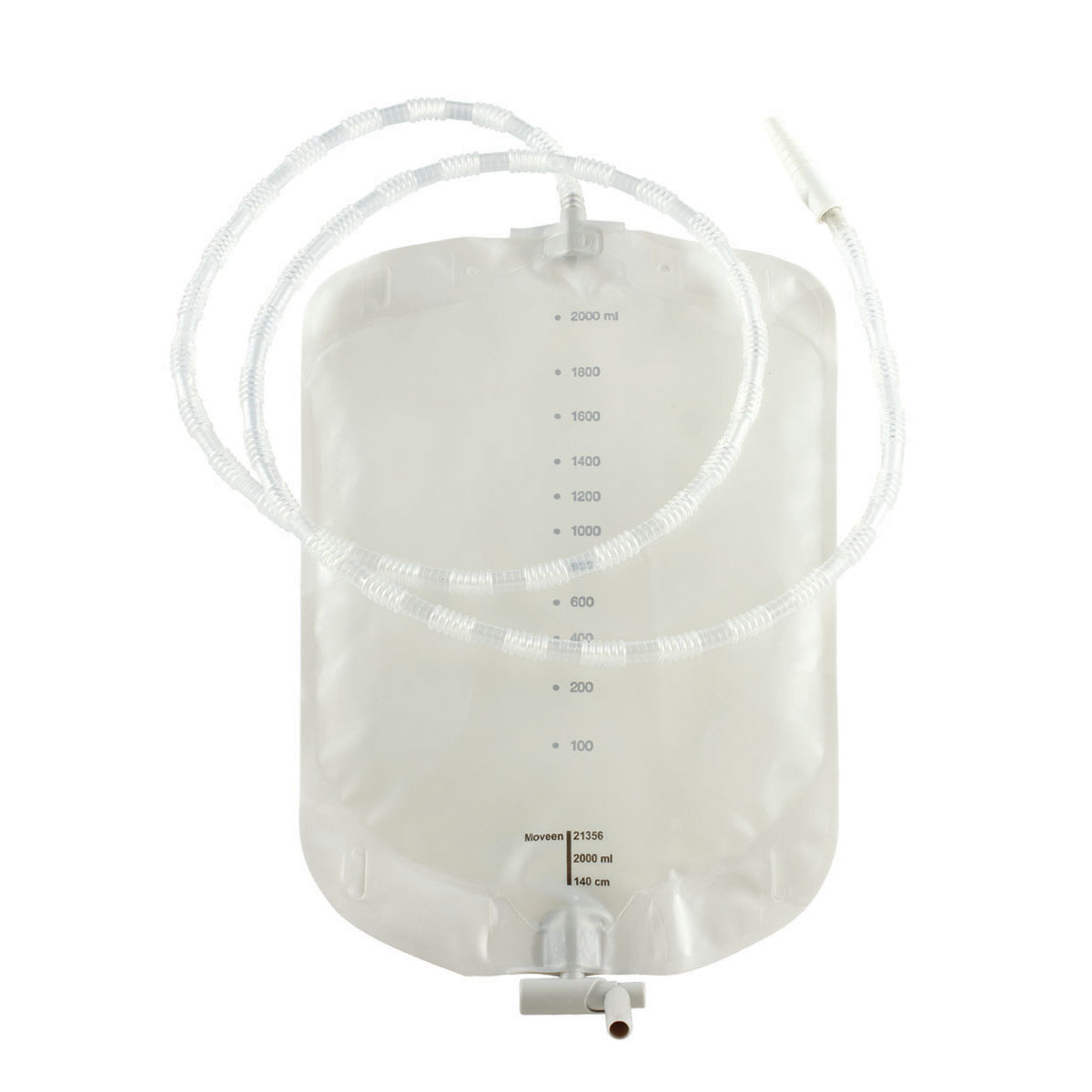
This drainage bag is built for bedside urine collection in users with an indwelling urinary catheter (Foley) or urostomy diversion who require closed-system drainage across overnight wear, post-surgical recovery, extended bed-bound or chair-bound care, or long-term indwelling catheter management. The 2000 ml capacity is the standard adult bedside bag volume — sufficient to collect a full night's urine output for most users without requiring intermediate emptying, which is the practical requirement that distinguishes a bedside bag from the smaller 500–800 ml leg bags used for ambulatory daytime wear. Two structural features define the practical wear behaviour of the Conveen Security+ bedside bag: the 140 cm extended tube length and the anti-kink tubing construction. The 140 cm tube length is longer than the standard 90–120 cm tube common in bedside drainage bags — supporting more flexible bag positioning options. The extended tube reach is particularly useful when the bag must hang from a hospital bed frame, bedside chair, or wheelchair while the user repositions through the night, and accommodates taller bed heights or bag mounts further from the user without restricting the user's movement range. Anti-kink tubing is the construction detail that maintains an open gravity-drainage path through the tube even when the tube is bent, compressed against bedding, or twisted during user movement — without anti-kink construction, the tubing can collapse at bends and stop drainage, causing urine to back up in the catheter and the bladder to distend before the user or caregiver notices the stoppage. Steady drainage is the primary clinical function the tubing must support; anti-kink construction is the structural feature that protects that function during routine wear. The drainage outlet at the base of the bag supports controlled emptying into a toilet or measurement container — emptying technique and outlet type should be confirmed against the specific Conveen Security+ variant before publishing detailed emptying instructions. The non-sterile format is the routine-collection packaging — sterile packaging is required for first connection to a fresh catheter system in clinical sterile-technique contexts, but non-sterile is appropriate for routine home care bag changes where strict sterile technique is not protocol. Confirm whether the SKU includes PVC-free and phthalate-free material specifications before ordering, as Coloplast has migrated parts of the Conveen line to PVC-free construction at different times. Coloplast is a Danish-origin continence and ostomy care manufacturer with a long-standing position in catheter accessory and drainage bag design.
Key Features
✔ Conveen Security+ urine drainage bag
✔ Capacity: 2000 ml / 2 litres — standard adult bedside volume
✔ Tube length: 140 cm — extended reach for positioning flexibility
✔ Anti-kink tubing construction
✔ Non-sterile format for routine collection use
✔ Bedside drainage bag design
✔ Drainage outlet for emptying
✔ Designed for indwelling catheter and urostomy drainage management
✔ Suitable for overnight, extended, and higher-volume drainage routines
✔ PVC-free and phthalate-free material — confirm by SKU
✔ Useful for home care, clinical care, and facility care routines
Benefits
✔ 2000 ml capacity supports overnight urine collection without requiring intermediate emptying — suitable for full-night bedside drainage cycles
✔ 140 cm extended tube provides longer reach between user and bag — supports flexible positioning across bed frames, chairs, and wheelchairs
✔ Anti-kink tubing maintains gravity drainage path through bends and compressions — reduces tubing collapse that drives drainage stoppage and bladder distention
✔ Larger 2-litre capacity reduces emptying frequency through overnight and extended wear intervals
✔ Bedside drainage format supports overnight and extended care routines requiring continuous closed-system collection
✔ Drainage outlet supports controlled emptying for output monitoring and bag turnover
✔ Non-sterile format is appropriate for routine home care bag changes where sterile technique is not protocol — lower cost than sterile-packaged alternatives for routine use
✔ Supports urinary drainage management for home care and caregiver-assisted routines
Clinical & Typical Applications
✔ Indwelling Foley catheter drainage in home care, long-term care, and palliative care settings
✔ Urostomy bedside drainage for overnight wear with urostomy pouch outlet connection
✔ Bed-bound or chair-bound users requiring extended closed-system urinary drainage
✔ Overnight drainage cycles requiring 2000 ml capacity without intermediate emptying
✔ Routine bag change cycles where non-sterile packaging is appropriate (not first catheter connection)
✔ Positioning scenarios requiring extended 140 cm tube reach — hospital bed frames, taller beds, wheelchair mounts
✔ Higher-volume output users where smaller bedside bag capacity saturates before the next change
Usage/Application
Use only as directed by a healthcare professional and follow facility or home care protocols. Connect the bag's drainage tubing to the compatible catheter funnel or urostomy pouch outlet — confirm the connection is secure before releasing tension on the tubing. Position the bag below bladder level at all times during use to maintain gravity drainage — secure to the bedside frame, chair, or wheelchair attachment point as appropriate, and route the 140 cm tube to avoid kinks, compressions, or loops above bladder level. To empty: open the drainage outlet over a toilet or measurement container, drain completely, wipe the outlet, and close the outlet securely before releasing — record output volume if fluid balance monitoring is required. Maintain a closed system between scheduled bag changes — do not break the catheter-tubing connection unnecessarily. Replace the drainage bag according to the prescribed change interval — do not exceed the manufacturer's recommended wear duration. Dispose of used drainage bags following local clinical waste guidance. Store unused bags in original packaging at room temperature away from heat and direct sunlight.

 780 409-1509
 Get directions