
Slideshow Items

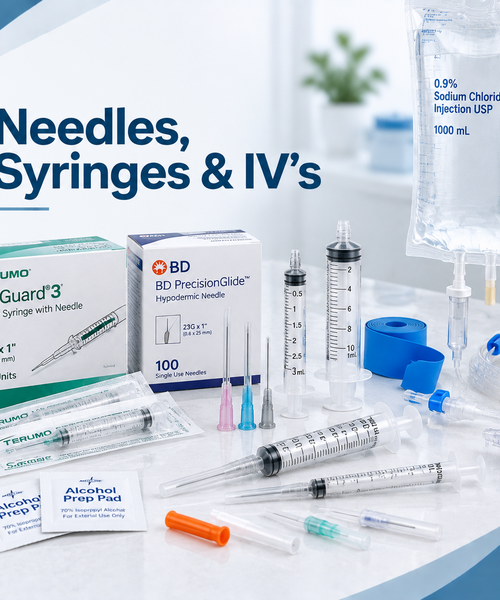
  • Needles, Syringes & IV's
  • needles-syringes-ivs
BD-BD Medical

  |  

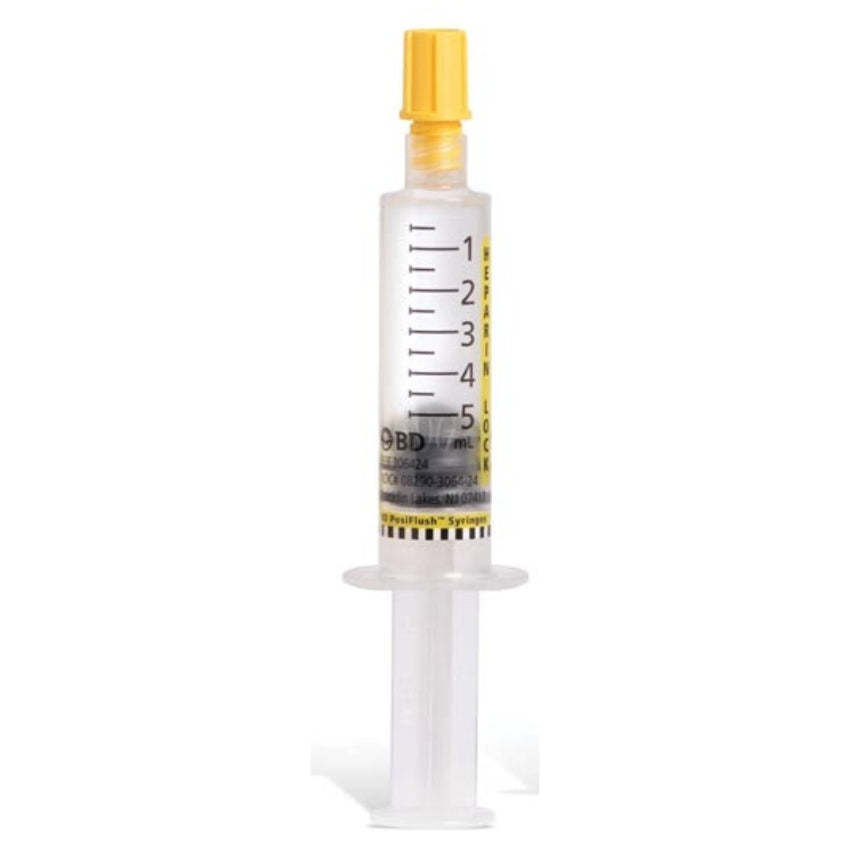
BD Posiflush Heparin Lock Flush Syringe 10 Units/Ml 5ml Fill In 5ml Syringe 30/Bx

C$59.99
In stock online
In store: Check availability

Available in store

SKU: 306414

Heparin lock flush syringes deliver catheter patency maintenance with pre-filled ready-to-use design eliminating preparation time, 10 units/mL low-dose concentration preventing clot formation, Luer-Lok tip ensuring secure connection, preservative-free.

    • Why 10 USP units/mL Heparin in Pre-Filled 5 mL Syringes for Safe IV Line Maintenance

      The 10 USP units per mL heparin concentration provides the minimal anticoagulant effect necessary to prevent fibrin and thrombus formation within indwelling vascular catheters without creating systemic anticoagulation that would increase bleeding risks—this low-dose approach maintains catheter patency between uses while avoiding the heparin-induced thrombocytopenia, bleeding complications, and medication interactions associated with higher concentrations, making it safe for routine use in peripheral IV lines, central venous catheters, and arterial lines where prevention of catheter occlusion extends device lifespan and reduces the need for painful reinsertion procedures. The pre-filled syringe design eliminates the multi-step manual preparation process of drawing heparin from multi-dose vials, removing opportunities for medication errors including wrong-strength selection (confusion between 10 units/mL and 100 units/mL concentrations has caused serious adverse events), dosing calculation mistakes, and contamination from repeated vial access—the ready-to-use format ensures every flush uses the standardized correct concentration while dramatically reducing nursing time spent on preparation, improving workflow efficiency in high-volume settings, and eliminating the cross-contamination risks inherent in multi-dose vials accessed by multiple staff members throughout a shift. The 5 mL volume provides adequate fluid for complete catheter flushing using the push-pause technique that creates turbulent flow to clear catheter lumens of blood and medication residue, while the preservative-free formulation prevents the allergic reactions and local tissue irritation that can occur with bacteriostatic solutions containing benzyl alcohol or parabens, particularly important for neonates and patients with preservative sensitivities.

      Key Features & Benefits

      Key Features:

      • Pre-filled with heparin lock flush solution
      • Concentration: 10 USP units per mL
      • Total heparin: 50 USP units per 5 mL syringe
      • Volume: 5 mL sterile solution
      • Ready-to-use (no preparation required)
      • Sterile, preservative-free formulation
      • Single-dose, single-use syringe
      • Luer-Lok tip for secure connection
      • Clear barrel with 0.5 mL graduation markings
      • Tamper-evident seal ensures sterility
      • Individually packaged
      • Latex-free construction
      • Box of 30 syringes for clinical inventory
      • Clearly labeled with concentration
      • Expiration date clearly marked
      • Meets USP standards for heparin lock flush solution

      Benefits:

      • Pre-filled eliminates preparation time
      • Reduces medication preparation errors
      • Ensures correct 10 units/mL concentration every time
      • Prevents multi-dose vial contamination
      • Improves workflow efficiency
      • Maintains catheter patency effectively
      • Low-dose minimizes bleeding risk
      • 5 mL volume appropriate for routine flushing
      • Preservative-free reduces allergic reactions
      • Luer-Lok prevents accidental disconnection
      • Sterile single-use reduces infection risk
      • Clear graduations enable dose verification
      • Latex-free protects sensitive patients and staff
      • Box of 30 convenient for facility stocking
      • Cost-effective compared to manual preparation time
      • Standardizes flushing protocols

      Clinical Applications

      Heparin Lock Flush Solution 10 units/mL Pre-Filled Syringes are appropriate for:

      ✓ Peripheral IV catheter flushing and locking ✓ Central venous catheter (CVC) maintenance ✓ Peripherally inserted central catheter (PICC) flushing ✓ Midline catheter maintenance ✓ Implanted port flushing (per protocol) ✓ Hemodialysis catheter locking (per protocol) ✓ Arterial line maintenance (per protocol) ✓ Maintaining patency of intermittent IV access ✓ Post-blood draw catheter flushing ✓ Between medication administration flushing ✓ Preventing catheter occlusion ✓ Hospital inpatient IV maintenance ✓ Critical care catheter management ✓ Med-surg unit routine IV care ✓ Emergency department IV line maintenance ✓ Operating room catheter care ✓ Outpatient infusion center catheter maintenance ✓ Home healthcare IV line maintenance (per protocol)

      Usage & Application

      IMPORTANT: For use by healthcare professionals only. Follow facility protocols for heparin lock flush use.

      CRITICAL SAFETY INFORMATION:

      Heparin Precautions:

      • Monitor for bleeding complications
      • Check platelet counts if prolonged use (heparin-induced thrombocytopenia risk)
      • Use caution in patients with bleeding disorders
      • Be aware of drug interactions with anticoagulants
      • Verify correct concentration (10 units/mL, NOT 100 units/mL)

      Pre-Use Assessment:

      1. Verify order and protocol:
        • Confirm heparin flush ordered per facility protocol
        • Check patient allergies (heparin, pork products)
        • Review patient medications (anticoagulants)
        • Assess bleeding risk
        • Some facilities use saline-only protocols (no heparin)
      2. Check patient contraindications:
        • Active bleeding
        • Severe thrombocytopenia
        • Heparin-induced thrombocytopenia (HIT) history
        • Heparin allergy
        • Uncontrolled hypertension (severe)
      3. Gather supplies:
        • Heparin lock flush 10 units/mL, 5 mL syringe
        • Alcohol swabs
        • Clean gloves
        • Sharps container
      4. Hand hygiene and don gloves

      Pre-Use Inspection:

      1. Check package integrity:
        • Verify sealed package intact
        • Check for damage or leaks
        • Discard if compromised
      2. Inspect syringe:
        • Check expiration date
        • Verify concentration: 10 USP units/mL (CRITICAL)
        • Verify volume: 5 mL
        • Check tamper-evident seal intact
        • Inspect solution: clear, colorless, no particles
        • Discard if:
          • Expired
          • Wrong concentration
          • Cloudy or discolored
          • Contains particles
          • Seal broken

      Opening and Preparation:

      1. Remove from package:
        • Peel open tamper-evident package
        • Remove syringe aseptically
        • Do NOT touch Luer-Lok tip
      2. Inspect solution in syringe:
        • Hold up to light
        • Verify clear, colorless, no particles
      3. Remove tip cap:
        • Twist off Luer-Lok tip cap
        • Do NOT touch tip (maintain sterility)
      4. Remove air bubbles (if present):
        • Hold syringe upright (tip up)
        • Tap barrel gently
        • Push plunger slowly to expel air
        • Small air removal acceptable
        • Stop when solution at tip

      Flushing Procedure:

      General Principles:

      • Use push-pause (pulsatile) technique for effective flushing
      • Maintain positive pressure during disconnection
      • Follow facility-specific protocols

      Peripheral IV Catheter Flushing:

      1. Clean catheter hub:
        • Scrub hub with alcohol for 15 seconds (vigorous friction)
        • Allow to air dry
      2. Attach heparin flush syringe:
        • Twist Luer-Lok syringe onto catheter hub
        • Ensure secure connection
      3. Check patency:
        • Gently pull back on plunger to check blood return
        • Blood return indicates patent catheter
        • If no blood return: may still be patent if flushes easily
      4. Flush using push-pause technique:
        • Push 1-2 mL
        • Brief pause
        • Push another 1-2 mL
        • Brief pause
        • Continue pattern
        • Typically use 3-5 mL for peripheral IV
        • Creates turbulence (better clearing than continuous push)
        • Do NOT flush too fast
        • Watch for swelling (indicates infiltration—stop immediately)
      5. Lock catheter (if intermittent use):
        • After flushing, leave small amount of heparin in catheter
        • Maintains patency between uses
      6. Maintain positive pressure during disconnection:
        • Clamp catheter extension while disconnecting OR
        • Disconnect while still pushing last 0.5 mL
        • Prevents blood backflow
      7. Cap catheter:
        • Replace sterile cap on hub

      Central Venous Catheter (CVC) Flushing:

      1. Identify lumen:
        • Multi-lumen CVCs: flush each lumen separately
        • Follow color-coding or labeling
      2. Clean hub:
        • Scrub 15 seconds with alcohol
        • Allow to dry
      3. Attach syringe:
        • Twist onto Luer-Lok hub
      4. Check blood return:
        • Gently aspirate
        • Should see blood if recently used
      5. Flush with heparin:
        • Use entire 5 mL for CVC (larger lumen, longer catheter)
        • Push-pause technique
        • CVCs require more volume than peripheral IVs
      6. Maintain positive pressure:
        • Clamp while disconnecting
      7. Repeat for each lumen

      PICC Line Flushing:

      • Similar to CVC flushing
      • Use 5 mL push-pause technique
      • Maintain positive pressure
      • Check blood return

      Implanted Port Flushing:

      1. After use:
        • Flush with saline first
        • Then flush with heparin per protocol
        • Heparin prevents clot formation in port
      2. Volume:
        • Use 5 mL heparin lock flush
        • Follow facility protocol

      Arterial Line Maintenance:

      • Follow facility-specific arterial line protocols
      • May use heparin flush for some arterial lines
      • Typically use continuous heparin infusion for arterial lines
      • Consult protocol

      Hemodialysis Catheter Locking:

      • Special protocols for dialysis catheters
      • Often use higher heparin concentrations
      • Follow dialysis-specific guidelines
      • Not routine nursing flush

      Post-Procedure Care:

      1. Dispose of syringe:
        • Place in sharps container or medical waste per facility
        • Even though no needle
      2. Remove gloves and hand hygiene
      3. Document:
        • Heparin flush performed
        • Volume used
        • Catheter patency confirmed
        • Patient tolerance

      Monitoring:

      1. Assess catheter site:
        • Check for signs of complications
        • Redness, swelling, pain
        • Leakage
      2. Monitor for bleeding:
        • Check for unusual bruising
        • Bleeding from sites
        • Especially with repeated heparin flushes
      3. Monitor platelet counts:
        • If prolonged heparin use
        • Watch for heparin-induced thrombocytopenia (HIT)

      Troubleshooting:

      Resistance when flushing:

      • Do NOT force (can rupture catheter)
      • Check for closed clamps
      • Reposition patient's arm
      • If still resistant: may be occluded, notify provider

      No blood return:

      • May still be patent if flushes easily
      • If resistance: possible occlusion
      • Notify provider per protocol

      Swelling at IV site:

      • Indicates infiltration
      • Stop flushing immediately
      • Remove IV catheter
      • Restart in different location

      Patient reports pain:

      • May indicate phlebitis or infiltration
      • Stop and assess
      • May need IV removal

      Solution appears cloudy:

      • Do NOT use
      • Discard syringe
      • Report quality issue

      Wrong concentration available:

      • NEVER substitute 100 units/mL for 10 units/mL
      • This is dangerous medication error
      • Use only prescribed concentration

      Special Considerations:

      Neonates and pediatric:

      • Heparin use controversial in neonates
      • Many facilities use saline-only protocols
      • Preservative-free critical for neonates
      • Follow pediatric-specific protocols

      Patients on anticoagulation:

      • Already receiving anticoagulants (warfarin, DOACs)
      • Increased bleeding risk with heparin
      • Monitor closely
      • May use saline-only flush

      Patients with bleeding disorders:

      • Hemophilia, von Willebrand disease
      • Increased risk with heparin
      • May use saline-only flush
      • Consult hematology

      Heparin-induced thrombocytopenia (HIT):

      • Absolute contraindication to heparin
      • Use saline-only flush
      • Document HIT history clearly

      Heparin allergy:

      • Do NOT use heparin flush
      • Use saline-only flush
      • Document allergy

      Renal failure patients:

      • Heparin clearance may be affected
      • Monitor for bleeding
      • Follow nephrology recommendations

      Liver disease patients:

      • Impaired coagulation already
      • Increased bleeding risk
      • Use caution

      Pregnant patients:

      • Heparin does not cross placenta
      • Generally considered safe
      • Follow OB protocols

      Home healthcare:

      • Some patients flush own IVs at home
      • Teach proper technique
      • Provide written instructions
      • Ensure refrigerator storage if required
      • Monitor for complications

      Heparin vs. Saline Flush:

      Heparin Lock Flush (10 units/mL):

      • Traditional approach for catheter maintenance
      • Anticoagulant effect maintains patency
      • Used for decades
      • Some evidence of benefit for CVCs

      Saline-Only Flush:

      • Increasingly common practice
      • No anticoagulant risks
      • Avoids HIT risk
      • Avoids drug interactions
      • Evidence suggests saline adequate for many peripheral IVs
      • Many facilities switching to saline-only protocols

      Current Practice:

      • Peripheral IVs: Many facilities now saline-only
      • CVCs/PICCs: Varies by facility, many still use heparin
      • Implanted ports: Often heparin after use
      • Follow facility protocol

      Advantages of Pre-Filled Heparin Flush:

      vs. Drawing from Multi-Dose Vials:

      • Pre-filled advantages:
        • No preparation time
        • No concentration errors
        • No contamination from vial access
        • Standardized dosing
        • Reduced medication errors
        • Single-use (no shared vials)
        • Preservative-free option

      vs. Manual Preparation:

      • Faster workflow
      • Less expensive (when prep time factored)
      • Safer (fewer error opportunities)

      Medication Safety:

      Critical concentration verification:

      • 10 units/mL vs. 100 units/mL confusion has caused serious errors
      • ALWAYS verify concentration before use
      • Read label carefully
      • Many facilities stock only one concentration to prevent errors

      Storage:

      • Before use:
        • Store at room temperature 15-30°C (59-86°F)
        • Some formulations may require refrigeration—check label
        • Protect from freezing
        • Keep in original packaging
        • Check expiration dates
      • Shelf life:
        • Check expiration on syringe
        • Typically 18-24 months

      Regulatory and Professional Guidelines:

      • INS (Infusion Nurses Society) Standards: Support use of heparin or saline
      • CDC: No specific preference, follow facility protocol
      • Many facilities moving toward saline-only protocols
      • Follow evidence-based practice and facility policy

      When to Contact Provider:

      • Unable to flush catheter (resistance)
      • Signs of catheter infection
      • Suspected catheter occlusion
      • Patient develops bleeding
      • Suspected HIT
      • Questions about appropriateness

      Technical Specifications

      Product Details:

      • Product Name: Heparin Lock Flush Solution, USP
      • Concentration: 10 USP units per mL
      • Total Heparin per Syringe: 50 USP units (in 5 mL)
      • Volume: 5 mL per syringe
      • Solution Type: Sterile aqueous solution
      • Preservatives: None (preservative-free)
      • pH: Approximately 5.0-7.5
      • Osmolality: Isotonic
      • Appearance: Clear, colorless solution
      • Syringe Type: Pre-filled, ready-to-use
      • Tip Type: Luer-Lok (threaded connection)
      • Barrel: Clear with 0.5 mL graduation markings
      • Sterility: Sterile until opened
      • Latex Content: Latex-free
      • Packaging: Individually packaged with tamper-evident seal
      • Box Quantity: 30 syringes per box
      • Intended Use: Flushing and locking vascular access devices
      • Route: Intravenous only (into catheter)
      • Patient Population: All ages (follow protocols for pediatric/neonatal)
      • Single-Use: Discard unused portion
      • Storage: Room temperature or refrigerate per label
      • Shelf Life: Check expiration on syringe (typically 18-24 months)
      • Regulatory Status: FDA-approved drug product
      • USP Designation: Heparin Lock Flush Solution, USP
    • No reviews yet

      Add yours

    Testimonials from Google

    See all reviews

    Recently viewed

    Your cart — 0

    You cart is currently empty

    Login