
Slideshow Items

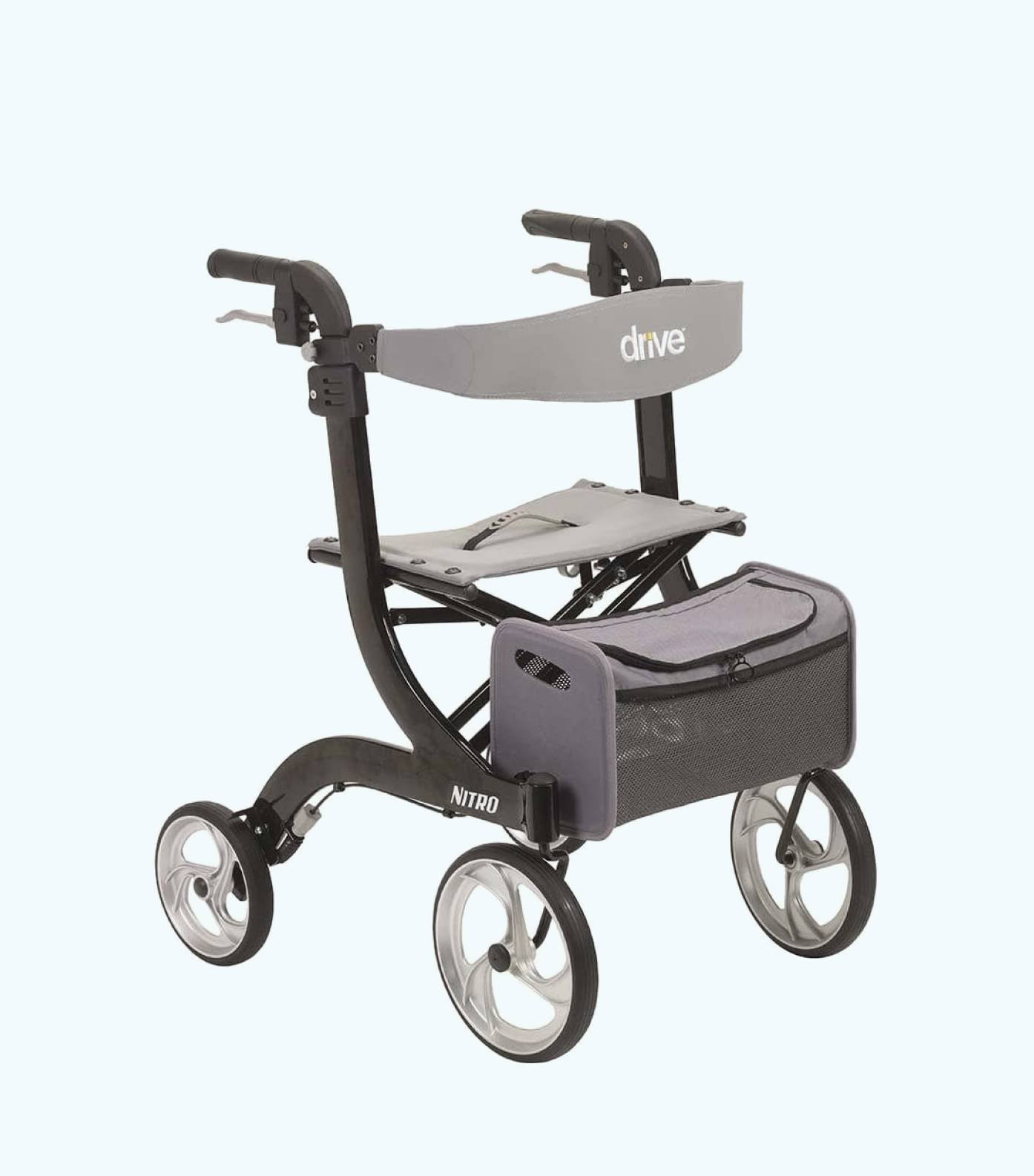
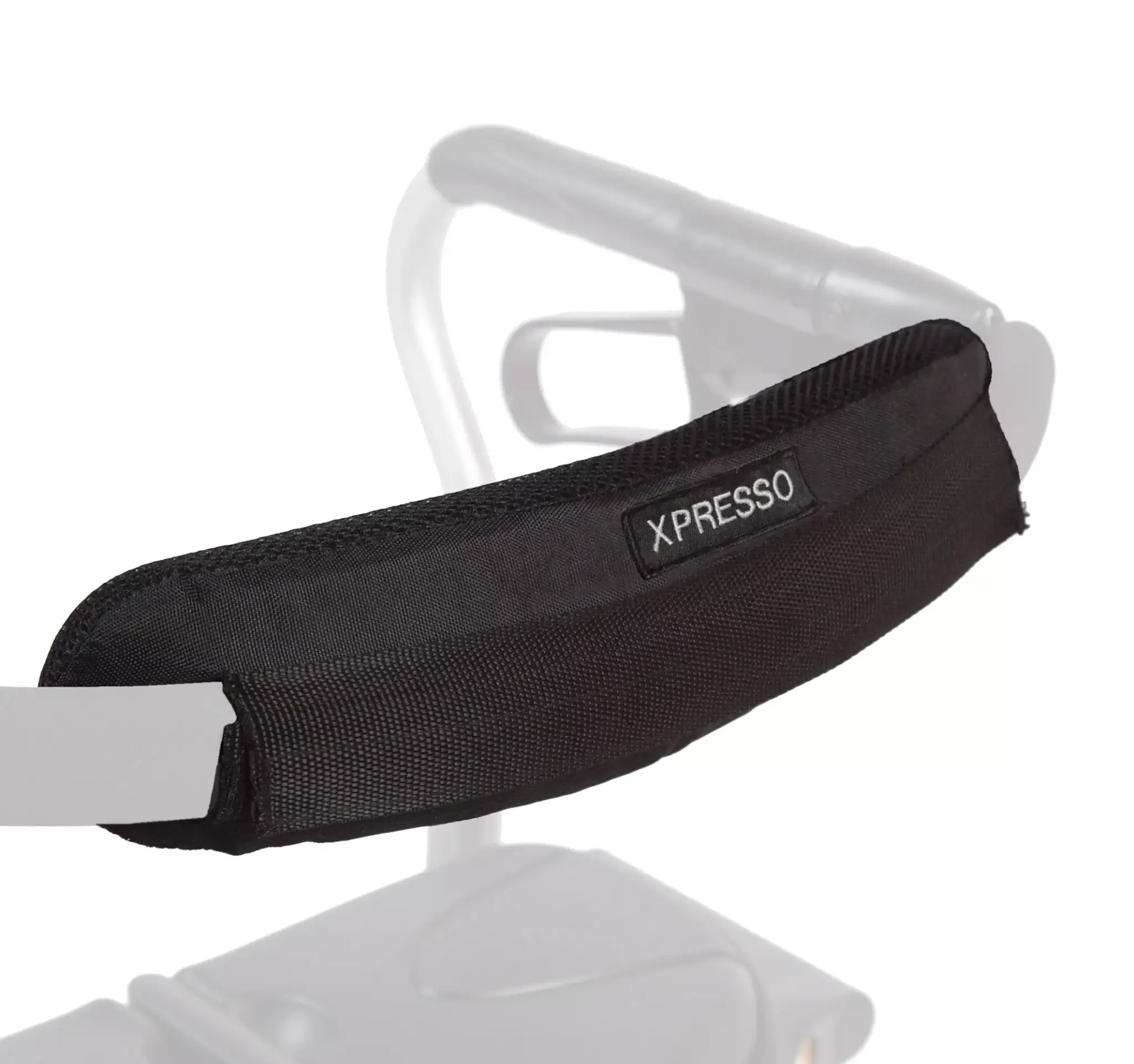
The padded fabric back strap with reinforced stitching delivers soft mid-back support for Evolution Xpresso and Trillium rollators while wide contact area and adjustable tension restore seated posture and prevent sagging during rest breaks.
Loading…
Rollator back straps provide critical postural support during seated rest periods, enabling users to safely lean back without contacting hard frame tubing that creates pressure points and discomfort. Over months of use, original back straps compress, sag, fray at attachment points, and lose structural integrity from repeated loading cycles, body weight stress, and environmental exposure. Degraded straps fail to maintain proper mid-back positioning, allowing users to slouch forward or lean laterally, increasing fall risk and reducing seated stability. The wide padded design distributes pressure across a broader mid-back surface area compared to narrow webbing straps, reducing concentrated loading while the adjustable tension system enables customized support matching individual comfort preferences and postural needs throughout the rollator's service life.
✓ Elderly users requiring frequent seated rest breaks during ambulation
✓ COPD and cardiac patients with limited exercise tolerance
✓ Post-operative hip or knee replacement patients during rehabilitation
✓ Multiple sclerosis patients with episodic fatigue
✓ Parkinson's disease patients requiring stable seated support
✓ Arthritis patients with joint pain limiting continuous walking
✓ Stroke survivors with hemiparesis affecting balance when seated
✓ Deconditioning patients building endurance gradually
✓ Chronic pain patients requiring comfort during rest periods
✓ Bariatric patients with increased postural support needs
✓ Long-distance walkers using rollators for outdoor mobility
✓ Rehabilitation facilities refurbishing institutional equipment
✓ Medical equipment rental agencies maintaining fleet quality
✓ Home health patients with aging rollators requiring component replacement
✓ Nursing homes managing resident mobility equipment
Wear Assessment Protocol
Inspect existing back strap for replacement indicators: visible sagging exceeding 1-2 inches when unloaded, fraying or broken stitching at attachment points or edges, compressed padding providing minimal cushioning, torn or split fabric exposing foam core, fading or discoloration affecting professional appearance, permanent deformation that doesn't recover when unloaded, or user complaints of discomfort or inadequate support during seated rest.
Pre-Installation Preparation
With rollator fully opened and stable, remove worn back strap by detaching from rear frame posts. Note the original mounting method—straps typically attach via hook-and-loop fasteners, snap buckles, or threaded loops around posts. Inspect frame posts for sharp edges, burrs, or damage that could abrade new strap material. Clean frame posts thoroughly with mild soap and water, removing accumulated oils, debris, and residue. Dry completely before installation.
Hardware and Component Verification
Examine included components: new back strap, any included mounting hardware (buckles, fasteners, loops), and installation instructions. If reusing original hardware, verify buckles function properly, hook-and-loop fasteners maintain adequate grip, and any snap connectors engage securely. Test hardware under light tension before full installation to prevent in-use failure.
Installation Procedure - Hook-and-Loop Straps
Position one strap end at the left rear post at mid-seat-height (typically 8-12 inches above seat surface). Wrap the attachment end around the post with hook-and-loop surfaces aligned. Press firmly to engage fastener, ensuring at least 2-3 inches of overlap for secure hold. Route the strap horizontally across to the right rear post, maintaining level alignment. Wrap around right post with identical technique, leaving 6-8 inches of slack initially for tension adjustment. Verify strap sits horizontally without twisting.
Installation Procedure - Buckle or Snap Systems
Thread strap through buckle or attach snap connectors following manufacturer orientation. Loop one end around left rear post and secure through buckle mechanism or engage snap completely—listen for audible click on snap systems. Route to right post maintaining horizontal alignment. Loop around right post and secure, leaving adjustment slack. Double-check that all buckles are properly engaged and snaps are fully seated before proceeding.
Tension Adjustment and Positioning
With strap installed but loose, have user sit on rollator seat in normal resting position. The strap should contact the mid-back at approximately the L3-L4 vertebral level, supporting the natural lumbar curve without forcing excessive lordosis. Adjust strap height on posts if needed to achieve proper mid-back contact. Gradually increase strap tension by tightening at adjustment points until the user can comfortably lean back with full support without the strap sagging significantly. Proper tension: strap provides firm support without rigid resistance—user should be able to lean back naturally.
User Testing and Verification
Have user perform full seated rest test: sit on rollator, engage brakes, lean back against strap fully, and assess comfort and support. Strap should maintain position without slipping vertically on posts. User should feel evenly distributed pressure across mid-back without concentrated loading or edge dig-in. Check that strap doesn't restrict natural shoulder movement or cut across shoulder blades. Verify user can sit comfortably for 2-3 minutes without discomfort.
Post-Installation Checks
Verify strap attachments are secure at both posts with no loosening or slippage. Confirm strap maintains horizontal alignment without twisting or rotating. Check that all hardware is fully engaged—buckles snapped, hook-and-loop firmly attached, snaps locked. Ensure strap doesn't interfere with rollator folding mechanism if applicable. Test fold/unfold cycle to confirm strap accommodates frame movement without binding or detaching.
Height Optimization for Different Users
For shorter users (under 5'2"): Position strap slightly lower (6-8 inches above seat) to maintain mid-back contact. For average users (5'2"-5'10"): Standard positioning 8-12 inches above seat surface. For taller users (over 5'10"): Raise strap to 10-14 inches above seat for proper mid-back alignment. Optimal positioning places strap at the user's natural lumbar curve when seated—too low provides inadequate support, too high creates shoulder pressure.
Tension Calibration for Different Needs
Active users with good trunk strength: Moderate tension providing light support for brief rest periods. Deconditioned or weak users: Firmer tension offering more substantial postural assistance. Bariatric users: Maximum safe tension to accommodate higher loading without excessive stretch. COPD/cardiac patients: Moderate tension allowing relaxed breathing without restriction. Always prioritize user comfort—excessive tension creates discomfort and reduces strap usage.
Maintenance and Cleaning
Clean strap surface weekly during regular use with damp cloth and mild soap. For institutional settings, wipe with facility-approved disinfectant following manufacturer dilution guidelines. Avoid saturating foam padding—surface cleaning only. Air dry completely before next use. Never machine wash padded straps as foam core may degrade or deform. Inspect monthly for early signs of wear, fraying, or compression loss.
Seasonal and Storage Considerations
For outdoor rollator use, increased UV and weather exposure accelerates strap degradation—inspect more frequently. During extended storage periods (over 3 months), store rollator indoors to protect strap from environmental damage. If storing folded, ensure strap doesn't remain under compression stress which may cause permanent deformation. Unfold periodically during long-term storage to allow strap recovery.
Adjustment for Changing User Needs
As users gain strength during rehabilitation, tension may need reduction to prevent over-support. For users experiencing progressive weakness, gradually increase tension to provide additional assistance. Monitor user feedback and adjust accordingly—optimal support balances assistance with encouraging natural postural muscle use. Re-evaluate strap positioning and tension quarterly for long-term users.
Safety Reminders
Never exceed manufacturer-specified weight capacity for the rollator—strap is designed for rollator's rated load only. Ensure both brakes are fully engaged before user sits and leans against strap. Instruct users to sit squarely on seat before leaning back—off-center loading may cause tipping. Strap provides seated support only—not intended for standing assistance or transfer support. Replace strap immediately if any structural damage develops during use.
Troubleshooting Common Issues
Strap slips down posts during use: Increase tension at adjustment points. Verify hook-and-loop surfaces are clean and fully engaged. Check that attachment wraps around posts with adequate overlap (minimum 2-3 inches). Consider that severe sagging may indicate need for shorter strap length or different mounting method.
User complains of pressure points: Re-evaluate strap height—may be positioned too high, creating shoulder blade contact. Verify strap isn't twisted, which concentrates pressure. Check that strap width is appropriate for user's back size. Ensure adequate padding hasn't compressed—may indicate need for replacement.
Strap interferes with folding: Verify strap is positioned clear of folding pivot points. May need to adjust mounting position slightly lower on posts. Some models require loosening strap before folding—normal for certain frame designs.
Uneven support side-to-side: Check that strap is level horizontally when viewed from behind. Verify equal tension at both post attachments. Ensure strap hasn't twisted during installation. User may have scoliosis or lateral postural deviation—clinical evaluation recommended.
Carousel items
Testimonial items
Very welcoming and informative. We went in to rent a Walker for my mom to see if she would use it. They had no rentals left so he gave us a brand new one on rental. Highly recommend this company for all your ADL needs.
Tara Maye
The rating of this product is 5 out of 5
Fantastic service and experience, from delivery to pickup we could not have asked for anything more! We rented a hospital bed, and I do not believe you would get better service anywhere. Highly recommended!
Shawn Dillon
The rating of this product is 5 out of 5
Super friendly and very helpful! Delivered the wheelchair for me, special ordered other parts and took the time to show me how to install. I recommend!
Fiona Haines
The rating of this product is 5 out of 5
Can not thank the team at Med Supplies enough for their amazing service. We were in a tough spot till we got their help. Amazing service. Kind and respectful delivery. First class all the way. Thank you again.
Jon Beatty
The rating of this product is 5 out of 5
Ordered the chair on Sunday and it arrived Monday morning. Spoke to customer service to follow up on delivery times. It was already on my front door. Excellent and helpful staff. The product is sturdy and of good quality. Thank you for your help.
H D
The rating of this product is 5 out of 5
Excellent experience - website faithfully represented what was in stock (which hasn't always been my experience with other vendors sadly), and local shipping was really fast - ordered on the weekend, received it on Monday in my case. Thank you for being
Jason Hudson
The rating of this product is 5 out of 5
0/0
You cart is currently empty
780 409-1509
Get directions