
Slideshow Items

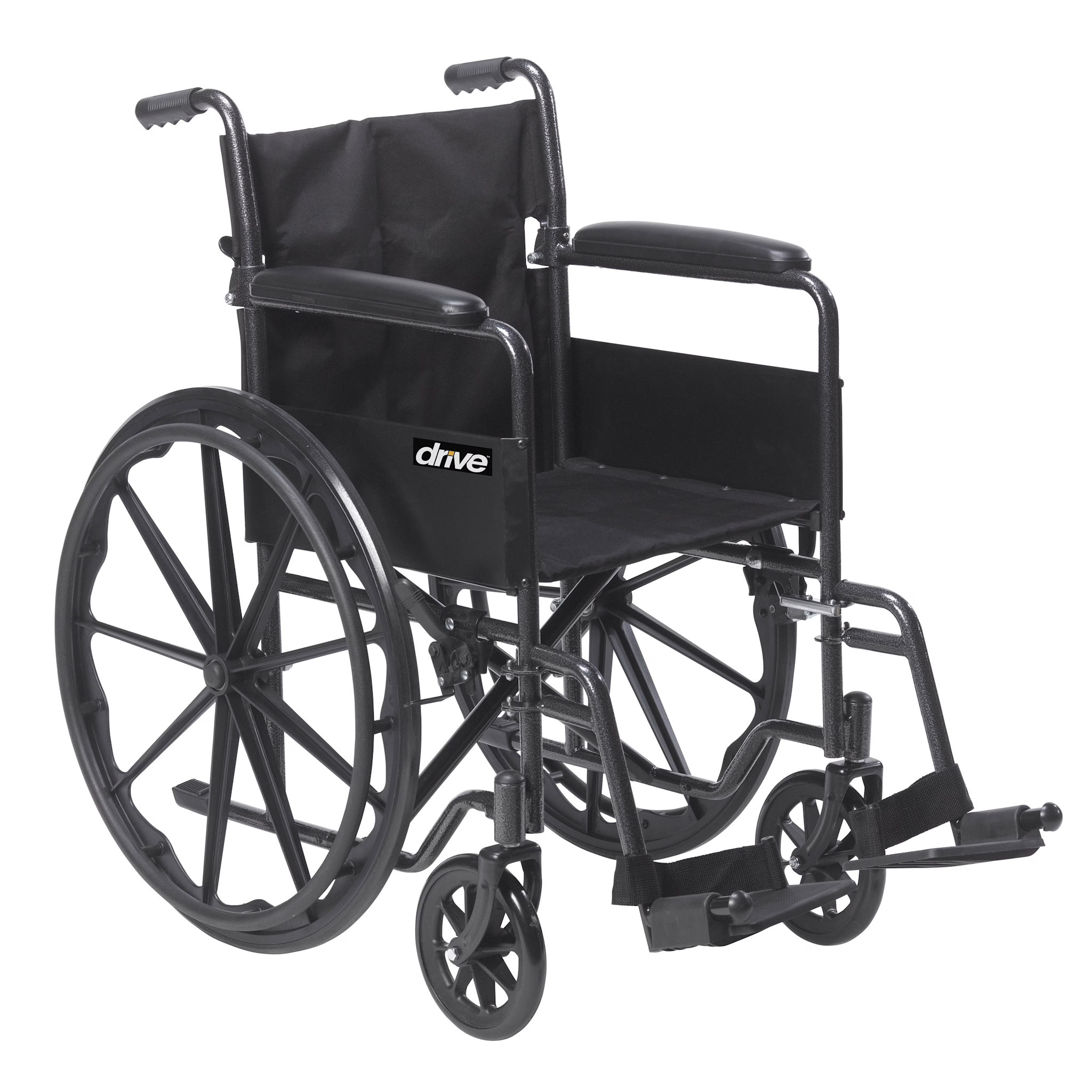
Silver Sport 1 Wheelchair Desk Arm 10" Left

C$29.99
In stock online
In store: Check availability

Available in store

SKU: STDSSSDDAL

Replacement left-side 10-inch desk arm assembly for Drive Silver Sport 1 wheelchairs, restoring padded arm support and desk-clearance geometry that allows the wheelchair to slide under tables, work surfaces, and dining areas for closer daily positioning.

    • Why the Desk Arm Is the Postural Support Boundary and the Functional Positioning Component of the Drive Silver Sport Wheelchair Simultaneously

      The desk arm on a Drive Silver Sport 1 wheelchair serves two structurally distinct functions that are both essential to the wheelchair's comfort and clinical performance, and that a single arm assembly must satisfy simultaneously. The first function is postural support: the armrest is the lateral support surface that positions and supports the user's forearm and elbow during seated use, distributing the weight of the upper limb across the padded arm surface rather than allowing it to hang unsupported at the shoulder. An unsupported upper limb in a seated wheelchair user generates a continuous downward traction load at the shoulder joint — a load that causes progressive shoulder fatigue and, in users with neurological or musculoskeletal conditions affecting shoulder stability, can contribute to subluxation or rotator cuff stress over prolonged sitting periods. The desk arm is therefore not a comfort accessory — it is the postural support boundary that determines whether the user's upper limb is supported at the correct height and angle during seated use. An arm assembly that has cracked, deformed, or lost its pad must be replaced before the wheelchair is returned to use as a primary seating aid, because an arm that cannot support the user's upper limb at the correct position eliminates the shoulder unloading function that the armrest provides.

      The second function the desk arm must satisfy simultaneously is functional desk positioning — the desk-length design's specific geometric contribution to the user's ability to perform daily activities at tables, work surfaces, and dining areas. A full-length armrest extends to the front edge of the wheelchair seat and prevents the user from sliding the wheelchair under a table surface to a position that brings the tabletop within comfortable arm reach. The desk-length arm terminates shorter than the full-length profile, creating a clearance gap at the front of the armrest that allows the wheelchair to be pushed under the table until the user's torso is at the table edge. This positioning difference is not a minor convenience — it is the geometric feature that determines whether the user can independently perform tabletop tasks without requiring an attendant to reposition items within reach, and whether the user can sit at a standard dining or work surface without the armrest preventing close approach. The 10-inch desk arm length is the dimension specified for the Silver Sport 1 frame geometry to achieve this desk clearance, and a replacement arm that does not match this length alters the approach geometry and the user's functional reach at tabletop surfaces.

      The left-side designation of this arm assembly is not an arbitrary label — it reflects the mounting geometry, pad orientation, and height adjustment interface that are specific to the left armrest position of the Silver Sport 1 frame. The left and right desk arms are mirror-image components whose attachment hardware engages the frame rail at the left side geometry. Installing a right arm assembly in the left position produces an armrest that does not seat correctly against the left frame rail, presenting mounting hardware at the incorrect orientation and a pad surface that does not align correctly with the user's left forearm during seated use. The left arm must be replaced with the correct left-side component to restore the manufacturer-specified armrest geometry.

      The steel arm frame and padded upholstery construction of the STDSSSDDAL replacement arm addresses the specific loading and wear conditions that wheelchair armrests experience in daily clinical use. The steel frame carries the static weight of the user's upper limb and the dynamic loads of transfer activity — the user pushes down on the armrest during sit-to-stand transfers, generating a concentrated vertical load at the arm mounting points that the frame must resist without deformation. The padded upholstery distributes the contact pressure of the user's forearm across the full arm surface, preventing the localised pressure concentration at the olecranon and forearm prominences that a hard arm surface would produce during prolonged sitting.

      KEY FEATURES

      • 10-inch desk-length arm — arm length specified for the Silver Sport 1 frame geometry to create the front clearance gap that allows the wheelchair to be pushed under standard table and desk surfaces, enabling close approach for independent tabletop task performance
      • Left-side mounting geometry — mirror-image arm profile and mounting hardware matched to the left frame rail attachment interface of the Silver Sport 1, ensuring correct arm height, pad orientation, and mounting security at the left armrest position
      • Padded arm surface — upholstery distributes upper limb contact pressure across the full forearm surface, preventing localised pressure concentration at the olecranon and forearm prominences during prolonged seated use
      • Steel arm frame construction — carries the static upper limb support load and the dynamic transfer loading of sit-to-stand activity without frame deformation at the arm mounting points
      • OEM replacement specification (STDSSSDDAL) — arm length, mounting hole pattern, and frame rail attachment geometry match the original Silver Sport 1 left desk arm dimensions, restoring manufacturer-specified armrest position after replacement

      BENEFITS

      • Restores upper limb postural support at the left armrest position — replacing a cracked, deformed, or pad-worn arm before the wheelchair is used as a primary seating aid, removing the shoulder unloading deficit that a missing or non-functional armrest creates
      • Desk-length geometry restores close desk approach — 10-inch arm length recreates the front clearance gap that allows the wheelchair to slide under standard table surfaces, restoring the user's independent reach at dining and work surfaces
      • Left-side specific geometry eliminates mounting misalignment — correct frame rail engagement and pad orientation at the left arm position, preventing the mounting hardware stress and pad misalignment that installing an incorrect arm side produces
      • Padded arm surface restores pressure distribution across the forearm contact area — eliminating the localised pressure concentration at forearm bony prominences that a damaged or absent pad introduces during prolonged sitting
      • Component-level arm replacement extends the wheelchair's service life without replacing the right arm assembly, seating system, or frame

      TYPICAL APPLICATIONS

      Arm frame damage replacement — immediate left desk arm replacement when steel frame cracking, bending, or mounting point failure has compromised structural integrity, restoring upper limb support before the wheelchair is returned to primary seating use

      Pad wear replacement — replacement when armrest upholstery has compressed, torn, or delaminated, reducing the pressure distribution function and exposing the hard arm frame surface to the user's forearm during seated use

      Missing arm replacement — replacement when the left desk arm has been removed and lost during wheelchair transport, transfer, or maintenance, restoring the complete armrest assembly before the wheelchair enters active use

      Scheduled maintenance replacement — arm assembly inspection and replacement as part of wheelchair service intervals in hospitals, rehabilitation facilities, and long-term care homes, confirming structural integrity and pad condition before the next user

      Wheelchair recommissioning — left desk arm inspection and replacement when a Drive Silver Sport 1 wheelchair is transferred to a new user, confirming arm geometry, pad condition, and mounting security before the wheelchair enters active clinical or homecare use

    • No reviews yet

      Add yours

    Testimonials from Google

    See all reviews

    Your cart — 0

    You cart is currently empty

    Login

    By using our website, you agree to the use of cookies. These cookies help us understand how customers arrive at and use our site and help us make improvements. Hide this message More on cookies »