
Slideshow Items

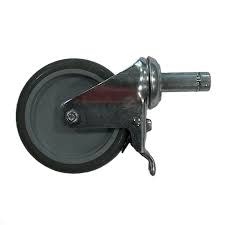
Drive 4” Caster w/lock for 15307LW Beds

C$69.76
In stock online
In store: Check availability

Available in store

SKU: 15300LW-CL

The Drive 4-Inch Caster with Lock is the correct-fit locking caster for Drive 15307LW homecare beds, restoring smooth swivel rolling and foot-engaged brake lockout when worn or seized casters no longer hold the bed in a stationary position.

    • Why the Locking Caster's Brake Function Is a Patient Safety Mechanism — and Why Its Failure Is Not Merely a Maintenance Inconvenience

      A homecare hospital bed that moves during a transfer is not a nuisance — it is a fall-initiation mechanism. The sequence is consistent: the patient sits upright at the bed edge in preparation for a sit-to-stand transfer, places weight asymmetrically onto one foot, and initiates the standing movement that transfers the center of gravity forward. If the bed rolls at this moment — even a few centimeters — the edge the patient is pushing against moves away from the direction of applied force. For a patient with reduced lower-limb strength, impaired balance, or post-surgical weight-bearing restrictions, the unexpected removal of the supporting surface they are pushing against during the most mechanically vulnerable phase of the transfer produces a fall. The locking caster's engaged brake is the single component that prevents this bed movement — not the bed frame, not the mattress, not the patient's own balance. A locking caster that cannot engage reliably, that re-engages under load, or that has accumulated wheel or housing damage that allows movement even when locked has eliminated the bed's primary transfer-safety mechanism. Caster brake inspection and replacement is therefore a patient fall-prevention maintenance task, not an optional service item.

      The mixed locking and non-locking caster configuration of the Drive 15307LW — in which locking casters are positioned at specific corners of the bed — is a deliberate engineering configuration, not a cost reduction. The locking casters' role is to hold the bed against the horizontal force components of transfer loading (patient push-off and caregiver pull and support), while the swivel geometry of all four casters allows the bed to be repositioned smoothly when the locks are released. The 4-inch diameter caster is sized to the 15307LW's base height and floor clearance geometry — a caster of smaller diameter would reduce the bed's effective height and change the patient's transfer-position geometry; a larger caster would raise the bed above the correct height for safe transfer mechanics. Correct caster diameter is therefore a component of the 15307LW's patient-position-optimized design: replacing the 15307LW's casters with the wrong diameter changes the transfer height that the bed was designed to provide, which is a specification change with clinical consequences for patients whose transfer protocol was established for the bed's design height.

      The foot-engage brake mechanism of the Drive 15307LW locking caster operates through a simple and deliberately robust design: the caregiver's foot depresses a lever that locks the swivel housing and pins the wheel against rotation simultaneously. The dual-lock function — swivel lock plus wheel lock — is important because a caster that only locks the wheel can still pivot at the swivel joint under lateral force, allowing the bed foot to swing laterally even when the wheel itself cannot roll. A bed that pivots laterally during a transfer is as dangerous as one that rolls forward — the patient's supported edge moves away from the intended position regardless of the direction of movement. The swivel lock prevents this lateral pivoting, and the wheel lock prevents forward and rearward rolling, so both mechanisms must function correctly to provide complete transfer stability. A worn locking caster that has lost its swivel lock function while retaining wheel lock provides only partial safety — and because the swivel lock failure is not typically visible to the caregiver performing a pre-transfer check, it is a silent safety deficit that the replacement caster corrects.

      The Drive 15307LW casters are subject to asymmetric wear from the positional habits of the specific care environment. In most homecare bed placements, the bed remains in one room at one position — pushed against a wall on one or two sides, with patient access from one specific side. This means one or two casters carry nearly all pivot loading from repositioning events, while the wall-side casters carry primarily static load. The high-pivot casters wear faster and in a different failure mode: swivel bearing wear produces play and noise in the housing before wheel wear becomes visible. Replacing all four locking casters simultaneously eliminates the asymmetric wear differential that develops when individual casters are replaced reactively — a fully matched set restores the 15307LW's original bed-movement characteristics for caregivers, who develop an intuitive sense of how much force is required to move and position the bed based on consistent caster resistance.


      Key Features

      • 4-inch diameter locking swivel caster — correct diameter specification for the Drive 15307LW homecare bed frame clearance and patient transfer height geometry
      • Dual-function foot-engage brake — simultaneously locks the swivel housing against lateral pivot and locks the wheel against forward and rearward rolling, providing complete transfer-stability lockout
      • Swivel design allows smooth, single-caregiver bed repositioning when brake is released — trailing-axis swivel geometry naturally aligns behind the direction of push
      • Durable wheel and swivel housing construction suited to the repeated lock-unlock cycling and floor-contact loading of homecare bed use
      • Correct-fit stem dimensions for the Drive 15307LW caster receptacle — secure stem seating without the wobble that undersized aftermarket caster stems produce in Drive bed receptacles
      • Sold individually — allowing single-caster replacement at failure, or complete four-caster set replacement during scheduled maintenance

      Benefits

      • Restores complete transfer-stability lockout — both swivel-lock and wheel-lock functions in a single foot-engage action, preventing the bed movement that initiates falls during sit-to-stand transfers
      • Correct 4-inch diameter maintains the 15307LW's designed patient transfer height — preserving the bed height geometry that transfer protocols for current patients were established against
      • Swivel function restored — eliminates the stiff, dragging, or off-axis rolling that worn caster swivel bearings produce, restoring smooth single-caregiver bed repositioning
      • Stem fit precision prevents the receptacle wobble and progressive receptacle bore wear that undersized aftermarket caster stems produce over time in Drive bed frames
      • Component-level caster replacement restores full bed mobility and safety function at a fraction of bed frame replacement cost when individual casters reach end of service life

      Typical Applications

      ✓ Brake failure replacement — 15307LW casters whose foot-engage brake no longer locks the bed reliably, requires excessive foot force to engage, or releases under moderate transfer loading ✓ Swivel seizure replacement — casters that no longer swivel freely when unlocked, dragging instead of pivoting and requiring excessive force to reposition the bed ✓ Wheel wear replacement — casters with visibly flat-spotted, cracked, or surface-degraded wheels that produce vibration, uneven rolling, or unacceptable noise during repositioning ✓ Preventive maintenance — scheduled replacement of all four locking casters on 15307LW beds in long-term use, eliminating accumulated asymmetric wear differences before brake reliability is compromised ✓ Post-fall review corrective action — caster inspection and replacement following a bed-movement-related transfer incident as part of equipment safety remediation ✓ Homecare and long-term care equipment servicing — caster replacement on resident or patient 15307LW beds during annual bed safety inspection and service intervals

    • No reviews yet

      Add yours

    Testimonials from Google

    See all reviews

    Your cart — 0

    You cart is currently empty

    Login

    By using our website, you agree to the use of cookies. These cookies help us understand how customers arrive at and use our site and help us make improvements. Hide this message More on cookies »