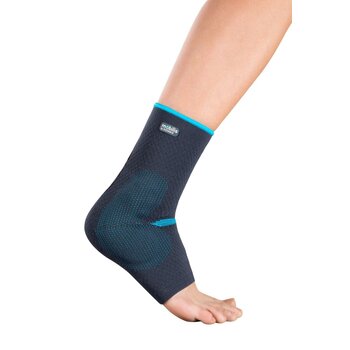
Why Epicondyle-Targeted Compression for Tendinopathy
Lateral epicondylitis (tennis elbow) and medial epicondylitis (golfer's elbow) represent overuse injuries affecting the tendon origins where forearm extensor and flexor muscles attach to bony prominences on the outer and inner elbow respectively, creating inflammatory responses, micro-tears, and degenerative changes from repetitive gripping, lifting, or wrist extension/flexion activities. Traditional elbow supports provide generalized compression around the entire joint, but research demonstrates that targeted pressure applied directly over the epicondyle combined with counterforce pressure applied to the proximal forearm muscle belly creates superior pain relief and functional improvement compared to uniform compression alone. The medi Epicomed employs medical-grade engineering that integrates anatomically-positioned silicone gel pads (epicondyle pads) that apply precise localized pressure to the lateral and/or medial epicondyle insertions where tendon inflammation occurs, while simultaneously incorporating a removable counterforce strap positioned approximately 2-3 inches distal to the elbow crease that compresses forearm extensor or flexor muscle bellies to reduce tensile forces transmitted through inflamed tendons during gripping and wrist movements. This dual-mechanism approach effectively "off-loads" damaged tendon tissue by redistributing mechanical stress away from the painful epicondyle attachment while the surrounding 3D compression knit fabric provides therapeutic compression that reduces edema, enhances proprioception, and delivers a gentle massaging effect during movement that promotes circulation and tissue healing. The Size 4 configuration represents medi's European anatomic sizing system calibrated for specific forearm circumference measurements typically ranging from 27-29 cm (approximately 10.6-11.4 inches) measured 5 cm distal to the elbow crease, ensuring optimal pressure distribution and brace effectiveness that cannot be achieved with poorly-fitted generic sleeves or simple strap systems. The universal left-right design accommodates both lateral epicondylitis (outside elbow pain, most common) and medial epicondylitis (inside elbow pain) through proper positioning during application, while the premium medical-grade construction justifies investment for individuals requiring reliable, long-term management of these notoriously persistent conditions.
Key Features
- medi Epicomed medical-grade elbow brace design
- Size 4 anatomic fit for forearm circumference 27-29 cm (10.6-11.4 inches)
- Integrated silicone epicondyle gel pads for targeted pressure
- Removable counterforce strap with adjustable hook-and-loop closure
- 3D knit compression fabric for therapeutic support
- Breathable, moisture-wicking material prevents excessive heat buildup
- Comfort zones at elbow crease prevent pinching during flexion
- Low-profile construction fits under clothing
- Universal design fits left or right elbow
- Latex-free materials for sensitive skin
- Reinforced stitching at stress points for durability
- Machine washable following care instructions
- Available in medi standard colorway (typically gray/black/blue)
Benefits
- Provides clinically-proven relief for lateral epicondylitis (tennis elbow)
- Effectively manages medial epicondylitis (golfer's elbow) symptoms
- Reduces tendon strain through counterforce mechanism
- Off-loads damaged tissue to promote healing
- Enables continued activity with reduced pain
- Enhances proprioceptive awareness for injury prevention
- Supports gradual return to normal activities
- Comfortable enough for all-day wear at work
- Maintains support through athletic training and competition
- Breathable fabric suitable for extended wear
- Medical-grade quality for long-term reliability
- Cost-effective alternative to repeated cortisone injections
- Supports conservative management before considering surgery
Clinical Applications
✓ Lateral epicondylitis (tennis elbow) - extensor tendon inflammation ✓ Medial epicondylitis (golfer's elbow) - flexor tendon inflammation ✓ Chronic overuse tendinopathy of elbow ✓ Post-cortisone injection support during healing ✓ Occupational repetitive strain (assembly work, typing, tools) ✓ Sports-related tendon overuse (racquet sports, golf, baseball) ✓ Post-surgical support during rehabilitation (with medical clearance) ✓ Prevention in high-risk activities or occupations ✓ Tendon insertion irritation from sudden activity increase ✓ Elbow pain from gardening, carpentry, or manual labor
Usage & Application
Understanding Tennis Elbow vs. Golfer's Elbow:
Lateral Epicondylitis (Tennis Elbow):
- Pain on outside (lateral) elbow
- Affects extensor tendon origin
- Pain with wrist extension, gripping, lifting
- Most common elbow tendinopathy (90% of cases)
- Caused by: racquet sports, computer work, manual labor
- Epicondyle pad positioned on outside elbow bone
Medial Epicondylitis (Golfer's Elbow):
- Pain on inside (medial) elbow
- Affects flexor tendon origin
- Pain with wrist flexion, gripping, throwing
- Less common but similar mechanism
- Caused by: golf, baseball, climbing, manual work
- Epicondyle pad positioned on inside elbow bone
Size 4 Verification:
- Measure forearm circumference 5 cm (2 inches) below elbow crease
- Size 4 fits: 27-29 cm (10.6-11.4 inches)
- If at size boundary, choose smaller for more compression
- Proper fit critical for therapeutic effectiveness
- Consult medi sizing chart if measurement unclear
Initial Application:
- Identify painful epicondyle location (lateral or medial)
- Ensure arm is clean and completely dry
- Slide brace onto forearm with gel pads facing skin
- Position so integrated epicondyle pad aligns directly over painful bony prominence
- Pull brace up so bottom edge is approximately 2 inches below elbow crease
- Rotate brace so epicondyle pad centers perfectly on pain point
- Smooth fabric to eliminate wrinkles or bunching
- Attach removable counterforce strap around proximal forearm (closer to elbow)
- Adjust strap tension to achieve comfortable compression
- Verify comfort zones at elbow crease prevent pinching when bending
Proper Positioning:
Epicondyle Pad Placement:
- Must align directly over bony epicondyle (palpable prominence)
- Pad should compress tender insertion point (may cause slight discomfort initially)
- Incorrect positioning reduces effectiveness dramatically
- Lateral: Outside elbow, in line with thumb when arm at side
- Medial: Inside elbow, in line with little finger when arm at side
Counterforce Strap Positioning:
- Position 2-3 inches (5-7 cm) below elbow crease
- Should compress forearm muscle belly (not over elbow joint itself)
- Strap wraps circumferentially around forearm
- Adjustable tension via hook-and-loop closure
- Can be tighter for activities, looser for rest periods
Tension Adjustment Guidelines:
Epicondyle Pad Pressure:
- Should feel firm pressure over painful point
- May cause slight discomfort initially (adapts within days)
- Should not cause numbness or tingling in hand
- Pressure reduces as inflammation decreases
Counterforce Strap Tension:
- Start moderate, adjust based on activity
- Tighter during activities triggering pain (gripping, lifting, sports)
- Looser during rest periods or sedentary work
- Should feel snug but not restrict circulation
- No numbness, tingling, or color changes in hand/fingers
Daily Wear Guidelines:
Initial Adaptation (Days 1-3):
- Wear 2-4 hours to adapt to compression and pad pressure
- Remove if excessive discomfort, numbness, or skin irritation
- Normal to feel awareness of pad pressure initially
- Gradually increase wear time
Active Treatment Phase (Weeks 1-6):
- Wear during all activities that typically trigger pain
- May wear continuously during waking hours if comfortable
- Remove during sleep (not needed when arm relaxed)
- Maximum protection during healing phase
Maintenance Phase (Weeks 6+):
- Continue wearing during high-risk activities
- May reduce wear as pain improves
- Retain for prevention during known triggers
- Gradual weaning as condition resolves
Activity-Specific Guidelines:
Racquet Sports (Tennis, Pickleball, Badminton):
- Wear during all practice and competitive play
- Apply before warm-up, remove after cool-down
- Tighten counterforce strap for maximum support
- Continue use for 4-6 weeks after pain resolves (prevention)
- May need to modify grip size or technique
Golf:
- Essential for golfer's elbow (medial epicondylitis)
- Wear during range practice and rounds
- Position epicondyle pad on inside elbow
- May affect swing feel initially (adaptation period)
- Work with pro on swing mechanics contributing to problem
Computer/Office Work:
- Wear throughout workday if typing triggers pain
- Position epicondyle pad carefully (lateral for mouse pain)
- Looser strap tension acceptable for desk work
- Take breaks every 30-60 minutes
- Ergonomic keyboard/mouse assessment recommended
Manual Labor (Carpentry, Assembly, Tools):
- Critical support for occupational epicondylitis
- Wear entire work shift
- Tighter strap during lifting and tool use
- May need job modifications alongside brace
- Consider rotational strategies to reduce repetitive stress
Gym/Weightlifting:
- Wear during lifting sessions
- Particularly important for gripping exercises
- May need to reduce weight or modify exercises
- Avoid exercises that reproduce pain despite brace
- Focus on eccentric strengthening (with provider guidance)
Gardening/Yard Work:
- Common trigger for both tennis and golfer's elbow
- Wear during all yard work activities
- Tool modifications may help (ergonomic grips, power tools)
- Take frequent breaks
- Ice after activity
Removable Strap Configuration:
Maximum Support Configuration:
- Strap attached and tightened
- For activities triggering significant pain
- Sports, manual work, lifting
- Maximum tendon off-loading
Moderate Support Configuration:
- Strap attached but looser tension
- For light activities, office work
- Balance of support and comfort
- Most common everyday use
Minimal Support Configuration:
- Strap removed, compression sleeve only
- For rest periods, light activities
- When counterforce not needed
- Maintains some proprioceptive benefit
Care and Maintenance:
- Hand wash in cold water with mild detergent every 3-5 wears
- Can machine wash on delicate cycle in mesh bag
- Air dry completely (never machine dry)
- Do not use bleach, fabric softener, or harsh detergents
- Clean hook-and-loop closures regularly (remove lint)
- Inspect gel pads and strap for wear periodically
- Replace when compression decreases or materials degrade
- Typical lifespan: 6-12 months with proper care and regular use
Troubleshooting Common Issues:
Epicondyle Pad Not Aligned with Pain:
- Most common application error
- Re-position brace by rotating around forearm
- Pad must press directly on tender epicondyle
- May need to adjust position multiple times to find optimal placement
- Take photo when correctly positioned for future reference
Brace Slides Down Forearm:
- May be too large (wrong size) or worn elastic
- Ensure forearm is completely dry before application
- Try one size smaller if available
- Tighten counterforce strap more
- Shave forearm hair if excessive (improves grip)
Discomfort at Elbow Crease:
- Verify comfort zones are positioned correctly
- May need to adjust brace slightly higher or lower
- Should not cause pinching when bending elbow fully
- Normal to feel slight pressure initially (adapts)
Numbness or Tingling in Hand:
- Brace or strap too tight (loosen immediately)
- May indicate circulation compromise
- Remove and reassess fit
- Try larger size if persistent
- Consult healthcare provider if symptoms continue
Not Reducing Pain:
- Verify proper epicondyle pad placement (most critical)
- May need more aggressive strap tension
- Ensure size is correct (too large reduces effectiveness)
- Condition may require additional treatment (PT, injections)
- Some cases don't respond to conservative care
Skin Irritation from Gel Pads:
- Ensure brace is clean and dry
- Wear thin barrier layer if needed (arm sleeve)
- May indicate sensitivity to silicone
- Discontinue if rash or skin breakdown develops
- Try alternative brace design without gel pads
Complementary Treatment Strategies:
Ice Therapy:
- Ice massage to epicondyle for 10-15 minutes post-activity
- Reduces inflammation and pain
- Most effective immediately after aggravating activities
- Use throughout acute phase
Activity Modification:
- Reduce or avoid activities that reproduce pain
- Modify technique (grip, posture, mechanics)
- Ergonomic assessment for occupational causes
- Gradual return to full activity over weeks-months
Physical Therapy:
- Eccentric strengthening exercises (proven effective)
- Stretching program for forearm muscles
- Manual therapy techniques
- Progressive loading protocol
- Often essential for complete recovery
Medications:
- Over-the-counter NSAIDs for inflammation (if appropriate)
- Topical anti-inflammatory gels
- Not a substitute for activity modification and brace use
Advanced Interventions (If Conservative Fails):
- Cortisone injections (temporary relief, max 3 lifetime)
- Platelet-rich plasma (PRP) injections
- Extracorporeal shock wave therapy (ESWT)
- Surgery (last resort, 5-10% of cases)
When to Seek Medical Evaluation:
- Pain persists beyond 6-8 weeks of conservative care
- Significant weakness developing in grip or wrist
- Numbness or tingling in hand not related to brace tightness
- Elbow appears swollen, red, or warm (possible infection)
- Unable to perform necessary daily activities despite brace
- Considering cortisone injection or other interventions
Recovery Timeline Expectations:
- Acute phase: 0-6 weeks (brace essential, activity modification)
- Subacute phase: 6-12 weeks (continued brace use, gradual return)
- Chronic phase: >12 weeks (may need more aggressive intervention)
- Full recovery: 3-12 months typical (highly variable)
- Recurrence common if return to activity too quickly
Prevention After Recovery:
- Continue wearing brace during high-risk activities for 3-6 months
- Maintain forearm strengthening and stretching program
- Proper technique in sports and work
- Ergonomic modifications permanent
- Early re-application if symptoms return
medi Brand Quality Distinction:
- German medical device manufacturer (premium quality)
- Medical-grade construction exceeds typical retail braces
- Clinically tested and validated designs
- Prescribed by physicians and physical therapists
- Higher initial cost justified by effectiveness and durability
- Often covered by insurance with prescription (verify coverage)
Technical Specifications
- Brand: medi (German medical device manufacturer)
- Model: Epicomed
- Size: 4
- Forearm Circumference Range: 27-29 cm (10.6-11.4 inches)
- Measurement Location: 5 cm (2 inches) distal to elbow crease
- Design Type: 3D compression knit sleeve with integrated gel pads and removable strap
- Epicondyle Pads: Integrated silicone gel pads for targeted pressure
- Pad Location: Positioned to align with lateral and/or medial epicondyles
- Counterforce Strap: Removable, adjustable strap with hook-and-loop closure
- Strap Position: Proximal forearm, 2-3 inches below elbow crease
- Material Composition: Breathable knit fabric (typically polyamide/elastane blend)
- 3D Knit Technology: Seamless construction with varying compression zones
- Comfort Zones: Engineered flexibility at elbow crease prevents pinching
- Moisture Management: Breathable, moisture-wicking properties
- Compression Level: Medical-grade graduated compression
- Profile: Low-profile design for discrete under-clothing wear
- Weight: Approximately 3-4 ounces
- Color: Standard medi colorway (varies by region, typically gray/black/blue)
- Latex Content: Latex-free materials
- Side: Universal design fits left or right elbow
- Application: For lateral epicondylitis (tennis elbow) or medial epicondylitis (golfer's elbow)
- Support Level: Moderate (targeted compression with counterforce mechanism)
- Intended Use: Tendinopathy management, occupational support, sports protection
- Activity Level: Daily activities, occupational, athletic
- Care Instructions: Hand wash cold or machine wash delicate cycle, air dry only
- Machine Washable: Yes (use mesh laundry bag, delicate cycle)
- Dryer Safe: No (air dry only to preserve elasticity and gel pad integrity)
- Expected Lifespan: 6-12 months with regular use and proper care
- Replacement Indicator: Loss of compression, gel pad degradation, strap wear
- Prescription Status: Available OTC but often prescribed by physicians/PTs
- Insurance: May be covered with prescription (verify with provider)
- Quality Standard: Medical device quality, CE marked (European standard)
- Quantity: Sold individually (single brace)
- Packaging: medi retail packaging with sizing guide and instructions