
Slideshow Items

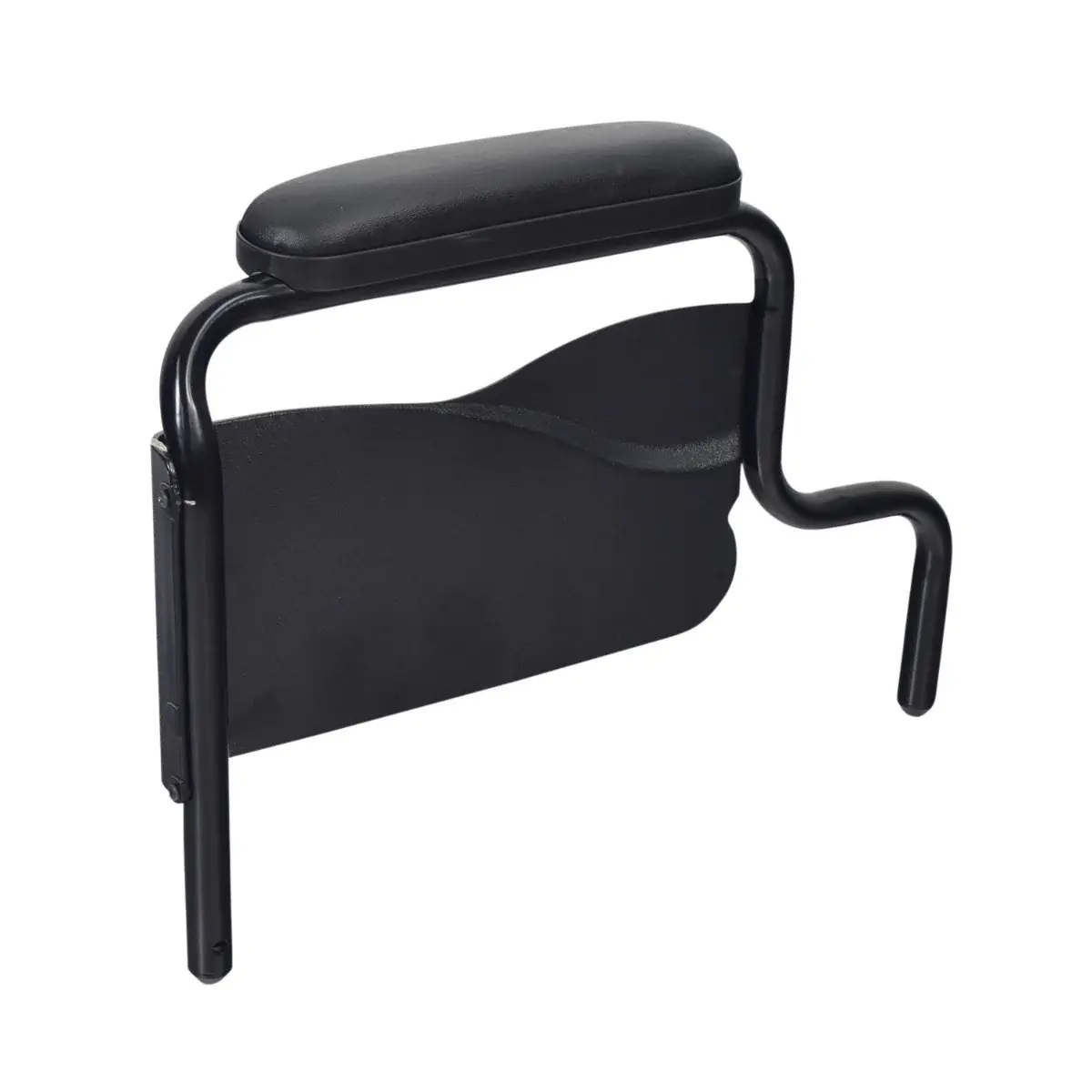
Replacment Armrest Assembly - Desk (Left)

C$67.98
3+ Day Shipping
In store: Check availability

Available in store

The Replacement Armrest Assembly Desk Left is a left-side padded desk-length armrest and mounting hardware for wheelchairs and patient seating in homecare and long-term care settings, restoring arm support, seating posture and table access.

    • Why a Functioning Desk Armrest Is a Seating Posture and Independence Essential, Not an Optional Comfort Feature?

      The armrest of a wheelchair or patient seating system performs a biomechanical function that extends well beyond the surface comfort of a padded resting surface — it is a structural positioning component that the seated user's upper body relies on to maintain a stable, symmetrically balanced seated posture across the hours of a daily seating period. When a user is seated in a wheelchair without functioning bilateral arm support, the weight of their arms and shoulder girdle is unsupported, and the upper body must recruit constant postural muscle effort to maintain trunk symmetry and prevent lateral lean toward the side where support is absent. For elderly, neurologically compromised, or physically weakened patients who may already have limited trunk control reserves — the population for whom wheelchairs and mobility seating are most commonly prescribed — sustained unsupported arm position rapidly produces shoulder and neck fatigue, progressive lateral trunk lean toward the unsupported side, and the scoliotic posture-in-seating that compounds the seating pressure distribution problems and skin integrity risks that correct wheelchair seating programs are specifically designed to manage. A functioning left armrest is not therefore a peripheral comfort item on a wheelchair; it is an active postural support component whose absence affects the user's seated alignment, muscle fatigue load, pressure distribution, and skin integrity risk across every hour of their seated day.

      The desk-length design of this left armrest assembly allows a user to position their wheelchair flush to a table or desk surface from the left approach — and this positioning capability has a direct bearing on the user's independence in daily living activities that most non-wheelchair users do not consciously register because they perform them without planning. At a dining table, the desk-length arm's abbreviated front section allows the wheelchair to advance past the table edge until the user's torso is over the table, putting the meal surface within comfortable reach without forward trunk lean that compensates for distance. At a standard household or office desk, the desk-length arm allows the user to position their wheelchair directly at the desk for writing, computer use, and phone calls — activities that a full-length arm obstructs by stopping the wheelchair six to ten inches from the desk face. For a wheelchair user in a homecare environment where everyday independence in meals, writing, and desk-based activities is a defined rehabilitation goal, the desk-length armrest's table-access function is a direct enabler of those activities that a full-length replacement armrest would systematically prevent.

      The padded top surface of the replacement armrest assembly serves a clinical pressure management function that is proportionally more important for wheelchair users than the casual arm-resting that office chairs and patient recliners see. A wheelchair user who spends six to twelve hours per day in their chair rests their forearm and elbow against the armrest surface for substantial portions of that time — during meals, activities, television, conversation, and rest — and the pressure at the bony prominences of the forearm (the radius, ulna, and olecranon process) against the armrest surface accumulates across those hours into a clinically significant pressure exposure. A worn, compressed, or degraded armrest pad that has lost its original foam resilience provides progressively less pressure distribution under the bony arm contact points, producing the localized high-pressure zones at the olecranon and distal radius that are the precursors to the dermal pressure changes and skin breakdown that armrest-associated pressure injuries represent. Replacing the armrest assembly with a new padded surface restores the pressure distribution geometry that the original pad provided — spreading the forearm's contact force across a larger surface area at a lower peak pressure — and extends the user's comfortable resting time before pressure discomfort prompts positional adjustments.

      The mounting hardware included with this left desk armrest assembly is the structural element that determines whether the armrest can safely serve as a transfer support — the push-off surface that the wheelchair user uses to initiate the sit-to-stand movement when transitioning from wheelchair to a standing or alternative seating position. A wheelchair armrest that is correctly mounted to the chair frame via its original hardware configuration resists the downward and forward force of the user's push-off without deflection, rotation, or unlocking under load — providing the solid, predictable resistance that an effective push-off requires. A worn or degraded mounting interface that allows the armrest to shift, tilt, or partially disengage under push-off loading creates a variable resistance surface that the user cannot rely on — and the unpredictable armrest behavior during a transfer attempt is a fall risk particularly for users whose transfer technique depends on simultaneous bilateral arm push-off and whose balance recovery after an unexpected arm movement is limited.

      What's Included

      • Left-side desk-length armrest pad — padded top surface providing forearm and elbow pressure distribution across the arm's contact zone
      • Mounting frame and hardware — the structural components that attach the armrest to the chair's left arm mounting interface and maintain the arm's position under postural and transfer loading
      • Assembly designed for left-side installation — frame geometry and mounting hardware configured for the chair's left arm position

      Key Features

      • Desk-length left-side design — abbreviated front section allows the wheelchair to advance flush to table and desk surfaces for independent meal and activity access
      • Padded armrest top distributes forearm and elbow contact pressure across a wider surface area — reducing peak pressure at the olecranon and distal radius during extended seated contact
      • Complete assembly format — pad and mounting hardware together — ensures both the comfort and the structural transfer-support functions are restored simultaneously
      • Durable frame construction rated for the combined postural resting load and push-off transfer loading that wheelchair arm use requires
      • Left-side orientation with correct frame geometry and mounting hardware for the chair's left arm position — verify model compatibility before ordering
      • Compatible with wheelchairs, mobility chairs, and patient seating systems that use desk-style armrests

      Benefits

      • Restores bilateral arm support that is essential for seated posture symmetry, trunk balance, and fatigue management during extended daily wheelchair use
      • Desk-length front clearance re-enables independent access to tables and desks — meals, writing, computer use, and activities that a degraded or missing left arm restricts
      • New padded surface restores the pressure distribution geometry that protects against forearm and elbow skin breakdown during extended armrest contact
      • Secure mounting hardware restoration provides the reliable push-off resistance that transfer-dependent wheelchair users require for safe sit-to-stand execution
      • Component armrest replacement extends the wheelchair's functional service life at significantly lower cost than full chair replacement
      • Left-side correct geometry ensures the frame-to-chair mounting interface engages properly — preventing the misalignment and instability that a wrong-side armrest produces

      Clinical Applications

      ✓ Wheelchair armrest repair — replacing a worn, damaged, cracked, or missing left desk armrest on a manual or transport wheelchair to restore bilateral arm support and table access ✓ Seating assessment follow-up — implementing a seating therapist or occupational therapist's recommendation to replace a degraded armrest that is contributing to postural asymmetry or pressure problems ✓ Transfer rehabilitation — restoring the left armrest's structural integrity for patients in post-surgical or neurological rehabilitation whose transfer technique requires reliable bilateral arm push-off support ✓ Homecare wheelchair maintenance — left armrest replacement on a homecare patient's primary wheelchair when the arm pad is worn through or the mounting hardware has failed ✓ Long-term care facility equipment servicing — replacing worn left desk armrests on facility wheelchairs during scheduled maintenance to maintain resident safety and independence during meals and activities ✓ Equipment refurbishment — left armrest replacement on used or donated wheelchairs as part of reconditioning before reissue to a new user ✓ Seating pressure management programs — armrest pad replacement as part of a clinical pressure management intervention for wheelchair users with forearm or elbow skin integrity concerns

      Installation Notes

      Confirming Left-Side Orientation Before ordering, confirm the failed armrest is the left arm — the arm on the user's left side when seated in the chair facing forward. Do not assume that a generic desk armrest assembly is fully symmetrical and can be installed on either side — the mounting hardware geometry and frame profile of this assembly are configured for the left-side mounting position of specific chair models, and installing a left arm on the right position will typically produce a mounting interface misalignment that prevents correct engagement.

      Confirming Chair Compatibility This replacement armrest assembly is designed for compatible wheelchair and patient seating models with desk-style arm mounting interfaces — confirm the chair model and its armrest mounting specification against the product compatibility details before ordering. The armrest's mounting hardware must match the chair frame's left arm receiver geometry in terms of post diameter, receiver depth, and retention mechanism design. If the chair's model number is not available, measure the existing armrest's mounting post dimensions and compare against the replacement's specifications.

    • No reviews yet

      Add yours

    Testimonials from Google

    See all reviews

    Your cart — 0

    You cart is currently empty

    Login